

DAR ES SALAAM: ALONG the shores of Lake Victoria, the banks of the Rufiji River, and countless streams and irrigation canals across Tanzania, freshwater is part of daily life. It is where children play, women wash clothes, and families draw water.
Yet hidden in these waters is a parasite that has quietly shaped the reproductive health of millions of Tanzanian women and girls often without their knowledge, and frequently beyond the recognition of the health systems meant to serve them. The condition is called Female Genital Schistosomiasis (FGS).
It is a chronic manifestation of schistosomiasis, a parasitic disease acquired through contact with freshwater contaminated by Schistosoma haematobium.
When the parasite enters the body, some of its eggs become trapped in the tissues of the female reproductive tract, where they trigger long-term inflammation, lesions, and scarring. Over time, this damage can profoundly affect a woman’s health, fertility, and quality of life. Women and girls living with FGS may experience abnormal vaginal discharge, bleeding, pelvic pain, infertility, and pain during sexual intercourse.
In Tanzania, where access to specialised diagnostic services is limited in many rural and peri-urban areas, these symptoms are frequently mistaken for sexually transmitted infections or even cervical cancer. As a result, many women are treated repeatedly for infections they do not have, while the true cause of their suffering remains undetected. This invisibility has serious consequences. FGS is not rare.
The World Health Organisation estimates that 56 million women and girls worldwide are affected, primarily in schistosomiasisendemic regions such as Tanzania. Research suggests that between 33 and 75 per cent of women living in endemic areas may have FGS.
Studies have also shown that FGS increases a woman’s vulnerability to HIV infection by up to three times and is associated with a higher risk of human papillomavirus (HPV) infection, the virus responsible for most cervical cancers.
Despite these well-documented links, FGS remains largely absent from sexual and reproductive health (SRH) services, clinical training curricula, and routine primary healthcare delivery in Tanzania.
Schistosomiasis control has traditionally focused on mass drug administration targeting school-aged children, leaving adult women and the reproductive consequences of infection largely overlooked. The result is a persistent gap between where women seek care and where FGS is actually addressed.
This gap is not accidental. It stems from the lack of systematic inclusion of FGS prevention, screening, diagnosis, treatment, and referral within SRH and primary healthcare systems.
Women and girls already visit health facilities for family planning, antenatal care, HIV services, and cervical cancer screening. Yet FGS is rarely considered in these settings, even when symptoms strongly suggest its presence.
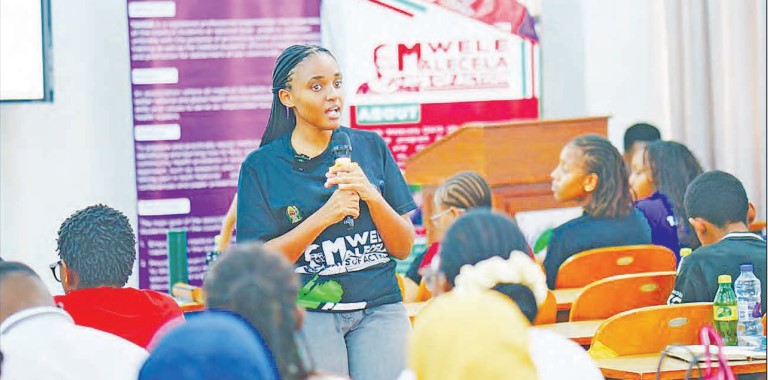
Addressing this disconnect is at the heart of the Mwele Malecela Days of Action (Mwele-DOA) programme, implemented by One Health Society Tanzania. Inspired by the legacy of the late Dr Mwele Malecela, a renowned Tanzanian scientist and global champion for neglected tropical diseases (NTDs), the programme seeks to reposition schistosomiasis and particularly FGS as a health systems and gender equity issue, rather than a narrowly defined parasitic disease.
Through community engagement, youth leadership, health worker capacity building, policy dialogue, and regional advocacy, MweleDOA aims to move FGS from the margins into routine care. The programme emphasises that women lived experiences must be central to health system design, especially in communities where exposure to schistosomiasis is part of everyday life.
As part of this effort, a global webinar was convened on 28 January 2026, bringing together policymakers, Ministry of Health officials, researchers, and advocates to explore practical pathways for integrating FGS into SRH and primary healthcare services.
ALSO READ: Change is how we live: Transformation lessons
The discussion was led by Dr Julie Jacobson, founder of Uniting to Combat NTDs. Among the key speakers was Professor Humphrey Mazigo, one of Tanzania’s leading schistosomiasis researchers and the principal investigator of the Multi-Country Assessment of Prevalence for Female Genital Schistosomiasis (MAP-FGS) study.
Coordinated by the Coalition for Operational Research on NTDs (COR-NTD), the MAP-FGS study represents the first systematic attempt to quantify the burden of FGS across several African countries, including Tanzania.
The findings are expected to provide critical evidence to inform national policies, clinical guidelines, and resource allocation areas where FGS has long been neglected. During the webinar, Mr Mohamed Nyati, Schistosomiasis Focal Person at Tanzania’s National NTD Control Programme, underscored the importance of aligning policy with practice.
“The Ministry of Health recognises the importance of integrating schistosomiasis services particularly FGS screening, diagnosis, treatment, and referral into routine sexual and reproductive health and primary healthcare platforms,” he said.
He described the collaboration with One Health Society through Mwele-DOA as strategic and complementary to national efforts, noting ongoing technical dialogue to ensure alignment with national priorities and service delivery structures at both national and sub-national levels.
The momentum has extended beyond Tanzania’s borders. On 30 January 2026, World Neglected Tropical Diseases Day, discussions on FGS integration reached the ECSA Health Community (ECSA-HC) Youth Summit. At the summit, ECSAHC Director General Dr Ntuli Kapologwe publicly affirmed the importance of repositioning NTDs within leadership development, announcing that NTDs are now embedded within the ECSA-HC mentorship programme.
This endorsement signals a critical shift, recognising FGS and other NTDs as core health system and equity challenges. At the centre of this work is an urgent message. As Dr Kuduishe Kisowile, Programme Coordinator of Mwele-DOA, explains, “FGS is not just about women and girls suffering silently.
We cannot say we are trying to end AIDS if we are ignoring a condition that increases the risk of HIV by three times. We cannot eliminate cervical cancer while ignoring a condition that doubles the risk of women and girls acquiring HPV.” Ending the neglect of FGS in Tanzania will require moving beyond vertical, diseasespecific approaches toward deliberate integration within the health system.
This means updating clinical guidelines, training health workers to recognise and manage FGS, raising community awareness and ensuring sustainable financing. Above all, it requires listening to women and girls whose health, dignity and rights have been overlooked for decades.
As Dr Victoria Gamba, Kenya’s Technical and Clinical Lead for FGS–SRH Integration and an obstetriciangynecologist, reflects, “I help diagnose and treat genital lesions associated with schistosomiasis.
To think that FGS, a treatable parasitic infection, can have such dire reproductive consequences like infertility makes this work worthwhile.” For Tanzania, the path forward is clear. Integration is not optional. It is the only way to bring FGS out of the shadows and into the care women deserve.