

DAR ES SALAAM: AS the world marked the International Day of Women and Girls in Science yesterday, February 11, the spotlight falls on two Tanzanian trailblazers who are proving that the most powerful tool in a laboratory isn’t always a microscope, sometimes, it’s a conversation.
While the global community celebrates the achievements of women in Science, Technology, Engineering, and Mathematics (STEM), Felista Tarimo and Justina Mosha are busy on the front lines of one of Africa’s most ambitious health pro-jects, Transmission Zero.
This Tanzanian-led international research programme is exploring groundbreaking genetic and biological tools to end the age-old scourge of malaria. But for Felista and Justina, the science doesn’t start in a test tube. It starts under the shade of a village tree, listening to the people whose lives depend on these innovations.
“Listening first means starting with their questions, not our agenda,” says Felista, a public health researcher and social scientist from the Ifakara Health Institute (IHI).
Felista’s work sits at the critical intersection of science and society. In rural com-munities where malaria remains a daily reality, she ensures that local voices aren’t just heard, they are used to shape how and when research happens.
She added, “Before we explain any science, we ask community members what they know about malaria and what challenges they face. Our perspectives shape better questions, better research, and better outcomes.” Her colleague, Justina Mosha, a medical sociologist at the National Institute for Medical Research (NIMR) Mwanza Centre, brings over a decade of experience to the table.
As the lead for stakeholder engagement at Transmission Zero, Justina’s mission is ethical dialogue. In a world where new technologies can often feel foreign or intimidating, Justina translates complex genetic science into simple, local language.
She hosts regular meetings in Kiswahili, working alongside local leaders to ad-dress fears and debunk misconceptions.
“Health solutions for Africa need to be designed by Africans, Tanzanian scientists, including women, are now leading research that reflects our realities and our val-ues,” Justina said The timing of their message couldn’t be more perfect.
ALSO READ: How irrigation, innovation lifts 83,000 girls out of poverty
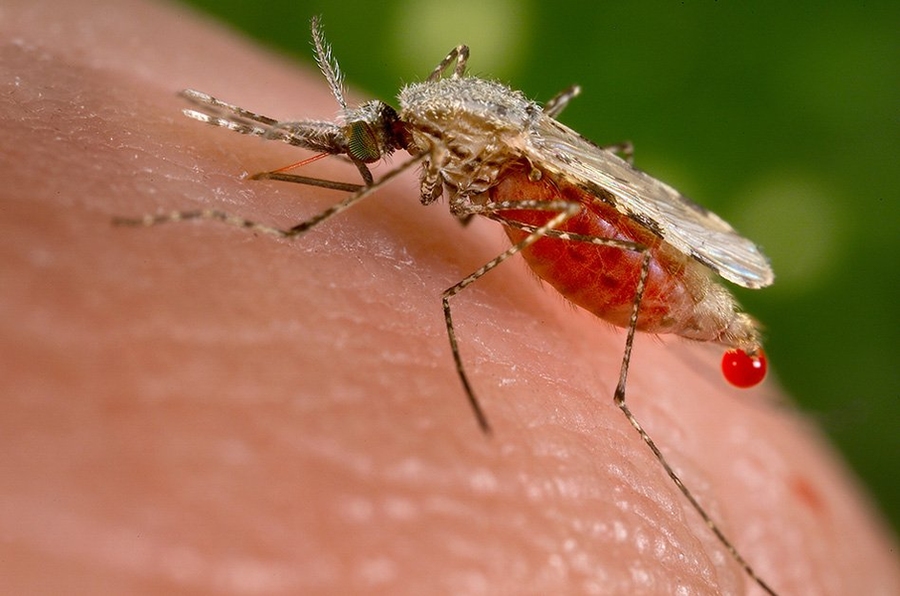
Transmission Zero recently achieved a historic milestone published in the journal Nature. For the first time, a genetically modified mosquito strain, tailored specifically to local conditions and created right here in Tanzania, has been shown to block the transmission of the parasite responsible for most malaria deaths.
While the scientists in the lab celebrate the data, Felista and Justina celebrate the partnership. Their model ensures that even the most high-tech research is ground-ed in community trust. For both women, the International Day of Women and Girls in Science is a call to action for the girls of Tanzania.
They want young women to see science not as an abstract, foreign concept, but as a practical tool to solve local problems. Justina’s advice to aspiring scientists is clear; she believes that science needs your unique voice because diverse perspectives are what lead to truly effective solu-tions.
For her, science is fundamentally about community, serving as a powerful way to improve the lives of your neighbours and those around you. Ultimately, she wants young girls to know they belong in this field, as African women are no longer just the subjects of research, they are the ones leading it.
As the magazine hits the stands today, the work of these two women serves as a reminder, the future of science in Africa is female, it is Tanzanian, and most im-portantly, it is listening.