

US: VALENTINE’S Day is traditionally a time of heartshaped balloons, overpriced roses and fully-booked restaurants. Couples kiss and hold hands, smiling selfies celebrate a day of public displays of devotion.
Why do so many of us feel such pressure to offer grand gestures, buy pricey gifts, and go through elaborate displays of affection? Presumably, to prove our love. Valentine’s Day is a showy, one-day-a-year demonstration that promises to do just that.
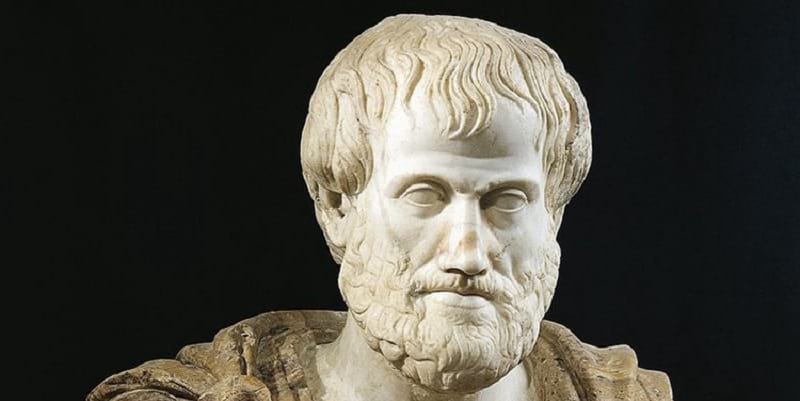
For the ancient Greek philosopher Aristotle (384- 322BC), however, this approach misunderstands the nature of love. For him, the true form of love wasn’t intense passion or grand gestures on one day of the year. Instead, it’s a steady commitment to help your beloved grow into their best version through everyday practices of care.
Aristotle wrote extensively about love, friendship and their place in a good life. His main book on ethics, the Nicomachean Ethics (350BC) – affectionately named after his son – is a classic work on virtue and happiness.
As a keen observer of human life, Aristotle’s philosophy was based on a real understanding of human beings – our emotions, needs, habits and the ways we live alongside each other. Humans are social animals, he argued, so we must live in a society and work toward a common good. More than this, we are “pairing” creatures. Coupling and sharing a life matters deeply. Interestingly, he believed this means learning to love ourselves, as well as others.
The five steps to love
Aristotle said we should love ourselves the most. This could sound like a celebration of narcissism, a gospel for the selfie age. But Aristotle meant that truly loving someone means loving them as another self, extending our self-love to another – a process with five parts.
First, loving yourself means desiring and promoting your own good. Do the same for your loved one. Desire and promote whatever is in their interest. Second, work for their own safety and security as you would your own.
Third, self-love means enjoying your own company and taking pleasure in reminiscing about past times and looking forward to good times to come. Desire and enjoy their company, too, in a shared life of interests, commitments and hopes.
Fourth, make sure your desires are rational, and only desire things that are part of a “fine and noble life” – a life that is virtuous, rational and filled with meaningful relationships. Fifth, openly express and experience your pains and pleasures. Consistently pursue what brings you pleasure and avoid whatever brings pain. For your beloved, recognise and share in their pains and pleasures, as if they were your own.
Love, Aristotle says, comes from the sense that the lover is “mine”. If that sounds icky to a modern ear, the point isn’t about ownership. When I say “my beloved is mine”, I mean “we belong together in a shared life”. I do not own my finger, it belongs to my hand, which is a part of me. Likewise, I don’t own my beloved, but they belong to our loving relationship, of which I, too, am part.
Love, friendship and skill
Aristotle also described lovers as friends – not any old good friends but each other’s other halves. Like friends, lovers hang out, have each other’s back and support one another. As lovers, they treat each other as a part of themselves.
Aristotle thinks it’s a big red flag if your lover doesn’t care as much about your feelings and needs as their own, no matter how grand their gestures and gifts.
Love was not a passive feeling for Aristotle, but a practice requiring skill. A lover, he argues, makes themselves better for their beloved, unlike a carpenter who makes a table for himself. Loving is a practice of constant selfimprovement for the sake of another person. Being a good lover means striving to be a better person, so that you and your beloved bring out the best in each other.
For Aristotle, love is not about how your Valentine makes you feel on a single night of the year. Gifts and gestures are nice, but the real proof of love is nothing you can buy. Loving another as much and as well as you love yourself is the real proof, one that takes time and practice. To quote Aristotle, “one swallow does not make spring” – nor does one magical night really show our love.
One of the difficult things about working on the philosophy of love is that human relationships change, but our dominant images of love tend to remain the same.
The stability of these images reassures us that love is something deep, but we can also be trapped by them. The image of the soulmate has been around for a long time, yet our world has changed a great deal and so have our expectations of one another.
The terminology dates back to at least 1822 when it was used by the poet Samuel Taylor Coleridge. “In order not to be miserable,” he wrote, “you must have a Soul-mate.” However, the imagery Coleridge tried to capture is much older. It dates back to the Symposium – Plato’s dialogue written around 385BC.
What does the writing on the soulmate tell us?
Not all writing on the soulmate is positive – some warn of soulmates who drag us down rather than lifting us up.
As a cautionary tale, in the bowels of Dante’s Inferno (1320), lovers Paulo and Francesca are forever blown about by the winds of their own passion. They belong together, but the price of their misplaced love is eternal suffering.
Dante is telling us that the soulmates we desire might not be good for us, especially when sex gets in the way and the soul is distracted by the body.
Dante’s longing to be with his own soulmate, Beatrice, is shown differently. It is spiritually driven – he literally goes through hell to see her – but the meeting itself is a kind of judgment. There is no warm embrace.
Soulmate imagery of this sort offers a warning that we need to be fixed and a reassurance that there is someone who can fix us. We just need to keep looking.
Love in Plato’s Symposium This is an idea that Plato had already considered and rejected. The Symposium describes a discussion of love that is disrupted by the hiccups of the playwright, Aristophanes.
Aristophanes claims that the gods were once jealous of our four arms and four legs, so they split us down the middle with a little adjustment towards the front. That slowed us down a bit. Now, whenever we meet our other half, we rush towards them and try to become whole again.
This is a lovely image, full of love’s intoxication and urgent bodily longings. But it places a heavy burden upon the other person. For example, it would lead me to expect my wife, Suzanne, to make me whole and her to expect the same of me. I am not sure that either of us would be cut out for such a demanding role.
Loving and being loved changes us, but it does not stop us from being human, with all that entails. There is a sense in which none of us is ever truly fixed.
What makes someone a soulmate?
The problem may not be with the idea of the soulmate, but with demanding too much from others.
While we live in a world where mortgages often last longer than marriages, the desire to share a life with someone is not going away any time soon. The need to think that relationships could last runs deep. And sometimes they do.
The problem with some of the classic soulmate imagery is not the idea of sharing a life, but the idea that doing so overcomes our incomplete nature, rather than modifying it.
What makes the other person a soulmate is that they love us as the incomplete and messed up beings that we are. Should we become more messed up than the average human, there are also perfectly good reasons why love should end.
ALSO READ: See Zuchu, Mbosso, Diamond command the Valentine’s Day hit parade
This is a difficult idea to sell, particularly in the shadows of Plato, Dante and others who have built up our western imagery of love as something that draws us towards a goodness that will never end.
What this imagery obscures is the finite nature of love, how shared lives are shaped by an awareness that love ends when we end.
The beauty of finite love
Outside of western philosophy, love’s beauty is connected to its impermanence. For example, love is a central concept in works from the 20th-century Kyoto School of philosophy.
The texts of its founder, Nishida Kitaro, are haunted by a deep sense of love and irreparable loss. Kitaro claimed that love unites us not only with other humans, but also with other creatures, rocks and trees. Perishable beings and things that do not last forever. The pain of love’s end can also bring a kind of wisdom.