

ARUSHA: IN just 100 days, President Samia Suluhu Hassan’s administration has translated momentum into concrete results, quite literally through the roll out of 81 infrastructure projects worth 500bn/- across the country.
From rehabilitated asphalt roads and newly constructed parallel bridges to the glow of modern street lights illuminating once-dark highways, the Ministry of Works says the projects are reshaping transport networks, improving safety and stimulating economic activity nationwide.
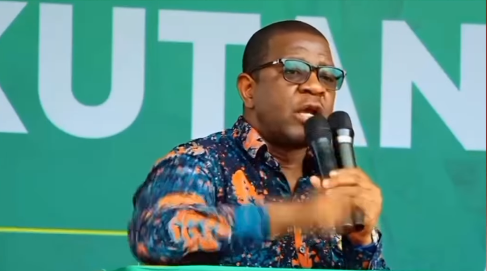
Speaking recently at King’ori in Arumeru District, Arusha Region, where one of the flagship projects has just been completed, Minister for Works Mr Abdallah Ulega described the first 100 days of President Samia’s second term in office as a period of “decisive execution.”
The ministry received 511bn/- to implement the projects, with 280bn/- from the Treasury and 222bn/- contributed by development partners.
Of the Treasury allocation, 125bn/- was channelled to the Roads Fund to settle payments for subcontractors working across the country.
“Out of the 81 projects, 40 have been fully completed,” Mr Ulega said, citing the King’ori Bridge and installation of 136 street lights in the area as examples of quick, high-impact interventions.
For residents of King’ori, the bridge is more than concrete and steel. During the rainy season, the area was notorious for flooding that disrupted transport and exposed citizens to danger.
The new structure has eliminated seasonal risks and restored reliable movement of people and goods. The street lighting project has also transformed the area. What was once poorly lit area is now vibrant after sunset, boosting safety while opening new opportunities for traders and small businesses operating at night.
“Street lights are not just about visibility; they create space for economic activity. Small traders can now operate longer hours, increase incomes and support local growth,” Mr Ulega explained.
His sentiments were echoed by a resident of King’ori, John Lemburis, who said “We can now move safely at night because there is enough light. Businesses will also open up and can be conducted 24/7.”
Beyond roads and bridges, the government has allocated funds in the current financial year for construction of the Kongowe Bus Terminal, aimed at improving transport services for residents of the southern regions.
The terminal is expected to ease congestion, streamline passenger services and enhance connectivity between regions, key pillars in the broader effort to modernise Tanzania’s transport infrastructure.
The infrastructure push has been matched by a strict approach to accountability. During an inspection tour from Dodoma, Mr Ulega encountered a long queue of trucks at Mikese Weighbridge in Morogoro Region. Investigations revealed that the congestion was caused by negligence among officials.
The minister responded swiftly, suspending the Tanzania National Roads Agency (TANROADS) Morogoro Regional Manager, the weighbridge manager and the ministry’s Director of Weighbridge Services pending further investigation.
ALSO READ: Shivo Towers breaks ground amid island-wide infrastructure surge
“This action has strengthened accountability and improved performance,” he said, underscoring the administration’s zero-tolerance stance on inefficiency.
The ministry is also confronting delays in major road projects, some linked to foreign contractors. Mr Ulega said collaboration with the Attorney General’s Office is underway to identify contractual breaches and take legal measures, including termination of contracts where necessary.
He singled out Kagera Region, where 9bn/- had been disbursed but progress remains unsatisfactory. “I warn project managers and contractors causing delays that strict measures will be taken,” he cautioned.
To strengthen local capacity and reduce reliance on foreign firms, the government has introduced a new procurement approach: all tenders valued below 50bn/- will be reserved for local contractors.
For larger projects involving foreign firms, at least 10 per cent participation must be allocated to local contractors to promote skills transfer and domestic expertise.
The move signals a deliberate shift toward empowering Tanzanian contractors while ensuring value for money.
Deputy Permanent Secretary in the Ministry of Works, Dr Charles Msonde said the infrastructure drive has already begun boosting productivity and contributing to national economic growth.
Modern roads reduce transport costs, improve market access for farmers and manufacturers and enhance regional trade linkages. Improved bridges and lighting systems increase safety while reducing losses linked to floods and road accidents. Local leaders echoed these sentiments.
Arumeru District Commissioner Mr Mwinyi Ahmed Mwinyi, speaking on behalf of Arusha Regional Commissioner Mr Amos Makalla, commended the ministry for strengthening road networks in the region.
On his part Arumeru Member of Parliament Mr Joshua Nassary said the installation of street lights and construction of bridges have significantly reduced flooding risks, protecting homes and businesses while restoring public confidence in infrastructure resilience.
As President Samia’s renewed mandate gathers pace, the first 100 days reveal a development strategy anchored in visible, measurable delivery.
W i t h 500bn/- already injected into infrastructure and more projects underway, the administration is signalling that implementation, not just planning will define its leadership. For communities like K i n g ’ o r i , the transf o r m a t i o n is tangible: safer roads, b r i g h t e r nights and renewed economic activity.
If the current tempo c o n t i n u e s , T a n z a n i a ’ s infrastructure l a n d s c a p e may look m a r k e d l y different in the months and years ahead.