
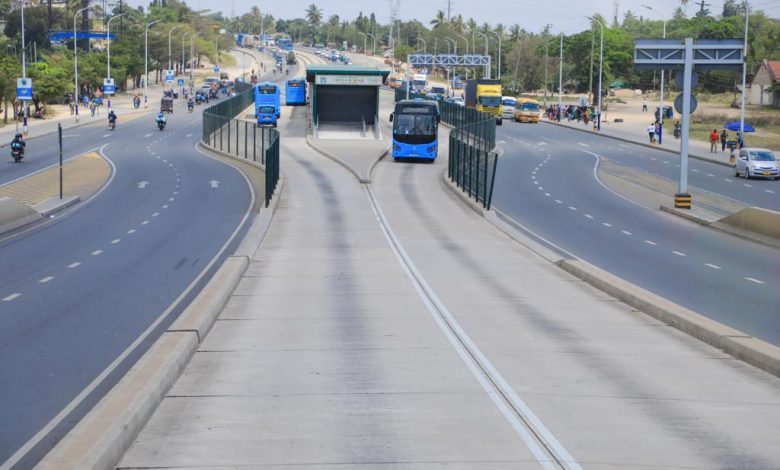

DAR ES SALAAM: THE Board of Directors of MOFAT has called for stricter enforcement of dedicated Bus Rapid Transit (BRT) lanes to improve service, reliability and financial sustainability, following an inspection tour of operations and key routes.
Board Chairperson Mr Gaudence Temu said the visit aimed to assess operational performance, infrastructure utilisation and challenges affecting daily service delivery, with particular focus on the invasion of BRT lanes by unauthorised road users.
“The purpose of today’s tour was to examine the operational challenges we are facing as a company and determine how best to address them. We wanted to see the real situation on the ground and engage directly with staff,” he said.
He noted that although the company has invested heavily in its fleet, with about 200 buses, but not all are currently operational due to constraints linked to traffic congestion and misuse of BRT infrastructure.
Mr Temu explained that BRT lanes were specifically designed for rapid buses to ensure uninterrupted movement and reliable schedules, but frequent intrusion by motorcycles, tricycles and private vehicles has reduced efficiency.
“This infrastructure was meant exclusively for rapid buses so that passengers can travel quickly without delays. When other vehicles enter these lanes, operations slow down and schedules are disrupted,” he said.
According to him, inconsistent trip times negatively affect both, customer satisfaction and business performance, as prolonged delays increase operating costs and reduce fleet productivity.
Despite the challenges, he commended government support and ongoing collaboration with traffic police, noting that enforcement efforts have helped, though more consistent control is still needed.
“We appreciate the cooperation we receive from the authorities. The infrastructure is good and enforcement efforts are in place, but tighter control will yield even better results,” he added.
During the tour, the board also reviewed route performance along the Mbagala– Kipunguni, Mbagala–Gerezani and Mbagala–Morocco corridors, where passenger demand continues to grow.
Mr Temu said future fleet expansion and redeployment will be guided by passenger demand patterns to enhance efficiency and service coverage.
He identified the Keko stretch as one of the main pressure points due to heavy truck traffic and narrow road sections, calling for targeted interventions to ease congestion.
Mr Temu further urged passengers to support service quality by adhering to boarding procedures, using travel cards and safeguarding public transport assets.
“We thank our customers for their continued trust. They should follow queue procedures and help us protect the buses. We remain open to feedback and recommendations,” he said.
Board member Mr Andrew Chenge described the inspection as timely and constructive, commending the company’s leadership and staff for sustaining operations despite the challenges.
He said the board is taking a solution-oriented approach and working closely with management to strengthen systems, accountability and service standards.
“The commitment shown by management and staff is commendable. With continued enforcement, stakeholder cooperation and operational improvements, the rapid bus service will become even more dependable and efficient,” he said.
Mr Chenge added that the board remains focused on long-term improvements aimed at enhancing commuter experience and safeguarding public transport investments.