

DAR ES SALAAM: On February 16, the Russian Centre for Science and Culture in Dar es Salaam transformed a corner of the city into a lively outpost of Slavic tradition, hosting a Festival of Russian Folk Traditions that was equal parts cultural exchange and cheerful defiance of the tropical sun.
Dar es Salaam does not often need encouragement to say goodbye to winter. But for an afternoon, guests gathered to experience how Russians bid farewell to the cold season and welcome spring with colour, ritual and, most importantly, pancakes.
The festival drew students, youth leaders and families curious to sample a slice of Russian heritage. They were not disappointed. From the outset, the air was thick with the aroma of freshly baked blini and that is delicate Russian pancakes that, as many attendees discovered, are far more than breakfast.
In Russia, they are symbols of the sun, round and golden, promising warmth and renewal.
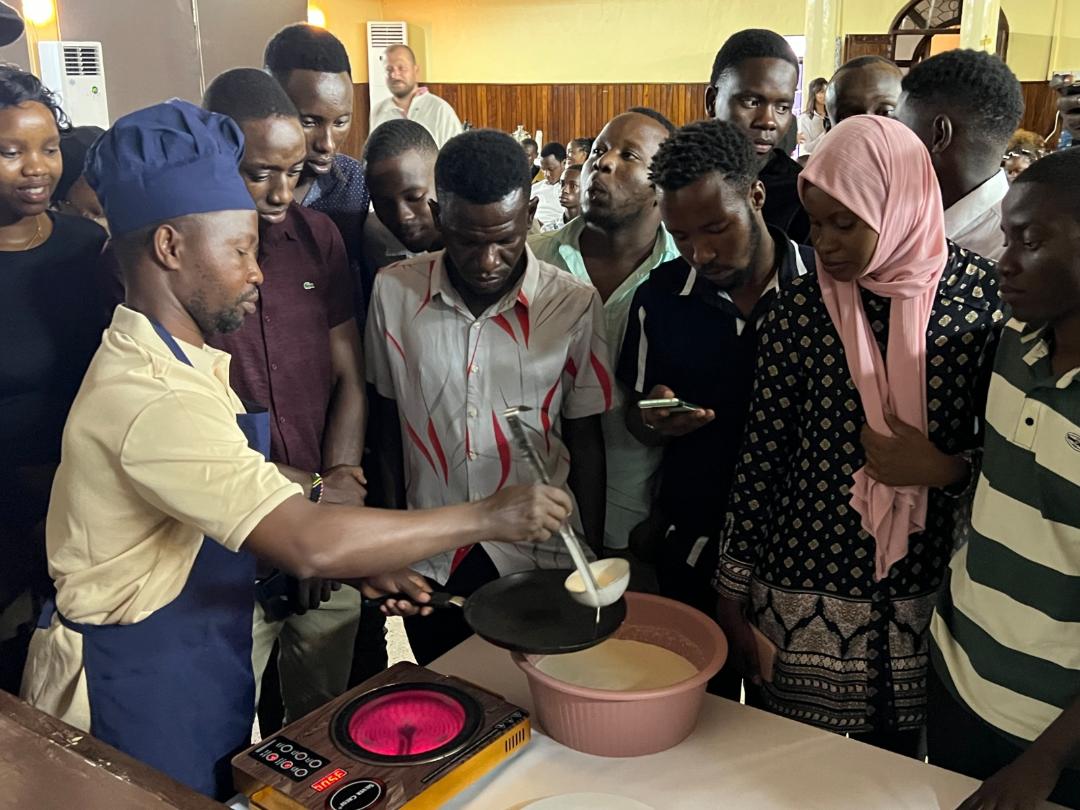
Under the guidance of cultural instructors, participants rolled up their sleeves for a hands-on workshop in blini-making. Measuring flour and whisking batter quickly turned into a lesson in history. The humble pancake, it turns out, carries centuries of meaning.
For a city more accustomed to chapati, this was a delicious expansion of horizons. Matthew Marandu, director of a local youth organisation, emerged from the cooking session with both culinary skills and cultural insight.
He said he had learned how to prepare Russian blini and gained a deeper understanding of the holiday’s origins and how it is celebrated across Russia. He was particularly encouraged by the number of young Tanzanians in attendance.
Many of them, he observed, were eager not only to taste authentic Russian pancakes but also to experience what he described as the “Russian spirit” — a phrase that, on this occasion, seemed to mean warmth, hospitality and a readiness to share traditions generously. Beyond the kitchen, the festival grounds echoed with laughter as guests tried their hand at traditional games.
There was “Rucheyok,” a lively folk game whose name translates to “little stream,” encouraging players to weave and dart in a chain of movement that requires coordination and quick thinking. Tug-of-war and sack races followed, proving that friendly competition needs no translation.
If diplomacy were always conducted with sack races, international relations might look rather different. The culinary offerings extended well beyond plain pancakes. Tables groaned under plates of blini filled with savoury and sweet delights.
There was honey, sour cream and a range of toppings, but the star attraction was blueberry jam specially brought from Russia. In a city famed for its coastal bounty, imported berries may seem an unlikely celebrity. Yet they disappeared at impressive speed.
Devota Alois, a student at the Tanzanian Institute of Accountancy, described her delight at attending the festival. She said she was particularly fascinated by the tradition of bidding farewell to winter and welcoming spring — a ritual that, though rooted in a colder climate, resonated with universal themes of renewal and hope. That ritual reached its dramatic peak with the ceremonial burning of the Maslenitsa effigy.
In Russia, the Maslenitsa festival marks the end of winter and the approach of spring. The effigy, often fashioned as a straw figure, symbolises the departing cold season. As flames consumed the figure in Dar es Salaam, onlookers watched a tradition that has endured for generations.
ALSO READ: Tanzania renews efforts to increase honey export from 24 to 50 percent by 2027
In the tropical heat, the symbolism required a touch of imagination. Yet the gesture was unmistakable: out with the old, in with the new. Fire, after all, is a universal language. Alexander Evstigneev, director of the Russian Centre for Science and Culture in Dar es Salaam, underscored the deeper purpose of the celebration. He said the central idea of the festival was the preservation of tradition.
Russia, he noted, is a country that reaches for the future — launching spacecraft, building nuclear icebreakers and developing life-saving vaccines. At the same time, it remains attached to its ancient roots.
His remarks highlighted a dual identity: a nation that can navigate Arctic waters and outer space while still gathering around a pan of pancakes. Modernity, in this view, does not erase memory. It coexists with it. Evstigneev also emphasised the importance of cultural diversity in a globalised world. Every country’s heritage, he argued, deserves recognition and protection.
He expressed opposition to a form of globalisation in which the cultures of Global South countries dissolve into a homogenised mass culture dominated by the West. The sentiment found quiet resonance in Tanzania, a nation equally proud of its traditions. From ngoma dances to coastal cuisine, Tanzania’s cultural landscape is as rich as its wildlife.
In this shared commitment to heritage, the festival suggested, Russia and Tanzania find common ground. Cultural diplomacy can take many forms: formal agreements, trade missions, high- level visits. Yet there is something disarmingly effective about a shared meal and a few good-natured games. It is difficult to remain strangers when you are debating the optimal thickness of pancake batter.
The event also reflected a broader pattern of engagement between Russia and African nations, in which educational and cultural exchanges play a growing role.
By opening its doors to Tanzanian youth, the Russian Centre positioned itself not merely as a venue, but as a bridge. Importantly, the festival was not a one-sided display. Tanzanian guests did not simply observe; they participated.
They cooked, played and asked questions. In doing so, they transformed the event from performance into dialogue. Humour threaded through the afternoon. When one batch of blini emerged slightly overcooked, a participant joked that it represented an especially enthusiastic farewell to winter.
Laughter followed, and another pan was set to work. Cultural learning, like cooking, benefits from patience and a willingness to try again.
For all, it was a reminder that traditions travel remarkably well. They adapt to new climates and audiences while retaining their essence. In celebrating Russian folk customs in Tanzania, the organisers made a broader point: progress and preservation are not mutually exclusive.
A nation can innovate in science and technology while honouring ancestral practices. Likewise, countries separated by geography and history can discover shared values in the simple act of coming together. If the measure of a successful cultural festival is the number of smiles, then February 16 was a triumph.
And if diplomacy can sometimes be measured in pancakes, then Dar es Salaam witnessed a small but meaningful surplus. Pic: Culture Caption: Young Tanzanians gather at a cooking station at the Russian Centre for Science and Culture in Dar es Salaam as a chef demonstrates how to prepare traditional Russian blini during a Festival of Russian Folk Traditions marking the farewell to winter and the arrival of spring.