
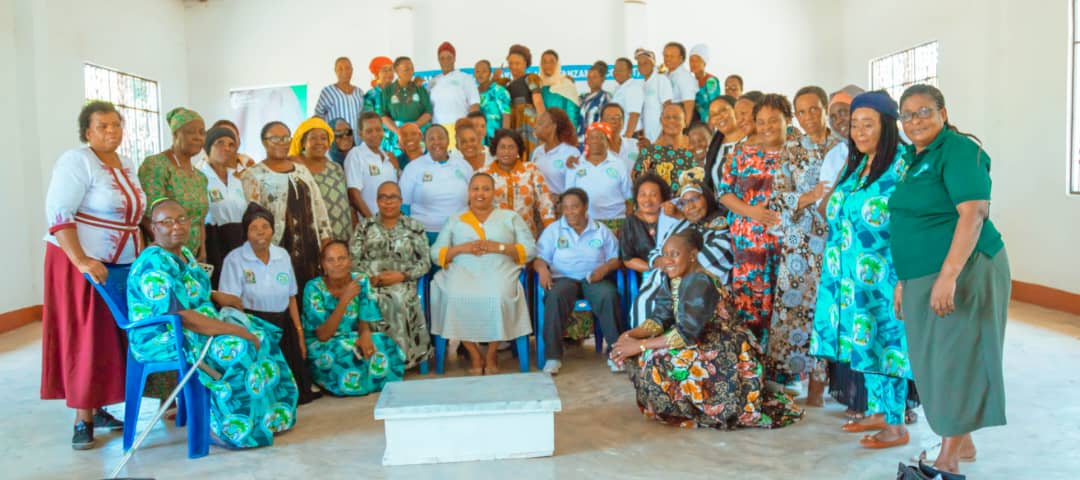

COAST REGION: IN Bagamoyo Town, the steady hum of bees is fast becoming the sound of opportunity. Here, more than 100 women from 10 regions recently gathered for intensive beekeeping and beehivemaking training funded by the LALJI FOUNDATION in collaboration with the Tanzania Widows Women Association (CCWWT).
The initiative brought together widows and women from community groups with one clear objective: To transform beekeeping from a traditional practice into a modern, income-generating enterprise capable of strengthening households and uplifting communities.
The training focused on equipping participants with up-to-date knowledge of beekeeping techniques, proper hive construction and management, safe honey harvesting and practical strategies for adding value to bee products. Honey, after all, is only the beginning.
Beeswax, propolis, and other by-products also hold commercial potential when processed and packaged effectively. For many of the participants, the programme was more than a technical workshop. It was a pathway toward economic independence.
Speaking during the session, the Project Coordinator from LALJI FOUNDATION, Ms Judith Kahatano, underscored that the central goal of the initiative is to empower women through sustainable projects that increase household income while contributing to broader community development.
She explained that economic empowerment is not merely about earning money; it is about building resilience. When women gain practical skills and access to viable business opportunities, families become more stable and communities more secure.
ALSO READ: From Dar es Salaam to Oslo: A journey into the legacy of the Nobel Peace prize
A well-managed beehive may seem modest, but its returns can be remarkably consistent when properly handled. Ms Kahatano emphasised that the foundation’s involvement does not end with a single round of training. The intention is to collaborate with various stakeholders to ensure that the knowledge shared translates into long-term impact.
Short-lived interventions may generate enthusiasm, she noted, but sustained mentorship and follow-up are what truly anchor change. Providing the technical backbone of the programme was Vincent Mnaya, a beekeeping trainer from the Tanzania Forest Services Agency (TFS).
He highlighted that beekeeping is both economically rewarding and environmentally beneficial. Bees support pollination, which strengthens agricultural productivity, while honey production offers a steady income stream with relatively low start-up costs. He encouraged beneficiaries to apply the skills they acquired with discipline and consistency.
Proper hive placement, routine inspection, adherence to safety procedures during harvesting and careful handling of products are essential for success. Bees are industrious creatures, he reminded participants, but they respond best to attentive management. In other words, even nature appreciates good supervision.
The Chairperson of CCWWT, Rabia Moyo, expressed heartfelt gratitude to LALJI FOUNDATION for financing the initiative. She noted that the training would significantly improve the earning capacity of widows and, by extension, the welfare of their families.
For many widows, economic vulnerability begins immediately after the loss of a spouse. Access to reliable income sources is therefore critical. Ms Moyo further stated that the association remains committed to working closely with the government and other institutions to strengthen the welfare of widows nationwide.
She appealed for continued government support in addressing persistent challenges faced by widows, including denial of inheritance rights, limited access to capital for business expansion, and the absence of operational offices at ward and regional levels.
These structural issues, she observed, often compound the financial hardships widows experience. Economic empowerment programmes such as beekeeping training are therefore part of a broader strategy to build independence while advocacy efforts continue on legal and social fronts.
The Secretary General of CCWWT, Sabrina Tenganamba, used the occasion to deliver a thoughtful message about family values. She called upon married couples to cherish and respect one another during their lifetime. According to her, inadequate preparation and insufficient mutual support within marriage frequently leave widows and particularly women facing avoidable challenges after losing their spouses.
Her remarks underscored the importance of planning, open communication and shared responsibility in marriage. When families are organised and informed, the transition following loss, though painful, can be managed with greater dignity and security.
Participants themselves spoke warmly about the opportunity. Many expressed appreciations for the sponsorship, noting that the skills gained would allow them either to launch new beekeeping ventures or improve existing ones. Several women shared plans to form cooperative groups to pool resources for hive production and collective marketing of honey and related products.
ALSO READ: With 8.5tri/- injected, HESLB claims pole position in creating a skilled Tanzanian workforce
Beyond individual benefit, the initiative holds wider economic promise for Bagamoyo and surrounding regions. Beekeeping requires relatively modest land space and can be integrated into existing agricultural activities. As more women establish well-managed apiaries, local honey production could increase, supporting small-scale processing enterprises and opening access to new markets.
Moreover, the environmental advantages are significant. Healthy bee populations enhance pollination for crops and natural vegetation alike, contributing to biodiversity and agricultural yields. In this sense, the training aligns economic advancement with ecological stewardship.
What distinguishes this programme is its combination of practical instruction and institutional partnership. By linking philanthropic support, community organisation and technical expertise, the initiative creates a framework for sustainable growth rather than isolated assistance. As the women departed with newly acquired knowledge and renewed confidence, the atmosphere carried more than optimism. It carried determination.
The hum of bees may be soft, but its economic echo can be powerful. With disciplined management, supportive partnerships and continued advocacy, the participants are poised to convert their training into tangible improvements in living standards.
In Bagamoyo, honey is no longer simply a sweetener. It is a symbol of resilience, cooperation and enterprise. Through structured training and sustained collaboration, women are being equipped not only to harvest honey, but to cultivate independence and strengthen their families for years to come.