
DODOMA: ARUSHA Accounting Institute (IAA) has rolled out an expanded apprenticeship training model and invested over 48bn/- in institutional reforms aimed at producing job-ready graduates aligned with Tanzania’s fast-changing labour market.
The move positions the institute at the centre of government efforts to address youth unemployment by equipping graduates with practical skills, entrepreneurial capacity and digital competence.
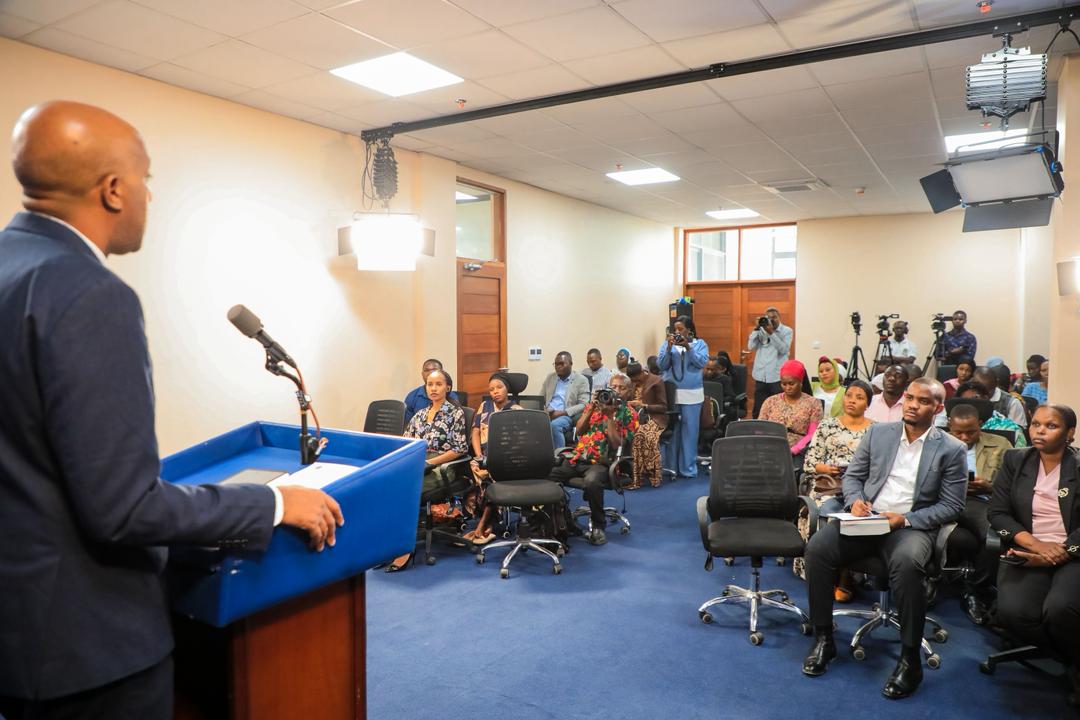
Speaking to journalists yesterday in Dodoma, IAA Rector, Prof Eliamani Sedoyeka, said the institute has strategically redesigned its programmes to ensure students graduate with both academic knowledge and real workplace experience.
“We are aligning our training with national priorities to ensure every graduate leaves IAA ready for employment, self-employment or job creation,” he said.
Prof Sedoyeka said IAA has introduced apprenticeship pathways in three key undergraduate programmes including Tourism and Hospitality Management, Insurance and Risk Management and Banking where students split their three-year study period equally between classroom learning and supervised industry placement.
“By graduation, students already understand workplace realities. They are not just degree holders, they are skilled professionals,” he said.
The apprenticeship approach is part of broader reforms supported through the Higher Education for Economic Transformation (HEET) project, under which the government allocated 48.47bn/- to IAA to strengthen training, research and consultancy services.
Through HEET, the institute has established an Industrial Advisory Committee to serve as a bridge between the institution and stakeholders from both the public and private sectors. The committee advises on curriculum development and review to ensure programmes reflect current market needs.

Beyond classroom reforms, IAA’s Business Incubator established six years ago has become a catalyst for youth entrepreneurship.
In the past academic year alone, over 8,600 youths were reached through entrepreneurship initiatives, 1,520 developed business ideas and more than 50 businesses were launched. Of these, 12 have already been formally registered.
The enterprises operate in trade, technology innovation, arts, conservation and environmental protection, creating self-employment and additional job opportunities.
To further nurture entrepreneurship, the institute has constructed five student-operated shops within the campus and additional commercial spaces outside the institution to support graduates transitioning into business.
On digital transformation, Prof Sedoyeka said the institute has invested over 900m/- in AI Smart Classrooms, a modern data centre, enhanced internet capacity and the establishment of an ICT Centre of Excellence.

“We are delivering a 360-degree education model , skills, markets, capital access and digital capability. This is not just an investment in IAA, but in Tanzania’s economic future,” he said.
He added that through a blended learning system, IAA integrates face-to-face classroom instruction with online sessions, Learning Management Systems (LMS) and digital assessment tools.
The system enables working professionals to pursue studies flexibly according to their schedules, allows students in remote areas to access quality education and reduces pressure on physical infrastructure at campuses.
“For Tanzania, blended learning enhances inclusivity in education and strengthens national human capital development,” he said.
Prof Sedoyeka said IAA has also signed 23 Memoranda of Understanding with public and private sector institutions, including the CEOs Round Table, to strengthen industry linkages through internships, field attachments, leadership mentorship and market-responsive curriculum review.
Meanwhile, in line with the sixth- phase government’s vision to expand higher education access across regions, IAA in August 2025 opened a new campus in Geita Region, bringing its total campuses to six; Arusha, Babati, Bukombe, Dar es Salaam, Dodoma and Songea with plans underway to establish another in Zanzibar.
Prof Sedoyeka said regional expansion aims to curb rural-urban migration by providing locally relevant programmes that retain skilled youth within their communities.