
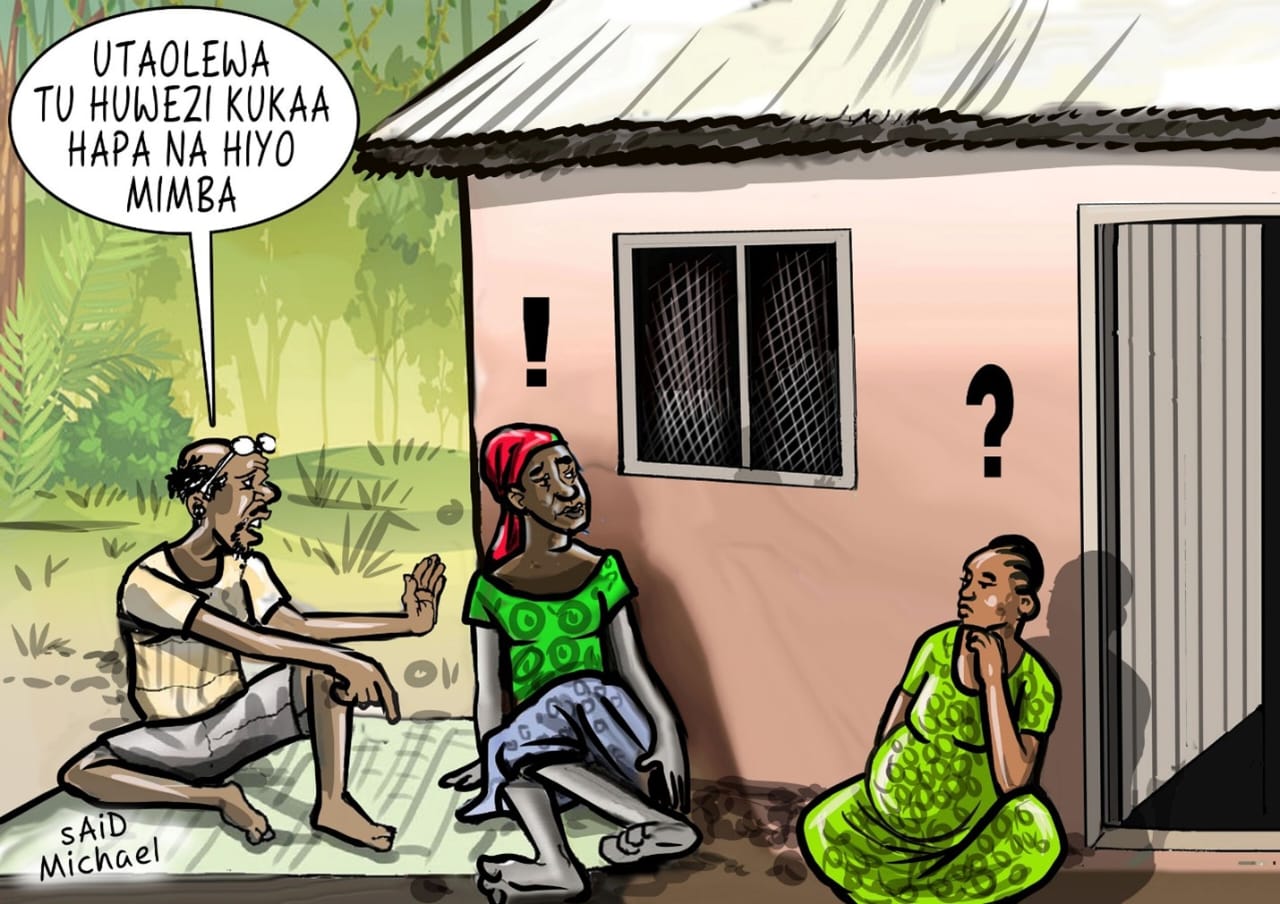

DAR ES SALAAM: INCREASED community awareness on Gender-Based Violence (GBV) has brought notable changes in the way incidents are reported and handled in various parts of the country.
This progress is the result of collaborative initiatives undertaken by the government in partnership with various stakeholders, all aimed at combating gender-based violence and strengthening prevention, reporting and response mechanisms.
The initiatives include establishment of Gender and Children Desks where survivors of GBV can safely report incidents, One-Stop Centres in health facilities to provide integrated services, including medical care, counselling, legal advice and police support for survivors.
Others are community outreach and mobilisation where local authorities, NGOs and community leaders organise awareness campaigns in villages, markets, schools and religious institutions and legal reforms and access to justice among others.
A GBV Mobiliser and Facilitator Salome Kadari from Mgagao Knowledge Centre (KC) in Mwanga District, Kilimanjaro Region said sustained community education has helped remove fear among survivors and strengthened their willingness to report abuse.
Salome, whose centre is affiliated with the Tanzania Gender Networking Programme (TGNP) for more than two years, attributes the progress to continuous sensitisation campaigns conducted at community level.
ALSO READ: Kazakhstan exported $1 billion worth of IT services in 2025
“Currently, there is a high level of awareness in the community. In the past, people did not know where to go when they experienced violence, but now when an incident occurs, they call and report it even at night,” she said.
According to her, the main task of community mobilisers is to stimulate change by encouraging survivors to speak out, report incidents and overcome fear so that they can access legal and social support services.
She explained that upon receiving information about a case, she immediately communicates with government leaders and relevant authorities, including police and social welfare officers and continues to follow up to ensure appropriate action is taken.
“My responsibility is to link the victim with the responsible authorities. Once I hand over the matter to government institutions, I continue to follow up to know how far the case has progressed,” she said.
Apart from receiving and forwarding reports, she said they have been conducting outreach visits regularly in villages to identify social challenges, initiate dialogue and submit emerging issues to local leaders for resolution.
They also use public village meetings as platforms to educate residents on the effects of GBV and the importance of timely reporting.
“During village assemblies, we are invited to speak to the community. Recently, there was a wave of child rape cases. We provided education and urged parents and guardians to take early action and report such incidents immediately,” she explained.
Ms Kadiri further noted that increased awareness has contributed to a decline in certain forms of violence, particularly within the Maasai community, where cases of domestic violence were previously widespread.
“In the past, there were many cases of women being beaten and even losing their lives while pregnant. Today, the situation has significantly improved, although some challenges still persist,” she said.
She, however, acknowledged that harmful traditional practices such as female genital mutilation (FGM) have not been completely eradicated. The practice, she said, continues in some communities, though now carried out secretly.
“Some people still practice it in hiding because they fear the law. I once engaged Maasai elders in discussion and asked why they continue circumcising girls. They told me the practice will eventually end, but not immediately, because even young Maasai men still prefer to marry women who are circumcised,” she said.
She added that in some Swahili communities, FGM is also carried out discreetly, unlike in the past when it was more openly practiced.
Despite these challenges, Ms Kadari believes that women’s economic empowerment initiatives have played a crucial role in reducing vulnerability and dependency, which are among the drivers of domestic violence.
Through awareness programmes, women particularly from the Maasai community have been encouraged to join entrepreneurship groups such as Village Community Banks (VICOBA).
“Initially, many women from this community were left behind economically. After receiving education, they have started coming out and engaging in small businesses such as selling cooking oil and soap. They are now more active and confident,” she said.
She explained that economic empowerment has given women a stronger voice in their households and greater decision-making power, which in turn contributes to reducing domestic violence.
Currently, she said, the most frequently reported cases involve child rape and marital conflicts. Unlike in the past, when survivors often remained silent due to fear and stigma, more victims are now stepping forward to seek help.
However, she pointed out that some challenges remain, particularly where cases are resolved informally within families or through traditional arrangements without involving authorities.
“Sometimes cases are settled without our knowledge. Families decide to resolve the matter among themselves and we are left dealing with the consequences in the community,” she said.
She admitted that such incidents can be discouraging to activists, but emphasised that overall progress is evident compared to previous years.
Ms Kadari commended the government for strengthening institutional responses to GBV through mechanisms such as Gender and Children Desks at police stations and the deployment of social welfare officers to support survivors.
She also acknowledged the role of stakeholders, including TGNP and other civil society organisations, in providing training, conducting awareness campaigns and building the capacity of community-level mobilisers.
According to her, this coordinated approach between government institutions and civil society organisations has enhanced public confidence in the reporting system.
“The community now understands that when they face such challenges, there is a place to report and people ready to assist them. That confidence has made a big difference,” she said.
She stressed that although reported cases have increased in some instances, this should be viewed as a positive indicator of growing awareness and trust in the system, rather than an increase in violence itself.
“Awareness has increased and reporting has risen significantly. That is an important step in this struggle,” she said.
She called on communities to continue cooperating with leaders, government institutions and development partners to sustain the gains made so far.
While acknowledging that incidents of gender-based violence have declined in certain areas, she maintained that the fight is far from over.
“There is clear progress, but we must continue educating the community and encouraging survivors to speak out. Only then can we fully eliminate gender-based violence,” she said.