
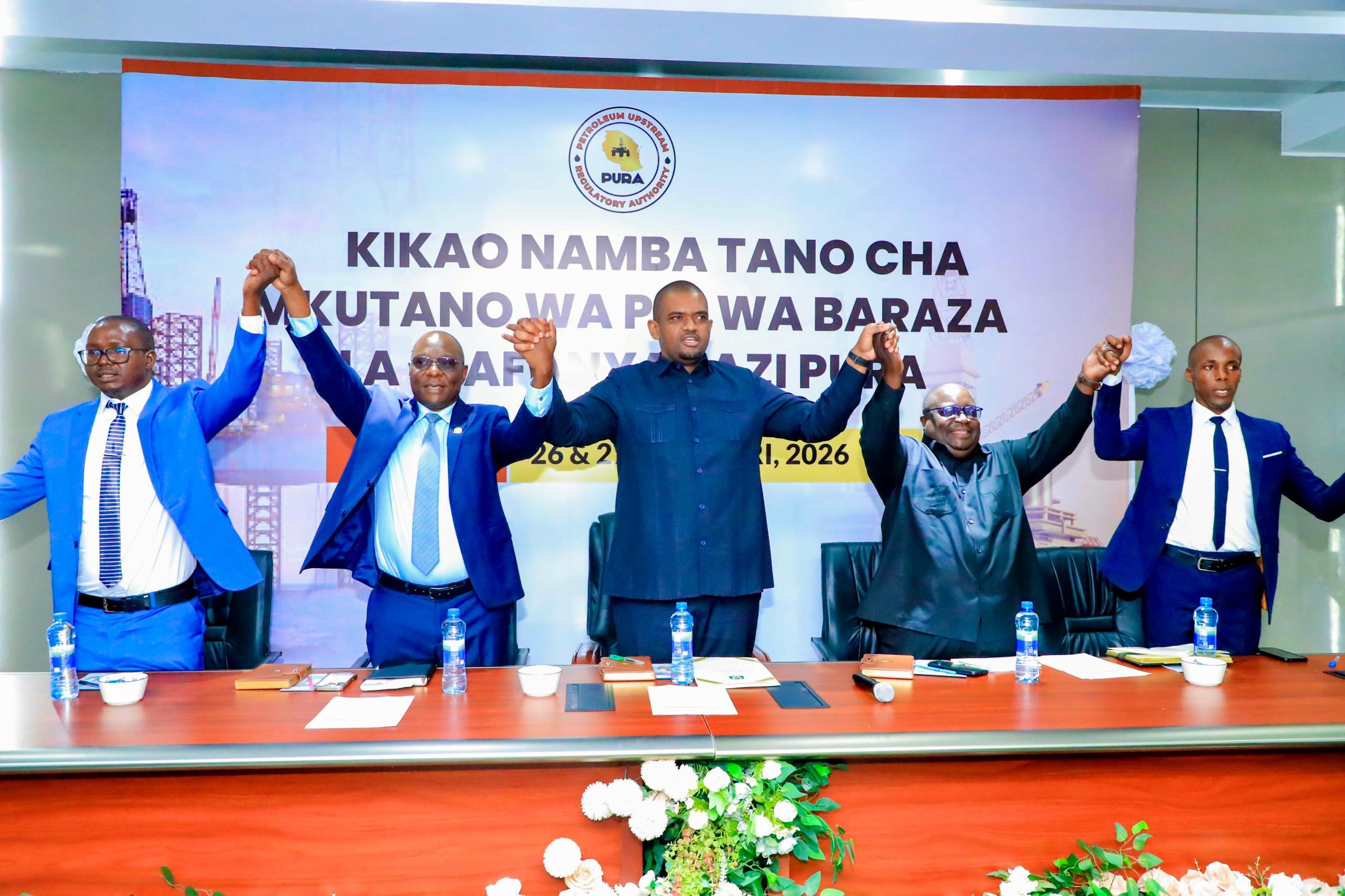
MOROGORO: The Minister for Energy, Deogratious Ndejembi, has urged the Petroleum Upstream Regulatory Authority (PURA) to strengthen its plans for accurate data collection, assessment of exploration blocks, and preparation for full Tanzanian participation in major strategic projects, including the liquefied natural gas (LNG) processing project.
Speaking during the Fifth Session of PURA’s Second Workers’ Council Meeting held in Morogoro today, February 26, 2026, the minister noted that the energy sector holds a unique position in achieving the goals of the National Development Vision 2050, and PURA must ensure its plans align with this vision.
The minister said that the sector has been recognized as one of the key drivers of national economic growth and that institutions under it have a major responsibility to ensure sustainable, safe, and reliable access to oil and gas resources.
Additionally, he called on PURA to intensify efforts in collecting and managing geological data and conducting preliminary exploration, especially given that large areas of the country remain underexplored.
ALSO READ: PURA tasked to accelerate exploration in new oil, gas areas for investment
“Accurate data is the foundation for attracting investment and increasing resource discoveries. We cannot develop the sector without sufficient information and thorough research,” he said.
The Minister also instructed PURA to conduct thorough assessments of existing blocks, particularly in the Tanga, Ruvu, and other regions, to determine whether block holders are carrying out exploration activities as required.
According to the minister, it is unacceptable for blocks to remain in the hands of investors who are not advancing exploration, and regulatory authorities must take action when no progress is being made for the benefit of the nation.
Regarding the LNG project, Ndejembi urged PURA to start early in preparing a capacity-building strategy to manage the project institutionally while encouraging proactive preparation for Tanzanians to participate fully in the LNG value chain rather than waiting for project implementation to begin.
