
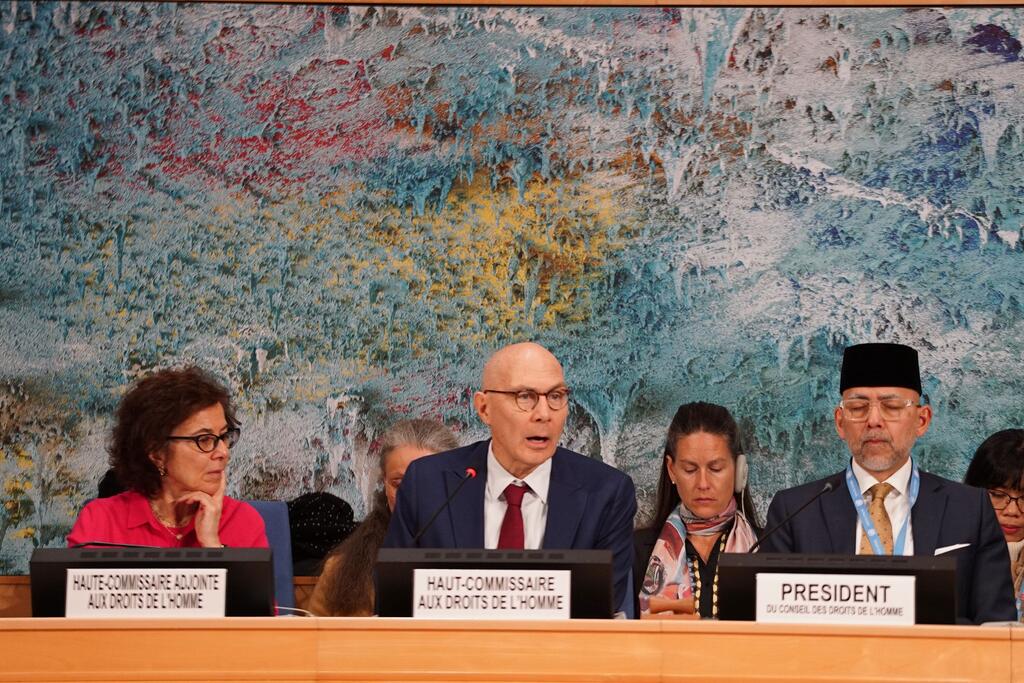

GENEVA: THE United Nations Human Rights Commission has commended Tanzania for its decisive steps to address violent incidents that occurred during and after the October 2025 General Election.
Addressing the 61st Session of the United Nations Human Rights Council in Geneva, UN High Commissioner for Human Rights Volker Türk welcomed Tanzania’s establishment of a national commission of inquiry to investigate violations linked to the polls.
“In a welcome development, Tanzania established a national commission to investigate violations that took place around the elections in October,” Mr Türk said, expressing optimism over the country’s response to the isolated incidents.
Following the unrest that erupted on October 29, 2025, President Samia Suluhu Hassan moved swiftly to form an independent Commission of Inquiry, underscoring her commitment to transparency, accountability and national reconciliation.
Chaired by retired Chief Justice Mohamed Chande Othman, the Commission was granted a broad mandate to investigate the disturbances and recommend measures to strengthen peace and social cohesion.
The president directed the Commission to establish the root causes of the violence, including grievances raised by some youths who took part in protests. It was also instructed to examine statements issued by opposition political parties and assess their relationship with the Independent National Electoral Commission (INEC) during the election period.
In addition, the Commission was tasked with reviewing claims that certain demonstrators may have been financially induced to participate in the unrest, including tracing the source of any such funds.
It will also evaluate whether alternative mechanisms could have resolved disputes without resorting to street protests that resulted in destruction of
property, and assess the measures taken by authorities to restore order. Justice Othman pledged to conduct a thorough, professional and evidence-based investigation.
“We will carry out a detailed inquiry using data and established procedures, and we will leave no stone unturned,” he said, noting that Tanzanians had called for transparency and accountability.
He added that the Commission would focus on the areas most affected, undertake field visits to gather first-hand accounts and operate with powers similar to those of the High Court, including summoning witnesses, who will have the right to legal representation.
Meanwhile, Tanzania reaffirmed its broader and unwavering commitment to human rights and development during the Geneva session.
The Minister for Constitutional and Legal Affairs, Dr Juma Homera, told Council members that the country continues to pursue a people-centred and development-oriented approach to human rights.
“In July 2025, the government launched the Tanzania Development Agenda, Vision 2050, founded on the principles of good governance, peace, security, stability, constitutionalism, the rule of law and respect for human rights,” he said.
Dr Homera also highlighted progress in social services, noting that a universal health insurance scheme was launched in January 2026 to ensure equitable and affordable access to healthcare, particularly for low-income households.
The reform has been complemented by significant expansion of health infrastructure, with the number of health facilities increasing from 8,549 in 2020 to 12,846 in 2025.
He further informed the Council that access to clean and safe water has improved under the Water Sector Development Programme, reaching 72 per cent in rural areas and 89 per cent in urban areas.
In his address, Mr Türk warned that the world is becoming increasingly dangerous, citing a sharp rise in armed conflicts, growing attacks on civilians and weakening respect for international law.
He noted that the number of conflicts worldwide has nearly doubled since 2010 to about 60 and called for renewed commitment to arms control following the expiry of the New START Treaty.
He also cautioned against democratic backsliding globally, repression of civil society, rising hate speech, widening inequality, climate inaction and the risks posed by unregulated artificial intelligence.
Despite the global challenges, the UN rights chief called for stronger accountability, protection of civilians and renewed international cooperation to uphold human rights and the rule of law.