
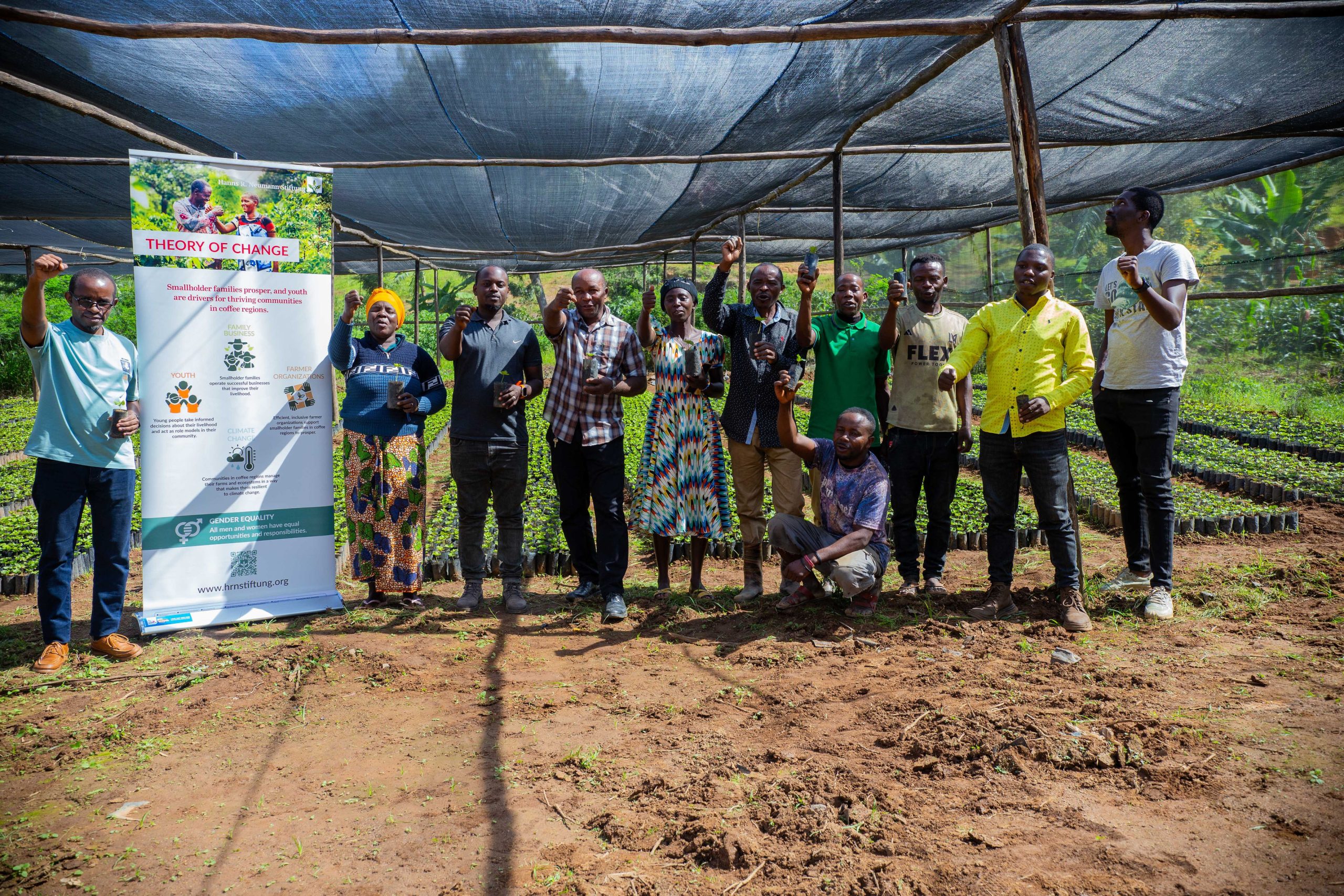

MBINGA: A profound transformation is underway in the highlands of Mbinga, where coffee farmers are recording gains in productivity, profitability and confidence. What began as a technical support initiative has evolved into a broader economic shift, reshaping livelihoods and restoring pride in one of Tanzania’s most important cash crops.
At the centre of this progress is a partnership involving the Government and the German-based non-governmental organisation Hanns R. Neumann Stiftung (HRNS). Over the past three years, HRNS programmes have reached about 2,000 smallholder farmers organised into 65 groups and 10 Agricultural Marketing Cooperative Societies (AMCOS). The focus has been practical training in modern agronomy, nursery management and cooperative governance.
Farmers have adopted improved farming methods, established structured seedling nurseries and integrated agroforestry systems that combine coffee with shade and fruit trees. This approach enhances soil health, moderates temperatures and diversifies household income. More resilient farms are emerging, capable of withstanding climate variability while increasing output.
Leaders of beneficiary groups report measurable results. During a recent visit by HRNS officials, AMCOS representatives cited a rise in coffee prices from an average of 7,000/- per kilogram to above 11,000/- in the latest season. The increase is attributed to improved quality, better post-harvest handling and stronger participation in auction systems.
For farmers, higher prices translate into improved living standards and renewed interest among young people. Agriculture, once viewed as uncertain and unrewarding, is regaining credibility as a viable profession.
Steven Milinga, Chairperson of Ngwindi Group in Mpapa Ward, says structured training has strengthened both production and entrepreneurship. His 29-member group, with near gender parity, has produced 30,000 seedlings towards a target of 150,000. Beyond farming, the group secured a 70m/- loan from the district council to construct a guest house — evidence of widening investment ambitions.
He acknowledges remaining challenges, including the need for shade nets, adequate seedling tubes and improved irrigation systems. However, confidence outweighs constraints. Farmers are planning, borrowing and expanding with a long-term outlook.
Similar progress is visible at Kigoti AMCOS. Chairperson Grace Ndunguru says access to improved seeds supplied by the Tanzania Coffee Research Institute (TaCRI) has raised seedling quality. The cooperative now sells certified seedlings to members and private buyers, generating income that financed the construction of a modern office. Governance and management standards have improved alongside production.
In Kitanda Ward, extension officer January Komba of Namangw’ina Group highlights the impact of improved inputs. Access to quality seeds, water pumps and seedling tubes has reduced transplanting losses and increased survival rates. Farms are healthier and yields higher.
HRNS Agricultural Expert Isack Lungu explains that before the project, farmers lacked quality seedlings, technical knowledge and capital. They worked hard but without structured guidance. Training has equipped them to manage nurseries professionally, apply fertiliser accurately and conduct timely crop protection. The result is stronger production capacity and greater market readiness.
Support has extended beyond skills transfer. Several AMCOS received shade nets, starter seeds and nursery materials. These inputs accelerated the production of disease-resistant seedlings, ensuring long-term sustainability.
Equally significant is the strengthening of cooperative governance. According to HRNS Producer Organisation Trainer Benson Wanyoike, leadership training and market literacy have improved transparency and accountability. Farmers now understand pricing mechanisms, participate actively in auctions and monitor global demand trends. While recent price gains reflect favourable market forces, organised and informed producers are better positioned to benefit.
Diversification has further reduced vulnerability. Beneficiary groups have invested in beekeeping, fish farming, avocado production and small-scale hospitality ventures. New AMCOS offices and guest houses signal a shift from subsistence to enterprise thinking. Income streams are broadening, cushioning households against fluctuations in coffee prices.
Climate resilience remains central to the strategy. HRNS has distributed more than 200,000 shade and fruit trees across Mbinga. These trees regulate farm microclimates, improve soil fertility and absorb carbon emissions. Agroforestry systems protect crops from rising temperatures and erratic rainfall while providing additional produce for sale or consumption.
The transformation extends beyond individual farms. Stronger cooperatives enhance bargaining power, reduce transaction costs and build collective confidence. Organised farmers can access credit, negotiate better prices and invest in shared infrastructure.
HRNS experts have urged continued government support to encourage farmers to join groups and cooperatives. Collective action, they argue, drives efficiency and transparency while enabling knowledge sharing.
Mbinga’s experience demonstrates that targeted agricultural education, access to quality inputs and institutional reform can unlock rural potential. Coffee is once again a symbol of opportunity in the highlands not only as a commodity, but as a catalyst for economic renewal.
Higher prices, improved governance and climate-smart practices are redefining the sector. Farmers who once struggled with low yields and uncertain markets now speak of expansion, investment and generational change. Youth participation is rising as agriculture becomes associated with skill, innovation and enterprise.
The Mbinga model illustrates how coordinated partnerships can convert structural challenges into sustained progress. Through training, cooperative reform and environmental stewardship, smallholder farmers are building competitive, resilient businesses.
Coffee in Mbinga is no longer simply harvested; it is cultivated with strategy and vision. For thousands of families, the crop now represents stability, dignity and shared prosperity — a foundation for long-term rural growth.