

NGORONGORO: NORTHERN Tanzania unfolds like a living travel diary where every mile northward from Dar es Salaam tells a different story.
The long-distance bus journey from the humid coastline into the cooler northern highlands is itself a transition between worlds. Urban traffic gradually thins into open plains, sisal farms and distant escarpments.
Roadside markets flash past in bursts of colour before the land stretches wider and wilder. By the time the road approaches Arusha, the gateway to Tanzania’s famed Northern Circuit, anticipation has replaced routine.
That anticipation reflects a wider national momentum. In 2025, Tanzania officially surpassed its tourism target ahead of schedule, recording approximately 5.3 million visitors and generating nearly 3.9 billion US dollars in revenue.
This surge confirms the Northern Circuit as the backbone of the country’s tourism success. The first great landmark of the journey is the Ngorongoro Conservation Area and its iconic crater. Rising dramatically from the plains, Ngorongoro is the world’s largest intact volcanic caldera.
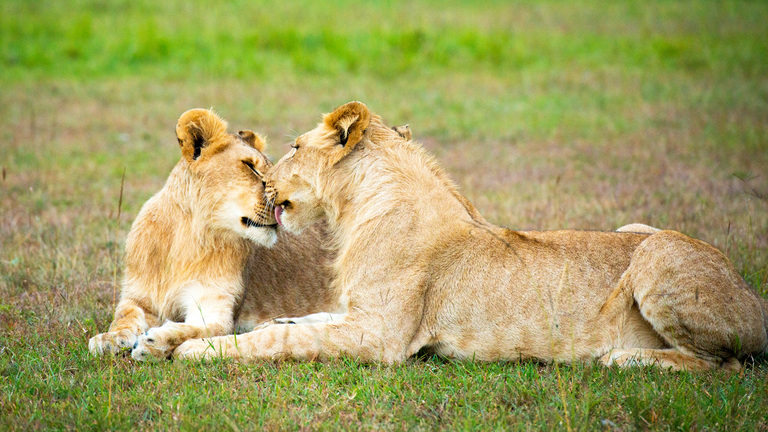
Its rim encloses a vast natural amphitheater teeming with wildlife, lions, elephants, buffaloes, zebras, wildebeests and the critically endangered black rhinoceros. The descent into the crater feels like entering a prehistoric sanctuary where ecosystems function much as they have for centuries.
“Ngorongoro Crater is the largest intact volcanic caldera in the world and hosts one of the highest densities of wildlife in Africa,” according to NCA public relations manager Hamis Dambaya.
According to Tanzania National Parks and NCA Authority reports, it shows that visitor numbers reflect its global appeal.
In recent years, Ngorongoro has recorded more than 700,000 visitors annually, contributing significantly to conservation funding and community development initiatives.
“Ngorongoro Conservation Area receives over 700,000 tourists annually, making it one of Tanzania’s most visited protected areas,” reports states.
Beyond wildlife, Ngorongoro remains home to Maasai pastoralists whose cattle graze along the highland slopes.
The coexistence of wildlife conservation and traditional livelihoods gives the area a unique dual identity, both ecological and cultural. From Ngorongoro, the road winds toward Tarangire National Park, a landscape defined by ancient baobab trees and sweeping savannah.
Tarangire is particularly renowned for its elephant population. During the dry season, hundreds gather along the Tarangire River, their movements shaping the rhythm of the plains.
“Tarangire National Park is famous for its large elephant herds and iconic baobab trees,” according to Tanzania National Parks Authority (TANAPA).
Though quieter than some northern parks, Tarangire’s seasonal migrations are among the most dramatic in East Africa. Giraffes stride across the golden grasslands, while lions and leopards move stealthily between the trees.
Its relative tranquility has made it increasingly popular among visitors seeking less crowded safari experiences. Closer to Arusha town lies Arusha National Park and the towering presence of Mount Meru.
Unlike the vast open plains of Tarangire or Ngorongoro, Arusha National Park offers a compact mosaic of habitats, montane forest, crater lakes, open grasslands and volcanic slopes.
TANAPA reports says, “Arusha National Park boasts a remarkable diversity of landscapes, including the Momella Lakes and Mount Meru, Tanzania’s second highest peak.”
Mount Meru rises to 4,566 metres and provides one of East Africa’s most rewarding trekking experiences. From its summit, climbers can see Mount Kilimanjaro shimmering in the distance.
The park’s forests are home to black-and-white colobus monkeys, whose long tails create striking silhouettes against the canopy.
ALSO READ: Tanzania and Kenya are in a joint bid to combat the Illegal fauna, flora, wildlife trade
Southwest of Arusha lies Lake Manyara National Park, nestled against the dramatic Rift Valley escarpment.
The alkaline lake attracts flamingos that gather in shimmering pink clusters along the shoreline. Lake Manyara National Park is renowned for its tree-climbing lions and large flocks of flamingos.
Though smaller in size compared to other northern parks, Lake Manyara contains remarkable biodiversity within a compact area, from groundwater forests to acacia woodlands and open lake shores.
Further off the main safari route lies Lake Eyasi, where wildlife gives way to anthropology. This remote soda lake is home to the Hadza and Datoga communities. The Hadza are among the last remaining hunter-gatherer societies in Africa.
“The Hadza have probably occupied their current territory for thousands of years with relatively little modification to their basic way of life,” said Momoya Maqwel, a tour guide from Hadzabe and Datoga communities.
Visits to Lake Eyasi focus not on game drives but on cultural exchange, learning about traditional hunting techniques, foraging practices and blacksmithing skills among the Datoga. Heading north again, the terrain grows harsher and more surreal near Lake Natron.
The lake’s high alkalinity gives its waters a reddish hue during certain seasons, caused by salt-loving microorganisms.
It is also East Africa’s primary breeding ground for lesser flamingos. “Lake Natron is a highly alkaline lake and serves as the most important breeding site for lesser flamingos in East Africa,” said Momoya.
Nearby stands Ol Doinyo Lengai, an active volcano known to the Maasai as the Mountain of God. It is the only volcano in the world that erupts carbonatite lava, a rare and unusual geological phenomenon.
“Ol Doinyo Lengai is the only active carbonatite volcano in the world,” said Dr Agnes Gidna, Chief Conservation Officer and Cultural Heritage Specialist at Ngorongoro Lengai Geopark.
While these northern extremes showcase geological drama, the slopes of Kilimanjaro reveal gentler beauty. Materuni Waterfalls, near Moshi, cascade roughly 70 metres through lush greenery.
The hike to the falls passes banana farms and coffee plantations, offering insight into Chagga agricultural traditions.
According to Tanzania Tourism Board, “Materuni Waterfalls is one of the most accessible and scenic waterfalls in the Kilimanjaro region.”
Not far from there lies Lake Chala, a crater lake on the border of Tanzania and Kenya. Its waters shift between deep blue and turquoise depending on sunlight and depth.
“Lake Chala is a caldera lake fedby underground springs, known for its changing colours.”
Smaller but culturally meaningful attractions enrich the northern landscape. Jesus Cave, locally known as CaveJesus Park near Himo, offers a serene environment of rock formations and shaded paths that attract both worshippers and nature lovers.
AALSO READ: Zanzibar to host major African wildlife park
In the Moshi area, Mti Aliojinyongea Mangimeru, stands as a local heritage landmark, tied to community folklore and oral history.
Such sites may not appear prominently in international brochures, yet they reflect the living memory embedded in northern Tanzania’s environment.
Finally, south of Moshi stretches Bwawa la Nyumba ya Mungu, the Nyumba ya Mungu Dam reservoir. Built in the late 1960s on the Pangani River, the dam supports hydroelectric generation and irrigation while providing scenic fishing and boating opportunities.
“Nyumba ya Mungu Dam was constructed to support hydroelectric power generation and irrigation in northern Tanzania,” according to Ministry of Energy report. As 2026 progresses, the Tanzanian government continues aiming higher.
The national target now looks toward attracting eight million tourists annually by 2030. “Tanzania has set a goal of reaching eight million tourists annually by 2030.”
According to Ministry of Natural Resources and Tourism, 2025 policy statement.
Northern Tanzania remains central to that ambition. From Ngorongoro’s wildlife spectacle to Tarangire’s elephants, from the cultural resilience of Lake Eyasi to the volcanic drama of Lake Natron, the region presents an interconnected narrative of ecology, culture and economic growth.
The road north from Dar es Salaam may begin as an ordinary bus journey, but it leads into a corridor of extraordinary contrasts, a living atlas where ancient landscapes continue shaping modern opportunity.