
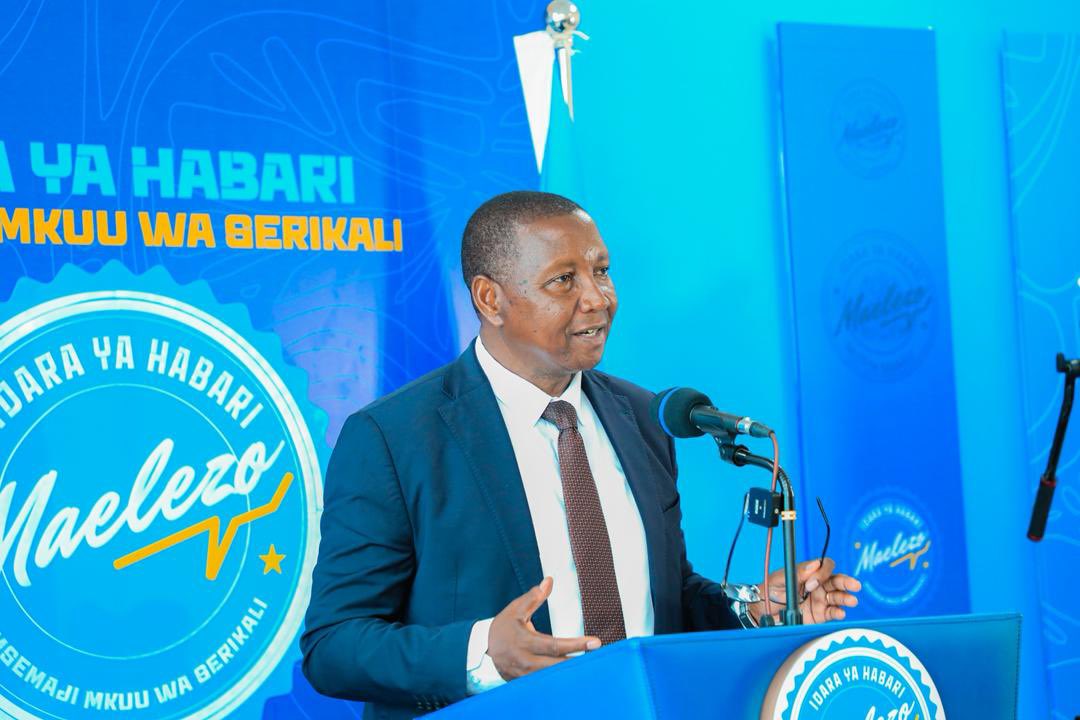

DODOMA: THE Ministry of Education, Science and Technology, in collaboration with stakeholders from both the public and private sectors, has developed a joint programme aimed at addressing the shortage of professionals with practical skills and bridging the gap between classroom-based knowledge and labour market demands.
Prof Adolf Mkenda unveiled the framework in Dodoma yesterday while presenting his ministry’s 100-day performance report, noting that it will be officially launched and become operational on February 9, 2026, in Dar es Salaam.
The minister said the framework fulfils President Samia Suluhu Hassan’s third promise in the education sector, which she pledged to implement within her first 100 days in office. According to Prof Mkenda, the framework, aligned with national policies and key strategies, including Vision 2050, is guided by the slogan: “We plan together and we implement training together.”
“It is the government’s commitment to build strong, systematic and sustainable partnerships between institutions providing middle- and higher-level education and industries, to ensure that education and training match the actual needs of productive sectors,” he said.
Under the framework, he added, young people will acquire relevant skills while the economy benefits from a capable and productive workforce, laying a foundation for development, innovation and inclusive economic transformation. priority groups, including children, pregnant women and the elderly, as well as covering chronic illnesses for citizens unable to pay.
He also noted that the government has abolished restrictions that previously prevented bereaved families from collecting the bodies of their loved ones due to unpaid hospital bills.” This is the true meaning of Utu (humanity) in our national agenda,” he said.
On the economy, the Prime Minister dismissed claims that the country is facing financial distress, saying the Bank of Tanzania’s planned sale of part of its gold reserves is a routine international practice used to support strategic infrastructure projects.
“The Bank of Tanzania manages the country’s reserves professionally. We should not be misled, the government has not run out of funds,” he said.
Prior to the Prime Minister’s speech, Cabinet ministers outlined measures being taken in their respective sectors to advance the president’s vision for an inclusive and competitive economy.
Finance Minister Ambassador Hamis Mussa Omary said the president’s address aligns with long-term strategies to accelerate private sector-led economic transformation.
Through the Higher Education for Economic Transformation Project (HEET), the minister said a total of 33 industrial advisory committees have been formed and 255 memoranda of understanding (MoUs) between higher learning institutions, universities and industries have been signed to align classroom training with labour market needs.
Elaborating further, he said that on the VETA side, six committees have been formed from sectoral clusters to link training institutions with industries, namely: Agriculture; transport and manufacturing; sports and arts; the blue economy and mining; tourism; ICT and business services; and construction and housing.
“For NACTVET, linkage areas have been organised around business, tourism and planning; health and allied sciences; and science and technology. We encourage every institution to establish partnerships through agreements to support practical training,” he said, adding:
“We have implemented the framework and will continue to oversee its execution professionally to deliver value to the nation, particularly in addressing youth employment challenges.”
He said that since President Samia assumed office, higher education loan funding has increased from 464bn/-, with projections for the next financial year exceeding 1tri/-.