
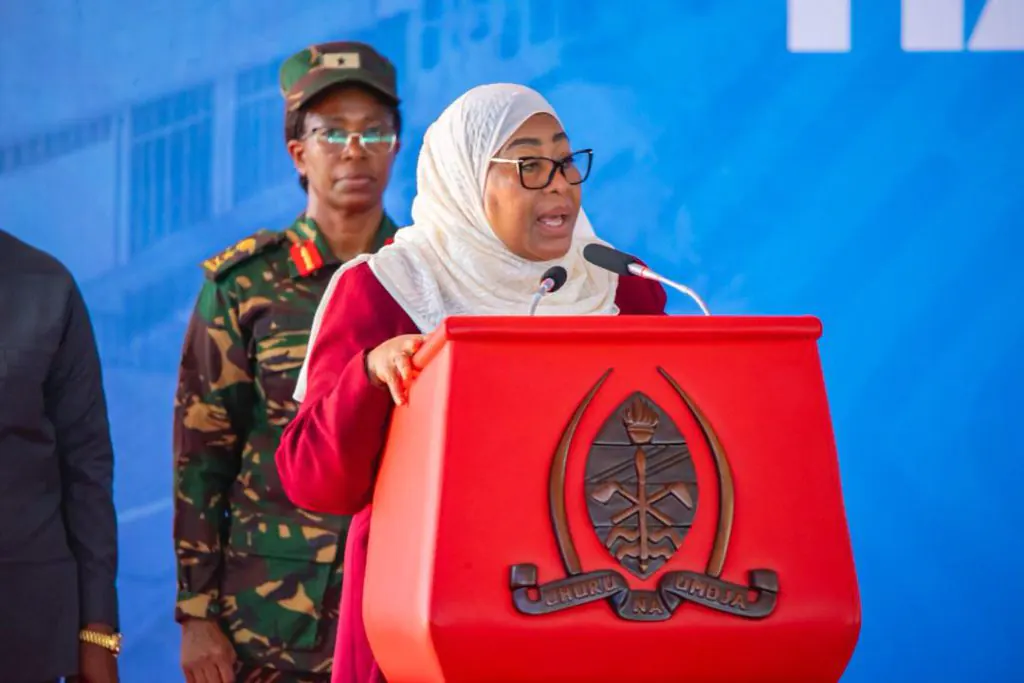

DODOMA: WITH President Samia Suluhu Hassan’s second term now past the 100-day mark, a clearer picture is emerging of the economic direction her renewed mandate is charting for Tanzania. Industrial activity is expanding beyond major cities. Young people are increasingly transitioning from job seekers to job creators.
Value addition is taking root across the production chain, from farms to factories to markets. These developments are not accidental. They reflect a deliberate strategy by the sixth phase government to build an inclusive, competitive and employment-intensive industrial economy.
At the centre of this transformation is the Ministry of Industry and Trade, whose performance between November 2025 and January 2026 mirrors President Samia’s ambition to position Tanzania as a regional and global manufacturing hub.
One of the clearest indicators of progress has been the expansion of financing for youth and small enterprises. Through the Small Industries Development Organisation (SIDO), the ministry disbursed 193 loans worth 821.7m/- under the National Entrepreneurship Development Fund (NEDF) and the Credit Guarantee Scheme (CGS).
The support reached entrepreneurs in 19 regions from Tanga, Tabora and Katavi to Rukwa, Iringa, Morogoro, Ruvuma and Mwanza, reflecting a nationwide push to broaden economic participation.
The impact has been immediate. A total of 546 jobs were created across manufacturing, agriculture, livestock, trade and services, with 436 secured by young people. For many beneficiaries, the loans represent more than capital; they mark entry into productive enterprise, reduced vulnerability to unemployment and increased income circulation within local economies.
“We are seeing young Tanzanians move from waiting for opportunities to creating them,” an industry official noted, underscoring the shift in mindset. Beyond financing, the government is physically decentralising industry by mapping industrial clusters and estates based on regional comparative advantages.
During the period under review, assessments were completed in 11 regions to identify high-potential value-addition areas.
The emerging industrial ecosystem includes rice processing in Magugu (Manyara) and Mbeya; sunflower oil production in Singida and Kondoa (Dodoma); forestry products in Kilolo (Iringa); carpentry and metal works in Kahama (Shinyanga) and Kihonda (Morogoro); cassava and sardine processing in Nyasa (Ruvuma); leather processing in Usangi (Kilimanjaro); and palm oil processing in Bitale (Kigoma).
Four SIDO industrial estates in Kigoma, Morogoro, Mbeya and Singida are ready for launch. Together, they will host 127 factories and create more than 4,600 jobs, the majority earmarked for youth. Presenting the 100-day performance report in Dodoma recently, Minister for Industry and Trade, Ms Judith Kapinga highlighted new programmes aimed at transforming youth participation in industry.
ALSO READ: Why youth must champion peace, unity and development
In partnership with the Tanzania Investment and Special Economic Zones Authority (TISEZA) and SIDO, the government has introduced a Special Youth Investment Programme targeting 100,000 youth-led enterprises. The initiative combines financing, dedicated industrial zones and support for accessing international markets.
Designated zones include Kigamboni (Dar es Salaam), Nyakato (Mwanza), Azimio (Arusha), Songwe (Mbeya), Uvinza (Kigoma) and Nyasa (Ruvuma). In parallel, the Special Industrial Growth Programme aims to establish 9,048 factories and create more than 6.5 million jobs over six years.
“These initiatives mean industries are moving closer to villages, farmers’ incomes are rising through value addition and thousands of young Tanzanians are being empowered to own and operate productive enterprises,” Ms Kapinga said.
Within the first 100 days, the Tanzania Engineering and Manufacturing Design Organisation (TEMDO) completed three agro-processing factories that are now in commercial production, with another set scheduled for completion this month.
The facilities include a briquette plant in Nyang’wale, Geita, converting sawdust and crop residues into clean energy; a sunflower oil extraction plant operated by Kijenge Animal Products Ltd in Arusha, producing up to 9,000 litres per day and a cassava processing facility in Handeni, Tanga, with a daily capacity of three tonnes of flour.
Meanwhile, a vegetable oil refining plant at Sokoine University of Agriculture (SUA) is nearing completion. The project is expected to reduce edible oil imports while generating employment.
Collectively, these facilities are projected to create more than 300 direct and 700 indirect jobs, alongside environmental benefits. Investor confidence also strengthened during the review period. Through the National Development Corporation (NDC), three major investors committed to establishing industries at the TAMCO Industrial Park: Hyundai Automobile Manufacturing (vehicle assembly), Goodlife Investment Tanzania (electric vehicle assembly) and Sanda Max Group Ltd (animal feed production).
Together, these projects are expected to generate over 150 direct and 500 indirect jobs. NDC also supervised Tanzania Biotech Products Limited (TBPL) in Coast Region, where local production of biopesticides and biofertilisers has enhanced malaria control efforts, boosted agricultural productivity and reduced import dependence. Exports to Uganda were recorded.
Business formalisation accelerated through the Business Registrations and Licensing Agency (BRELA), which registered 4,233 companies and 7,498 business names, the majority youthowned. During the same period, 141 industrial licences, 4,907 Class A business licences and 881 trademarks and service marks were issued. Increased media outreach and exhibitions further strengthened compliance and innovation.
The College of Business Education (CBE) secured land for a future Living Campus and submitted a 10-million-US-dollar proposal under the Higher Education for Economic Transformation (HEET) programme to expand entrepreneurship and business training. More than 3,500 youth received training in entrepreneurship, incubation and innovation.
The Tanzania Bureau of Standards (TBS) trained 1,059 entrepreneurs in product quality, marketing and management, issuing 192 quality marks free of charge. Meanwhile, the Tanzania Industrial Research and Development Organisation (TIRDO) advanced research on critical minerals essential for clean energy and electric mobility, laying groundwork for future industrial expansion.
Agriculture-linked industries also recorded notable gains. Through the Warehouse Receipt System, cashew farmers earned over 1tri/- as 438,000 tonnes were traded digitally at an average price of 2,520/- per kilogramme.
The system generated more than 7,000 jobs and increased local government revenues. Digital trade platforms, including the Tanzania Trade Portal, ITMIS and TanTrade applications, reached tens of thousands of users, improving market access and information flow. The “Made in Tanzania” brand continued gaining visibility domestically and internationally.
ALSO READ: Minister directs boards of trustees to safeguard public assets
Taken together, the first 100 days of President Samia’s second term present an economy being restructured from the ground up. The transformation is not defined by rhetoric but by targeted interventions: decentralising industry, equipping youth with capital and skills, strengthening value chains and enhancing competitiveness.
As Tanzania moves beyond the symbolic 100-day milestone, the contours of its next industrial chapter are becoming clearer, local in impact, inclusive in design and anchored in long-term sustainability and global competitiveness.