

DAR ES SALAAM: IN my view, Dr Samia Suluhu Hassan’s administration over these 100 days has pursued pragmatic policy measures with measurable impacts on jobs, investment, industrialisation and long-term economic strategy.
The economic direction she is charting aims to reposition Tanzania as a stable, investmentfriendly and diversified economy, anchored in value addition, youth empowerment, structural reform and macroeconomic stability, thereby making Tanzania an economic powerhouse in the region.
A few economic indicators speak for themselves. Job creation and industrial momentum are unquestionable. One of the most tangible indicators of Dr Samia’s early economic leadership has been the focus on employment and industry at the bigger picture aimed at reducing unemployment and widening the tax base.
Scanning the Ministry of Industry and Trade, I have noted that in the first 100 days of her new term, more than 540 direct jobs have been created through initiatives linked to youth financing and business expansion, with thousands more anticipated through downstream activities and new factories via economic multiplier effects.
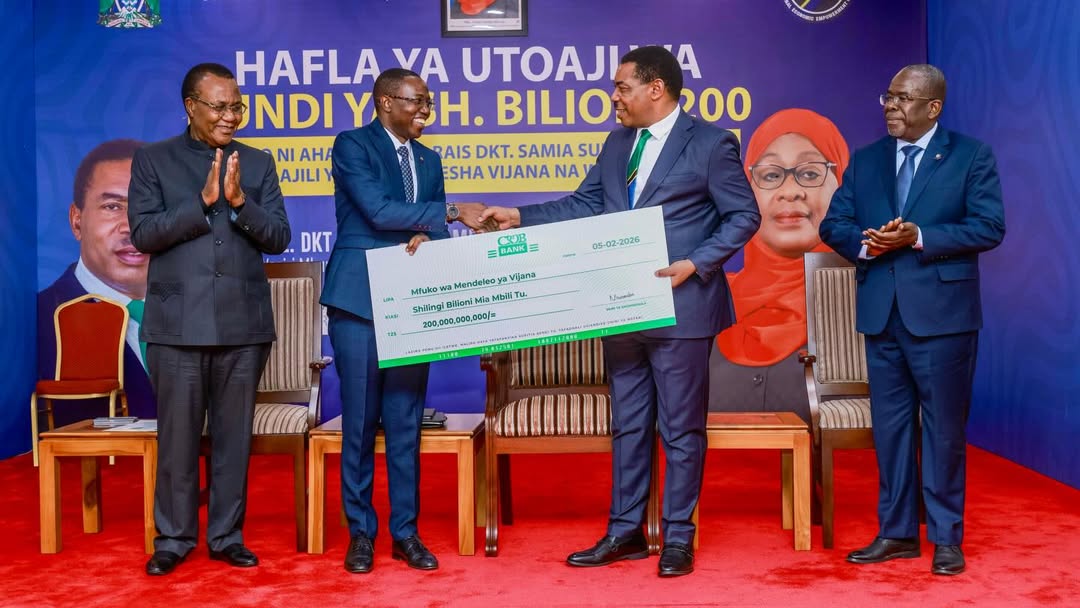
Examples include expanded lending to small enterprises—193 loans totalling over 820m/-, which have already generated more than 540 jobs, particularly for low-income earners, and more to be created from the envisaged 200 bn/- earmarked for SMEs.
Additionally, several factory developments are underway, including those related to automotive assembly (Hyundai), consumer goods (Goodlife Investment), and industrial equipment (Sanda Max Group), all expected to cumulatively create hundreds of direct and thousands of indirect jobs, increasing Tanzania’s manufacturing footprint and reducing reliance on imported finished goods.
The view aligns with President Samia’s industrialisation agenda, signalling a shift from commodity dependence to value-added production. By prioritising enterprise support and manufacturing, her government targets youth unemployment while strengthening Tanzania’s industrial base to support sustainable, long-term growth beyond the informal and serviceled sectors.
Furthermore, recognising that sustainable economic growth depends on skills and human capital development, Dr Samia’s administration within these 100 days has worked to address the persistentskills gap between what Tanzania’s labour market demands and what its education system supplies.
The Ministry of Education, Science and Technology, in collaboration with public and private stakeholders, launched a framework aimed at bridging practical skills gaps, particularly in sectors driving current and future growth.
This focus on practical, market-aligned training, in my view, is particularly important in agriculture, manufacturing, digital technology, and services. It reflects an understanding that building not only a modern economy but also a digitally powered economy requires not just jobs but also skilled workers who can increase productivity, innovate, and compete internationally.
In my view, by prioritising skills both within formal education and through technical and vocational training, the government is laying the groundwork for a workforce capable of sustaining long-term economic growth and remaining competitive.
Likewise, on macroeconomic stability and investment confidence, the facts speak for themselves. Dr Samia’s 100 days in office have also emphasised macroeconomic discipline and stability—crucial ingredients for attracting investment and bolstering economic resilience.
According to Bank on Tanzania (BoT) data, Tanzania’s economy maintained steady growth of around 5.8 per cent in 2025, with inflation held at approximately 3.3–3.4 per cent and foreign exchange reserves rising to about 6.6 billion US dollars, covering more than five months of imports.
Public debt has remained at sustainable levels, allowing the government room for productive spending without triggering fiscal distress.
Analysing a country’s growth and development, macroeconomic stability is particularly important for a developing economy such as Tanzania’s. Stable inflation and adequate reserves not only protect ordinary citizens’ purchasing power but also signal confidence to investors and financial markets.
Improved credit ratings and an expanding Dar es Salaam Stock Exchange, where market capitalisation grew by over 34 per cent—bolster Tanzania’s reputation as a credible investment destination in the region.
As an economist analyst, these outcomes are not accidental but the result of targeted government strategies to strengthen governance systems, tighten public financial management, and diversify revenue streams.
They reflect a departure from short-term, politically driven spending toward a more strategic, growth-oriented fiscal framework.
Under President Samia’s leadership, Tanzania has articulated an ambitious foreign and investment policy during these 100 days, placing it on a trajectory that extends beyond domestic reforms to encompass active economic diplomacy.
In 2025 alone, Tanzania recorded a record 927 investment projects worth over 11 billion US dollars, a 19 per cent increase from the previous year, the highest since the establishment of the national investment promotion agency. These projects are expected to create more than 162,000 jobs, with a significant portion of them led by domestic investors.
Partnerships with international partners, particularly China, have, in my view, underscored support for priority infrastructure such as the Tanzania–Zambia Railway (TAZARA), water supply projects, and energy initiatives, often on concessional financing terms.
This strategic cooperation is critical for improving logistics, connectivity, and trade, factors that make Tanzania more attractive to both regional and global commerce destinations.
The government has intensified initiatives to diversify the economic base. Within these 100 days, efforts include support for agriculture, agro-processing, pharmaceuticals, clean energy, and digital transformation, as well as policies to increase formal business registration, leading to a notable surge in youth-owned enterprises and in industrial licenses issued to young entrepreneurs.
In the broader economic context, this diversification not only enhances economic resilience but also expands Tanzania’s value-chain participation, allowing producers to earn a higher share of profits from processed and manufactured goods rather than solely from raw-material exports.
Importantly, Dr Samia has consistently framed her economic policies within the context of Tanzania’s National Development Vision 2050 (Dira 2050)— a long-term blueprint targeting inclusive growth, technological advancement, and double-digit growth rates.
By pursuing reforms with an eye toward structural transformation, her administration, within these 100 days, aims, in my view, to shift from reliance on primary commodity exports to a more diversified, innovation-led economic model.
Key components of this vision clearly include expanding digital platforms for tax and revenue collection, tightening oversight to reduce revenue leakage, and encouraging collaboration between the private sector and development partners. Directing economic growth toward tangible improvements in living standards, jobs, services, education signifies a people-centred development philosophy.
What many need to understand is that economic progress under Dr Samia’s 100-day watch has not occurred in a political vacuum. The president has emphasised national unity and reconciliation, arguing that peace and social cohesion are prerequisites for economic growth and investor confidence.
Her administration’s outreach to stakeholders, including religious and community leaders aims to reduce tensions and foster a stable environment conducive to long-term development. While political debates continue, the explicit link between stability and economic health reflects a broader understanding that economic development is inseparable from governance and social harmony.
I could go on, but to put it in a broader context, President Dr Samia Suluhu Hassan’s first 100 days in office have demonstrated a pragmatic, multidimensional economic strategy. Far from relying on short-term fixes, her administration appears to be laying the foundations of a robust, diversified, and inclusive economy.
With measurable achievements in job creation, investment facilitation, macroeconomic stability, structural reforms, and long-term planning, all while reinforcing social stabilityTanzania is charting a course toward sustainable and resilient growth.
Evidence from this period shows that early momentum is being converted into institutional and policy gains, which, if sustained, could transform Tanzania into a more competitive player in the East African and global economies. Key economic indicators during the first 100 days of her latest term highlight early momentum towards the promised land.
GDP growth strengthened to 5.8 per cent. Inflation remained low and stable. Foreign reserves rose to USD 6.6 billion, FDI inflows accelerated to 1.7 billion US dollars, investment projects and job creation surged, and youth financing translated into direct job creation.
Over the past 100 days, Dr Samia has shown me that there is a solution to any challenge. I commend Dr Samia and VicePresident Dr Emmanuel Nchimbi for their pioneering joint efforts to guide Tanzanians towards the promised land.