
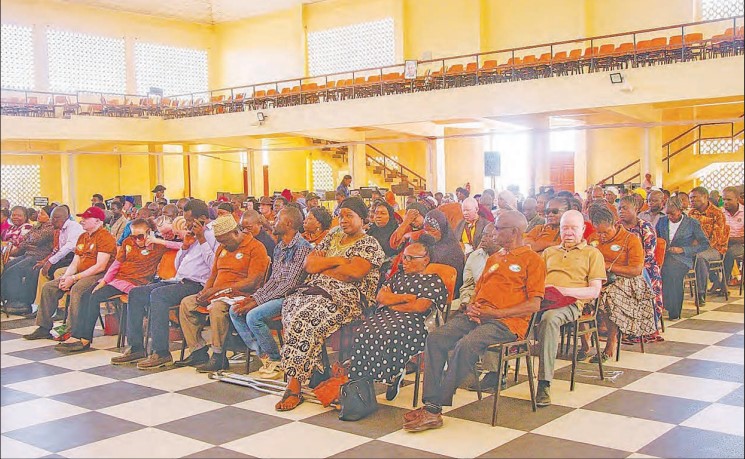

DODOMA: THE Public Procurement Regulatory Authority (PPRA) has intensified efforts to ensure special groups including women, youth, persons with disabilities and the elderly secure a fair share of opportunities in public procurement across the country.
According to PPRA, women remain among those facing persistent obstacles in accessing economic opportunities, prompting the Public Procurement Act, 2023 to provide dedicated preferences for womenled groups so they can benefit from tendering processes.
Many young people also lack income-generating opportunities and the government has introduced provisions that will prioritise youth entrepreneurs in accessing tenders and government contracts.
Persons with disabilities, recognised by the government as a crucial economic group, have also been allocated tailored measures to support their participation. The elderly, aged 60 and above, benefit from similar support to ensure they, too, have a place in national development through public procurement.
The PPRA empowerment drive includes organising specialised forums for these groups to raise awareness of their preferential access within the National e-Procurement System of Tanzania (NeST), alongside public education through the media, creative arts and music.
Within the category of persons with disabilities, PPRA has equipped beneficiaries with training and specialised devices to help them monitor tenders and engage effectively. Introduced in July 2023, the NeST system has transformed procurement by making tendering faster, more efficient and transparent.
Eligible Tanzanians can now register, apply for tenders, sign contracts and receive payments electronically from any location, a shift that significantly widens access for special groups. PPRA notes that these groups, besides receiving dedicated tenders, can also compete in general tenders open to companies.
ALSO READ: Why e-Government key in cooperatives reforms
In November 2025, PPRA signed a collaboration agreement with the Vocational Education and Training Authority (VETA) to expand outreach. Through this partnership, VETA known for producing skilled artisans will support the registration and empowerment of special groups to enhance their chances of securing government tenders.
PPRA Director General, Mr Dennis Simba, said the steps required for special groups to access public tenders are few and simple and the partnership with VETA will help build the capacity of youth, women, persons with disabilities and the elderly, enabling them to undertake various works offered through public procurement.
As part of its public awareness strategy, PPRA recently launched a film titled ‘Winga (Middleman) to educate the public on the importance of registering directly on NeST for government tenders.
The film highlights the dangers of relying on intermediaries who demand payment in exchange for false promises of tender access. PPRA Communications Manager, Ms Remija Salvatory, said there is no middleman in public procurement and the only legitimate route to tender opportunities is through direct self-registration on the NeST platform.
She added that the film is aimed at reaching audiences who may not attend formal training but consume local films, helping them discover and pursue tender opportunities.
She urged Tanzanians to act as ambassadors and raise public awareness that public procurement offers real opportunities to do business with the government, especially for members of special groups. Under the Public Procurement Act, 2023, procuring entities are required to allocate 30 per cent of their annual procurement budget to special groups including youth, persons with disabilities, women and the elderly.
PPRA notes that the public procurement sector accounts for more than 70 per cent of the government’s annual budget, meaning the opportunities available are vast. With more than 5tr/- allocated to public tenders annually, PPRA believes that if the opportunities reach the intended beneficiaries, the country could create millions of jobs. Despite the huge potential, only 1,000 special groups have been registered on NeST so far.
PPRA says that contracts worth approximately 24bn/- have been awarded to these groups since the system became operational, but the number of registered groups remains far below expectations. The target for the 2025/2026 financial year is to register 20,000 groups.
Special groups are encouraged to form clusters of between five and 20 members and obtain registration from an enabling institution such as a local government authority or VETA. Once listed on PPRA’s register of special groups, they are supported through preliminary registration on NeST before completing the process and applying for public tenders.
PPRA reaffirmed its commitment to closely monitoring procuring entities to ensure compliance with the 30 per cent allocation requirement and to continue creating awareness nationwide so that special groups can fully capitalise on the opportunities available in public procurement.