
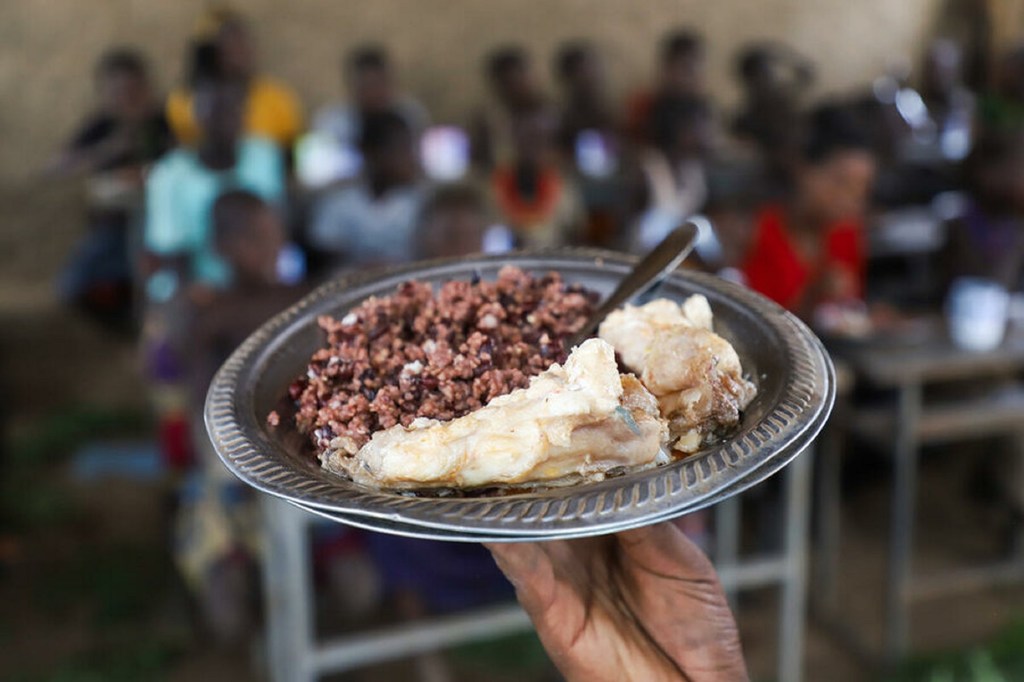

BUKOBA: KYERWA District in Kagera Region has recorded a 97.6 per cent performance rate in its school feeding programme for secondary school students.
Out of 16,830 students attending secondary schools in the district, about 16,419 received meals, reflecting the high coverage.
Kagera Regional Education Officer (REO), Mr Michael Lighola said that school feeding programmes are vital for the physical, mental, and psychosocial development of school-age children and adolescents.
“Attending classes hungry severely affects children’s and adolescents’ ability to learn, thrive, and realise their full potential,” he said.
He further explained that out of 317 secondary schools in the region, 312 are providing meals to students.
At the primary level, 1,011 out of 1,069 schools offer meals to pupils. Region-wide, out of 173,179 secondary school students, about 135,559 are receiving daily meals, indicating a 78.2 per cent coverage.
For primary schools, out of 694,730 pupils, 476,094 (68.5 per cent) receive meals. Missenyi Council achieved 95.8 per cent coverage among primary school pupils, with 54,032 out of 56,386 pupils receiving meals.
ALSO READ: WVT launches school feeding awareness campaign
Bukoba District Council recorded 94.7 per cent, serving 70,355 out of 74,286 primary school pupils. Mr Lighola urged parents and guardians to work closely with school boards to ensure that pupils and students continue to receive meals during class hours.
“School feeding programmes are critical in improving academic performance. A recent baseline study indicated that academic performance increased from 40 to 62 per cent between January and March last year. We aim to reach 90 per cent by August this year. A hungry child cannot concentrate properly on studies and may even be tempted into wrongdoing,” Mr Lighola noted.
He added that school feeding can help address nutritional challenges in the community, particularly for children at risk of malnutrition.
Key components of the National School Feeding Guideline include the importance of school meals, school management of the programme, stakeholder responsibilities, community mobilisation and local contributions, and the use of data management systems.
School feeding programmes, sometimes referred to as school meal programmes, regularly provide nutritious food to children and adolescents attending school.