
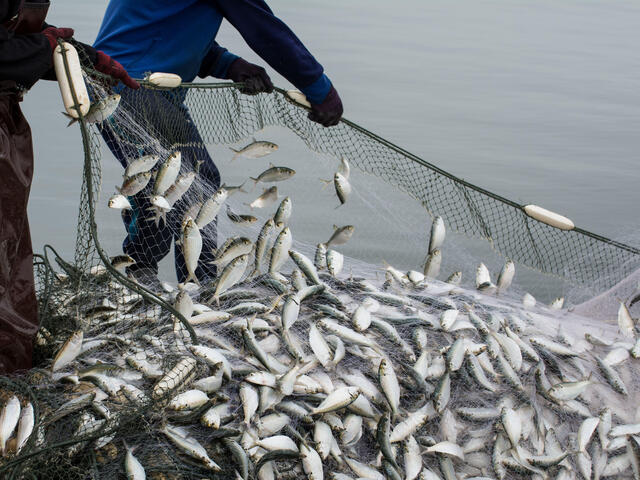

DAR ES SALAAM: THE country’s aquatic food systems sustain millions of livelihoods across inland lakes and along the Indian Ocean coastline.
Yet beneath this economic promise lies a structural imbalance that continues to undermine productivity and shared prosperity, persistent gaps in Gender Equality, Disability and Social Inclusion (GEDSI).
These gaps took centre stage at a Regional GEDSI workshop convened in the country, bringing together stakeholders from government, research institutions, academia, civil society and development partners from Mozambique, Nigeria and Tanzania.
The forum sought to move beyond rhetoric by forging a shared framework for embedding GEDSI principles into fisheries, aquaculture and climate-related initiatives, while designing a robust Theory of Change to guide inclusive transformation of aquatic food systems.
The Tanzania Fisheries Research Institute Director General, Dr Ismail Kimirei, said when representing his Permanent Secretary at the meeting, that sustainable transformation of the sector requires deliberate inclusion.
“Equitable participation,” he noted, “is not only a social justice imperative but a productivity and governance priority”.
Academic institutions signalled similar urgency. The University of Dar es Salaam’s College of Agriculture and Food Sciences Principal, Dr Mkabwa Manoko, stressed the importance of strengthening practical capacity to integrate GEDSI into research design, marine resource management and funding proposals.
He said when represented the Vice-Chancellor, Prof William Anangisye, that participants were unequivocal, they are seeking operational tools and implementation pathways, not abstract theory that can be embedded into planning, monitoring and evaluation systems. Development partners echoed the call for operational clarity.
United Kingdom International Development representative Ms Glory Mramba underscored the importance of a nationally owned Theory of Change capable of aligning policy, partnerships and capital flows beyond individual donor cycles.
Discussions revealed persistent structural inequities within the country’s aquatic food systems.
Women remain heavily concentrated in lower-value segments of the value chain, such as small-scale processing and retail trading, while participation in high-return activities, boat ownership, commercial aquaculture operations, exportoriented processing and large-scale distribution, remains limited.
This segmentation constrains income growth, asset accumulation and long-term economic empowerment.
The participation of people with disabilities and individuals with special needs is even more limited.
While equity considerations may be acknowledged in policy frameworks, targeted inclusion mechanisms are largely absent.
Inaccessible infrastructure, lack of adaptive technologies and minimal data disaggregation reinforce institutional blind spots, effectively excluding a significant pool of potential producers and entrepreneurs from one of the country’s most dynamic sectors.
Youth engagement presents a similarly complex challenge.
ALSO READ: Legislators laud President Samia’s reforms in fisheries sector
Although young people constitute a substantial share of those involved in wild-catch fisheries, many do not equitably benefit from profits.
Limited asset ownership, unequal income distribution and restricted participation in decision-making processes confine them to labourintensive roles with limited upward mobility.
This imbalance not only undermines social equity but also constrains innovation and sector renewal.
Compounding these structural challenges is the prevalence of Gender-Based Violence (GBV) in some fishing communities.
GBV undermines women’s safety, dignity and economic participation, creating conditions that directly affect workforce stability and productivity.
Without addressing these risks, economic empowerment initiatives may fail to achieve sustainable outcomes.
Structural barriers extend beyond social norms. Limited access to credit and financial services disproportionately affects women, youth and persons with disabilities who often lack collateral or formal credit histories.
Weak extension systems, digital access gaps and information asymmetry further restrict participation in emerging opportunities.
Even communication methods can unintentionally exclude marginalised groups when outreach strategies are not intentionally diversified. Infrastructure deficits further reduce competitiveness.
Inadequate storage facilities, weak cold-chain systems and limited processing capacity diminish product quality and market access.
Coupled with insufficient skills development and limited access to modern technologies, these constraints erode efficiency and limit the sector’s ability to compete regionally and globally.
Climate change adds urgency to reform. Rising temperatures, erratic rainfall and shifting aquatic ecosystems disproportionately affect vulnerable communities.
Yet climate-smart aquaculture and Integrated Multi-Trophic Aquaculture (IMTA) pilots also offer entry points for inclusive reform if designed intentionally to expand access to capital, training, cooperative structures, digital technologies and leadership participation.
Through application of the Reach–Benefit–Empower (RBET) framework, participants emphasised that transformation must go beyond numerical participation.
It requires shifts in ownership patterns, profit-sharing mechanisms and governance representation.
Country reflections from Mozambique, Nigeria and Tanzania revealed strong convergence.
Shared priorities include conducting GEDSI baseline assessments, strengthening extension services, integrating gender and climate considerations into fisheries and aquaculture policies, mobilising inclusive financing, promoting digital innovation and upgrading storage and processing systems.
Importantly, countries committed to phased transformation targets to ensure measurable progress.
For business leaders and investors, the case is clear: Inclusion is not peripheral to growth, it is central to it. Inclusive aquatic food systems are more productive, more innovative and more resilient.
When women access higher-value nodes of the value chain, reinvestment rates increase. When youth gain equitable profit-sharing and leadership opportunities, entrepreneurial dynamism strengthens.
When persons with disabilities are included through adaptive technologies and targeted financing, untapped human capital contributes to national output. Equity and competitiveness are mutually reinforcing.
A nationally anchored Theory of Change can align policy reform, institutional accountability and capital flows, ensuring inclusion becomes embedded in governance systems rather than treated as a short-term project objective.
The workshop concluded with a shared regional commitment to advancing inclusive, resilient and regenerative aquatic food systems.
The consensus was unmistakable, systemic transformation requires institutional accountability, technological modernisation, integration of traditional knowledge and sustained cross-country collaboration.
Tanzania’s aquatic food systems hold immense economic potential. Unlocking that potential will depend on whether the sector deliberately restructures itself to ensure women, youth and persons with disabilities are not peripheral actors, but central drivers of growth.
Inclusive reform is no longer optional, it is fundamental to sustainable productivity, climate resilience and long-term prosperity in the blue economy.