
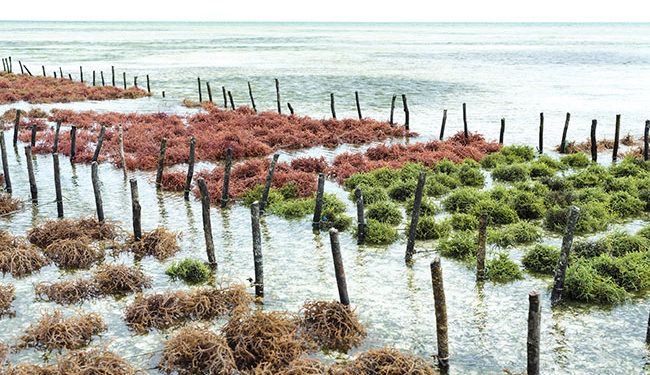

DAR ES SALAAM: SEA moss (seaweed) production in Tanzania, particularly in Zanzibar, is a major coastal industry, ranking as Africa’s 3rd largest producer, with over 25,000 farmers, 80-88% of whom are women.
Centered in Zanzibar and coastal areas like Bagamoyo, it is a crucial income source, focusing on Eucheuma Cottonii and Spinosum for export and local value added products. Key Aspects of Sea Moss Production in Tanzania:
• Production Hub: Zanzibar is the primary hub, producing over 11,000 tonnes annually. It is also grown in Bagamoyo and other mainland coastal regions.
• Local Processing: While historically exported raw, there is a growing movement for local value addition— creating seaweed gel, soap, powder, and cosmetics to increase income for women, often in partnership with organizations like WWF.
ALSO READ: ZMBF launches project to boost Zanzibar’s seaweed sector
• Impact of Climate Change: Production faces challenges from rising sea temperatures, which increase disease, and and the need for deeper water farming, leading to a decline in production from a peak in 2015.
• Market & Suppliers: Companies like Sili Sea Moss in Dar es Salaam and Sea Weed Cafe supply raw and processed sea moss (purple, green, gold) for both local consumption and international export.
• Economic Impact: It is a vital, sustainable, and eco-friendly source of income for coastal communities, requiring no fresh water or fertilizers.
The industry is transitioning toward deeper-water, off-shore farming to combat warmer, shallower water temperatures, aiming to improve yields and the economic empowerment of w