

DAR ES SALAAM: WHEN Tanzanians went to the polls on October 29 this year, many did so with a sense of civic duty and hope that the democratic process would pave the way for stability and continued development.
However, what followed in the days after the general elections left the nation shaken.
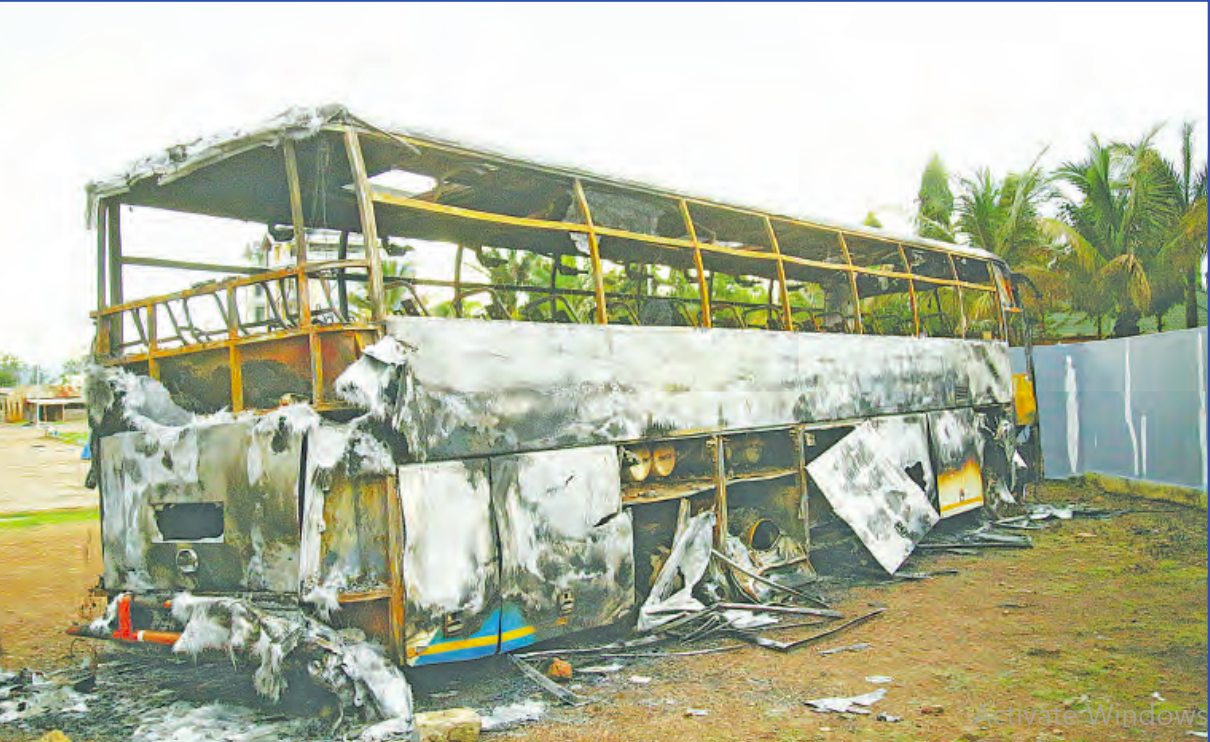
Violence erupted in several areas, lasting for days, leading to the loss of lives and the destruction of both public and private property.
Shops were damaged, vehicles vandalised and normal life was disrupted as fear spread among communities.
President Samia Suluhu Hassan was quick to condemn the unrest, stressing that violence was not the answer to political or social grievances.
She urged the youth, who were widely reported to be at the centre of the demonstrations, to seek dialogue and lawful means to express their concerns instead of resorting to destruction.
Her message was echoed by religious leaders across the country, who used their pulpits and platforms to preach peace, restraint and national unity.
The situation was further strained by rumours that the organisers of the demonstrations were planning another wave of nationwide protests on December 9, before later postponing them to December 25, coinciding with Christmas celebrations.
For many Tanzanians, the prospect of renewed unrest during a festive period associated with family gatherings and religious observance was deeply troubling.
Across Dar es Salaam and other parts of the country, ordinary citizens have voiced strong disapproval of the violence, saying it disrupts their daily activities, threatens their livelihoods and undermines the peace that Tanzania has long been proud of.
In Tegeta, a bustling suburb in northern Dar es Salaam, Mohamed Salum, a food vendor, says the unrest directly affected his ability to earn a living.
Standing next to his modest food stall, Salum explains that during the days of violence, customers stayed away out of fear.
“When there is trouble on the streets, people do not move freely. I depend on daily sales to feed my family. If people are afraid to leave their homes, I sell nothing. Violence does not help anyone, it only makes life harder for ordinary people like us,” he says.
Salum adds that vendors like him are often the first to feel the impact of instability because their businesses rely on public movement and trust.
“If a shop is looted or a road is blocked, it is not politicians who suffer immediately, it is small traders. We want peace so that we can work.”
ALSO READ: October 29 is a public holiday, Dr Samia approves it
A few kilometres away in Mwenge, a commercial hub known for its salons, workshops and markets, hairdresser Flora Mlay shares similar concerns.
She recalls closing her salon earlier than usual during the unrest, worried about her safety and that of her clients.
“My customers were calling to cancel appointments because they were scared. Some said there were rumours of violence spreading. When there is chaos, even a simple business like hairdressing becomes impossible,” Mlay says.
She believes that disagreements should be resolved through peaceful dialogue and legal channels.
“Destroying property does not solve problems. It only scares investors, affects tourism and takes away opportunities from young people who need jobs,” she says.
For Abdalla Fundikira, a bodaboda operator in Sinza, the violence posed both a safety risk and a financial burden.
Fundikira says he avoided certain areas during the unrest, fearing roadblocks and confrontations.
“As a bodaboda rider, my office is the road. If there is violence, I am exposed. You don’t know when stones will be thrown or when police will disperse crowds. I decided to stay home some days, but that means no income,” he says.
Fundikira also worries about the long-term effects of unrest on youth employment.
“Many young people ride bodaboda because there are no other jobs. Violence destroys the little opportunities we have. Peace is what allows us to hustle and survive.”
Religious leaders have also played a visible role in calming tensions. In churches and mosques, messages of peace, patience and unity have been repeated, particularly as rumours of fresh demonstrations circulated in December.
Clerics urged citizens to remember the values of coexistence and to avoid being drawn into actions that could harm the nation.
“Christmas is a time of love and togetherness,” said one church leader during a sermon in Dar es Salaam.
“Turning it into a time of conflict goes against our faith and our national values.” Security authorities, for their part, have sought to reassure the public.
Police spokesperson, Deputy Commissioner of Police (DCP) David Misime, has emphasised that there is no threat to national security and that law enforcement agencies are committed to maintaining peace.
“The public should continue with their daily activities and focus on building the nation,” DCP Misime said.
“Our security organs are alert and capable of handling any situation. Tanzania remains safe.”
He added that while the police respect the right of citizens to express their views, such expressions must be done within the framework of the law.
“Peace and security are the foundation of development. Without them, no meaningful progress can be achieved,” he stressed.
Many Tanzanians agree with this sentiment, pointing out that the country’s relative stability has been a key factor in attracting investment and promoting social cohesion.
They fear that repeated episodes of violence could erode this reputation. Analysts also note that the destruction of public infrastructure ultimately places a burden on taxpayers.
Roads, public buildings and utilities damaged during unrest must be repaired using funds that could otherwise be directed toward health, education or job creation.
As the nation reflects on the events following the October elections, a common message emerges from citizens across different walks of life… violence is not the solution.
Whether it is a food vendor in Tegeta, a hairdresser in Mwenge or a bodaboda rider in Sinza, the voices are united in calling for calm, dialogue and respect for the rule of law.
For many, the hope is that lessons have been learned and that future disagreements will be handled peacefully. As one resident put it, “We may have different opinions, but we share one country. Protecting it is everyone’s responsibility.”
In the end, Tanzanians are once again affirming a long-held national value, that peace is not just the absence of conflict, but the foundation upon which livelihoods, families and the future of the nation depend.