

ARUSHA: THE Tanzanian government said it will involve content creators to assist it in the ongoing campaigns against gender-based violence and other social injustices.
The Deputy Permanent Secretary in the Ministry of Community Development, Gender, Women and Special Needs, Advocate Amon Mpanju, said that though Tanzania has made great strides in ensuring equity and equality between men and women, more needs to be done to reach the ultimate target.
“We are still working to increase women’s participation in leadership and decision-making and to this end, Tanzania is recruiting more people to advocate for the mission, including content creators, the mainstream media, religious and local leaders,” the Deputy Permanent Secretary explained.
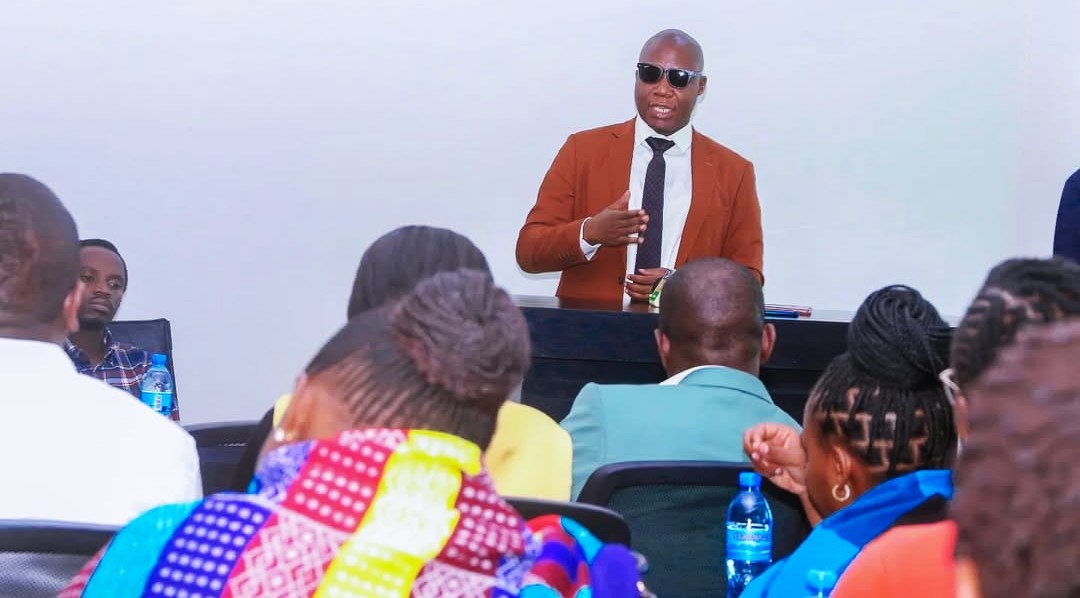
Advocate Mpanju was speaking during the occasion to launch the second phase in the series of training sessions on content creation that covers issues related to gender equality, with a call for advocating for fair inclusion.
Organized through the Ministry of Community Development, Gender, Women, and Special Needs, through the Gender Transformation Action Program (GTAP), the training involves content creators and local public leaders in Tanzania.
The first phase was conducted in the Lake Zone, while the second round, which covers the Northern Regions of Arusha, Manyara, and Kilimanjaro as well as the central precinct of Dodoma and Singida, is ongoing in Arusha.
“In Tanzania, Ward Executive Officers’ positions are still male-dominated with only 44 percent of the 3950 local leadership posts being held by women, although crucial decision-making takes place at ward levels,” he said.
ALSO READ: Tanzania injects 2bn/- to support content creators engaged in arts, sports, tourism sectors
“We call for equal opportunities in social and national economic development,” said the Deputy Permanent Secretary while addressing participants in the training workshop held in Arusha.
He pointed out that the National Assembly comprises 40.5 percent women parliamentarians, while only 15 percent of Ministerial positions are held by women, while deputy ministerial posts it is 31 percent.
The training is specifically for social welfare officers, representatives from local social media outlets, ward executives, and human resources managers from public and private institutions.
On her part, the Media and Communications Specialist, from NIRAS International Consulting, Sweden, Joanna Martin, pointed out during the training that Gender Violence not only threatens lives, but also stifles social development and kills dreams.
“Many women and girls still do not have a voice and hardly participate in decision-making or development issues,” said Ms Martin, adding that they are also too shy to make use of media services to air their concerns.
On his part, one of the religious leaders, Father Dennis Ombeni from the Arusha Catholic Archdiocese, said both men and women can contribute to social development issues.
“And especially now that education programs have become very inclusive and therefore awareness issues are already cross-cutting,” he said.