
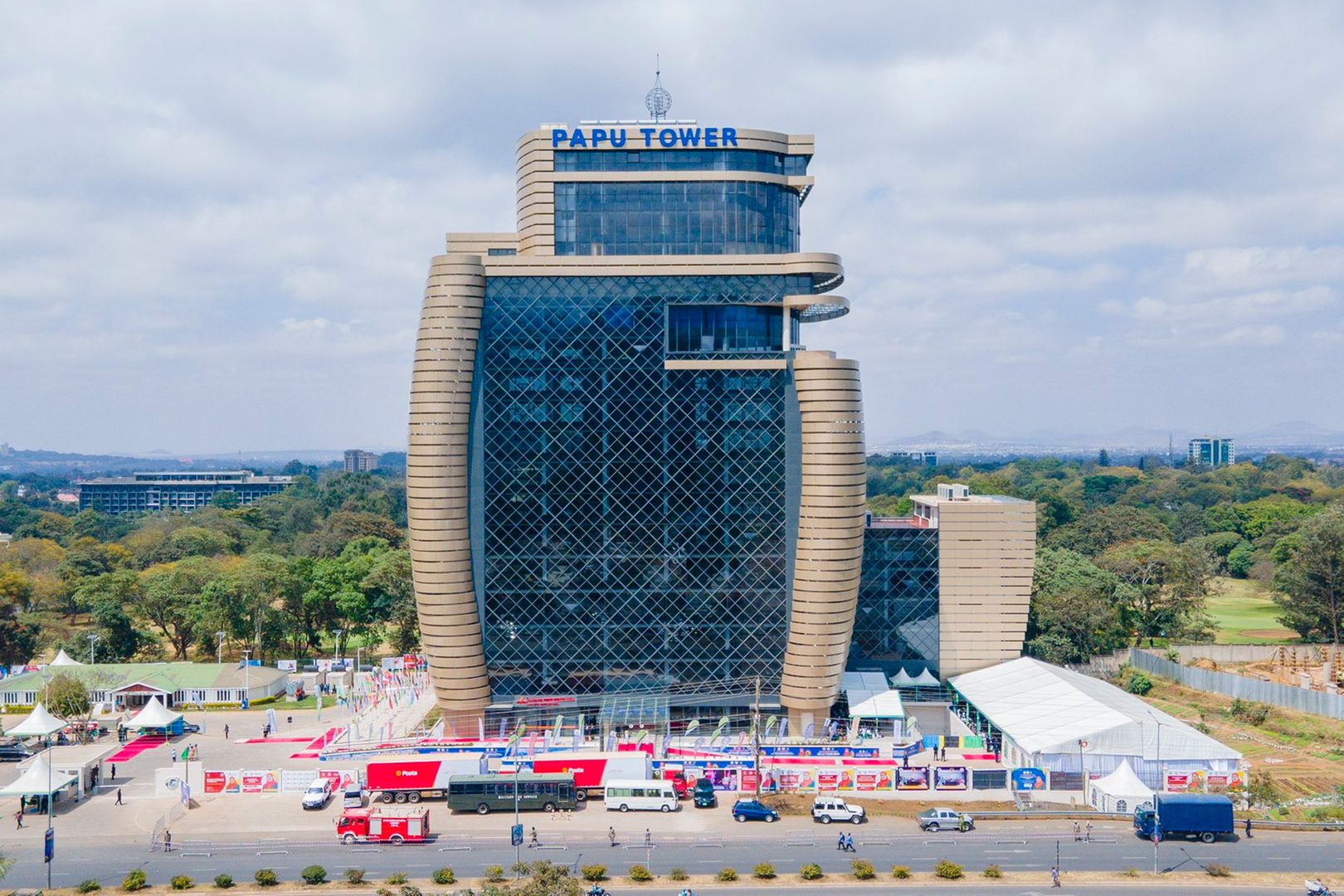

ARUSHA: AT a defining moment in Tanzania’s development journey, more than 200 senior corporate and public sector leaders are set to gather in Arusha for the Minority Interest Forum 2026 (MIF 2026), a high-level platform designed not merely to convene dialogue, but to interrogate the future of governance in entities where the government holds minority shares.
Scheduled for March 16–18, 2026 at PAPU Tower in Arusha, the Forum comes as Tanzania accelerates implementation of Dira 2050 while navigating global economic realignments, rapid digital transformation, tightening sustainability standards and rising expectations for measurable performance and accountability.
It is against this evolving economic and policy backdrop that MIF 2026 advances its theme: “From Oversight to Foresight: Advancing Agile and Innovative Leadership under Transformation Pressures.”
The theme is less a slogan and more a strategic proposition that governance must evolve if institutions are to remain competitive and nationally relevant in an increasingly complex environment.
The Forum will be graced by the Minister of State, President’s Office, Planning and Investment, Prof Kitila Mkumbo, whose portfolio sits at the intersection of national planning, capital allocation and investment performance.
His presence reinforces the growing recognition that minority interest governance is directly linked to Tanzania’s broader economic architecture and long-term development strategy.
Providing further context, the Treasury Registrar, Nehemiah Mchechu, explains that the Forum reflects a deliberate strategic shift in how minority interest entities are expected to position themselves within the country’s development framework.
He noted on Wednesday that as Tanzania moves deeper into the implementation phase of Dira 2050, institutions in which the government holds shares must demonstrate not only compliance and profitability, but also strategic alignment and measurable contribution to national priorities. His remarks underscore a broader reality.
Historically, oversight of minority interest entities has leaned heavily on compliance, statutory reporting and regulatory monitoring. While such mechanisms remain foundational, they are increasingly insufficient in isolation.
“As markets become more dynamic and risk landscapes more unpredictable, the operating environment now demands anticipatory leadership,” asserted Mr Mchechu.
ALSO READ: 16th East African Procurement Forum begins in Arusha
He went on to add: “This means leadership capable of reading macroeconomic signals, assessing geopolitical shifts, integrating ESG frameworks and aligning enterprise strategies with long-term national goals.”
After all, while compliance provides stability, it is foresight that truly fuels competitiveness. Indeed, minority interest entities today operate within ecosystems defined by Dira 2050 priorities, sustainability imperatives, digital disruption and global capital mobility.
These forces are not peripheral developments; they are structural shifts shaping investment flows, procurement standards, financing costs and reputational capital. Consequently, boards and executive leaders cannot confine themselves to retrospective performance reviews.
They must interpret emerging risks before they crystallise and convert transformation pressures into strategic advantage. It is precisely this shift in mindset that positions MIF 2026 as a catalytic intervention in leadership thinking.
Its core objective to strengthen the capacity of Minority Interest Directors and Chief Executive Officers to exercise agile, innovative and foresight-driven leadership, responds directly to the structural changes shaping both domestic and global markets.
The emphasis on agility speaks to speed of response; innovation to competitive differentiation; foresight to sustainability of returns and institutional resilience.
Expanding on the Forum’s design, the Director of Performance Management, Monitoring and Evaluation – Commercial Entities, Ms Lightness Mauki, who also chairs the preparation committee, notes that MIF 2026 intentionally moves beyond traditional conference formats.
She observed on Wednesday that governance challenges confronting minority interest entities are increasingly complex and interconnected, requiring structured dialogue that links policy direction, board oversight and executive execution in a coherent manner.
In line with that objective, the Forum will combine keynote addresses, expert panels, strategic dialogues and structured networking sessions aimed at translating governance principles into applied practice.
Conversations are expected to explore how boards can embed risk anticipation into strategy cycles, how management can align operational decisions with shareholder expectations and how innovation can be institutionalised rather than treated as episodic reform.
“The ultimate goal is to ensure that governance frameworks translate into improved enterprise performance and stronger national economic outcomes,” underscored Ms Mauki.
The composition of participants further reinforces the Forum’s strategic depth. More than 200 delegates Minority Interest Directors, Chief Executive Officers, senior government officials, regulators, institutional investors, governance and risk experts, alongside selected media representatives represent sectors central to Tanzania’s productive capacity, including finance, infrastructure, energy, telecommunications, manufacturing, logistics and services.
These sectors influence capital formation, employment creation, industrial competitiveness and service delivery.
Taken together, this is a gathering of institutional decision-makers whose mandates extend to governance direction, procurement systems, capital deployment and enterprise transformation.
Their deliberations are therefore likely to generate multiplier effects across supply chains, investment ecosystems and regulatory frameworks. In this broader sense, the Forum operates not only as a corporate governance platform, but as a strategic node within Tanzania’s economic reform trajectory.
As Tanzania advances towards its long-term development aspirations, governance within minority interest entities becomes inseparable from national economic performance. Such entities occupy a hybrid space commercial in operation, yet strategically linked to public interest.
Their effectiveness influences investor confidence, public–private collaboration and the credibility of the broader investment climate. Recognising this interconnectedness, MIF 2026 acknowledges that transformation pressures are structural realities rather than cyclical disruptions.
ESG compliance affects access to international capital; digital integration reshapes operational efficiency; geopolitical volatility alters trade dynamics; shifting investment patterns redefine competitive landscapes.
Under these conditions, leadership must be data-informed, strategically aligned and decisively forwardlooking. By convening in Arusha, a city synonymous with highlevel policy engagement, the Forum provides a neutral yet strategic space for recalibration.
Over three days at PAPU Tower, conversations are expected to shape not only boardroom priorities but also governance culture encouraging a transition from reactive supervision to proactive strategic stewardship. Ultimately, the Minority Interest Forum 2026 represents an inflection point.
It signals a recognition that minority interest entities cannot remain passive custodians of compliance frameworks, but evolve into strategic drivers of innovation, resilience and sustainable growth.
In championing the shift from oversight to foresight, the Forum positions governance not as a control mechanism alone, but as a dynamic instrument for advancing Tanzania’s long-term national prosperity.