

DAR ES SALAAM: TANZANIA’S ambition to become a one-trillion-dollar economy by 2050 will require bold fiscal reforms, stronger domestic revenue mobilisation and a more inclusive tax administration system.
Under the National Vision 2050, the country aims to attain upper-middle-income status, with a Gross Domestic Product (GDP) of 1.0 trillion US dollars and a per capita income of 7,000 US dollars by mid-century.
Realising that goal will demand sustained economic growth, structural transformation and a tax system capable of financing development
without excessive reliance on external borrowing. Within this broader transformation agenda, the Tanzania Revenue Authority (TRA) is expected to spearhead efforts to widen the tax base and improve compliance.
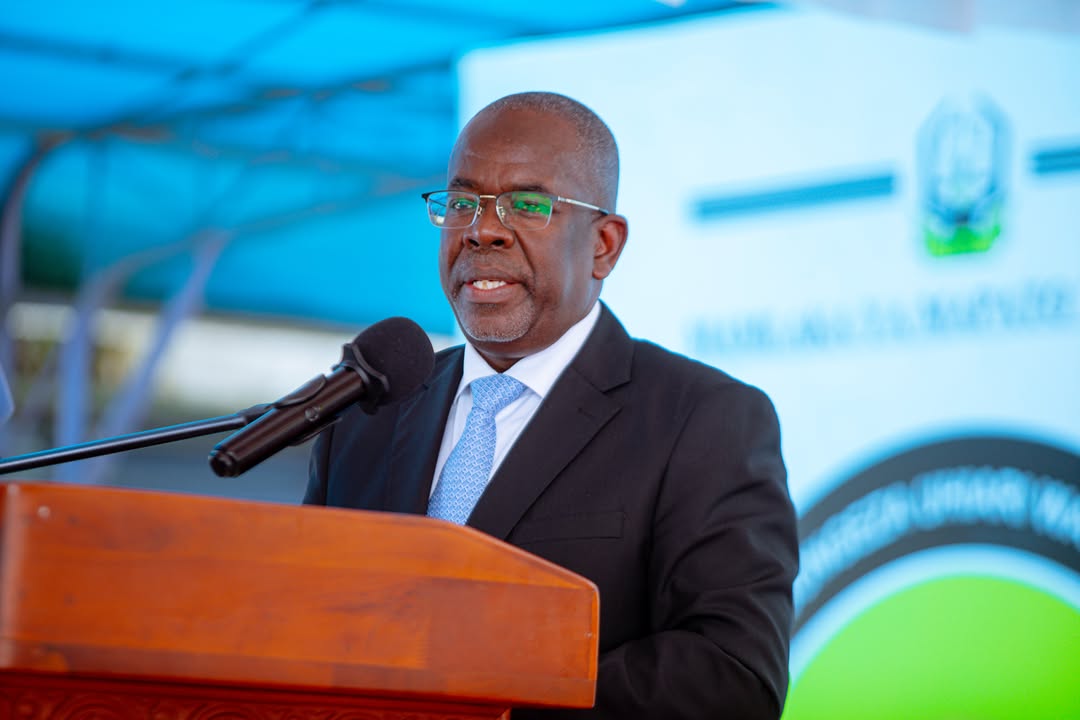
Speaking yesterday during the TRA Innovation Awards ceremony at the authority’s headquarters in Dar es Salaam, Minister for Finance, Ambassador Khamis Mussa Omari called for a more inclusive system to gather ideas from the public to strengthen tax administration.
“Improving revenue collection is not TRA’s responsibility alone. Let us have a system for gathering ideas and opinions from different people that can strengthen our institution,” he said.
He emphasised the need for collaboration among academia, the private sector and individual citizens, noting that enhancing domestic revenue is a shared national responsibility.
“The duty to enhance our tax system and increase domestic revenue is ours collectively as Tanzanians. It is not the sole responsibility of the Tanzania Revenue Authority,” he said.
Amb Omari noted that TRA has consistently pursued new revenue sources and reforms through internal mechanisms, including tax reform task forces and sectoral consultations.
However, he underscored the importance of establishing a broader platform that allows individuals to contribute ideas directly.
He commended the introduction of the authority’s innovation competition, describing it as recognition that effective solutions may lie beyond traditional bureaucratic channels.
TRA Director of Research and Planning, Dr Ephraim Mdee, said the Innovation Awards, launched in May last year, invited members of the public and TRA staff to submit proposals aimed at expanding the tax base, increasing revenue collection and improving taxpayer services.
ALSO READ: IDRAS will not change tax laws, says TRA expert
He said the response exceeded expectations, with 5,861 ideas submitted by external stakeholders and employees.
The proposals underwent a rigorous review process involving three committees: The Innovation Coordination Group, the Innovation Evaluation Committee and the Innovation Steering Committee, which comprises TRA’s top leadership.
Out of the total submissions, 106 advanced to the detailed evaluation stage, with nine ultimately selected as the best innovations.
Awards were presented in three categories: First Prize of 50m/- for ideas scoring above 90 per cent; Second Prize of 30m/- for ideas scoring between 70 and 90 per cent; and Third Prize of 20m/- for ideas scoring between 50 and 70 per cent.
This year, one idea scored above 91 per cent, three scored between 70 and 90 per cent and five scored between 50 and 70 per cent.
The first prize winner was Gabriel Mashenene, who attained an average score of 92 per cent.
His innovation, titled ‘KodiTrack – Smart Invoice & Import Verification System,’ is a digital platform designed to combat fake invoices and import fraud.
The system verifies cargo and invoice information in real time, helping to curb tax evasion, broaden the tax base and boost government revenue.
TRA Commissioner General, Mr Yusuph Mwenda, described the initiative as a historic and inclusive process that, for the first time, opened innovation efforts to the wider Tanzanian community.
“In the past, we sought innovative ideas internally, but for the first time we opened the process to the entire Tanzanian community,” Mr Mwenda said.
He acknowledged that while many submissions demonstrated strong concepts, some lacked sufficient detail.
He said TRA plans to provide clearer guidelines in the next round to help participants develop more comprehensive proposals.
The next innovation round will open on April 1 and run until June 30 this year, with a stronger focus on technology-driven solutions to address the expanding digital economy.
“Our economy is increasingly moving online. Many businesses are now operating through digital platforms. As a tax authority, we must move in that direction or even ahead of it,” Mr Mwenda said.
He added that TRA is also exploring practical, technology-based approaches to formalise and better integrate the informal sector into the tax system.