
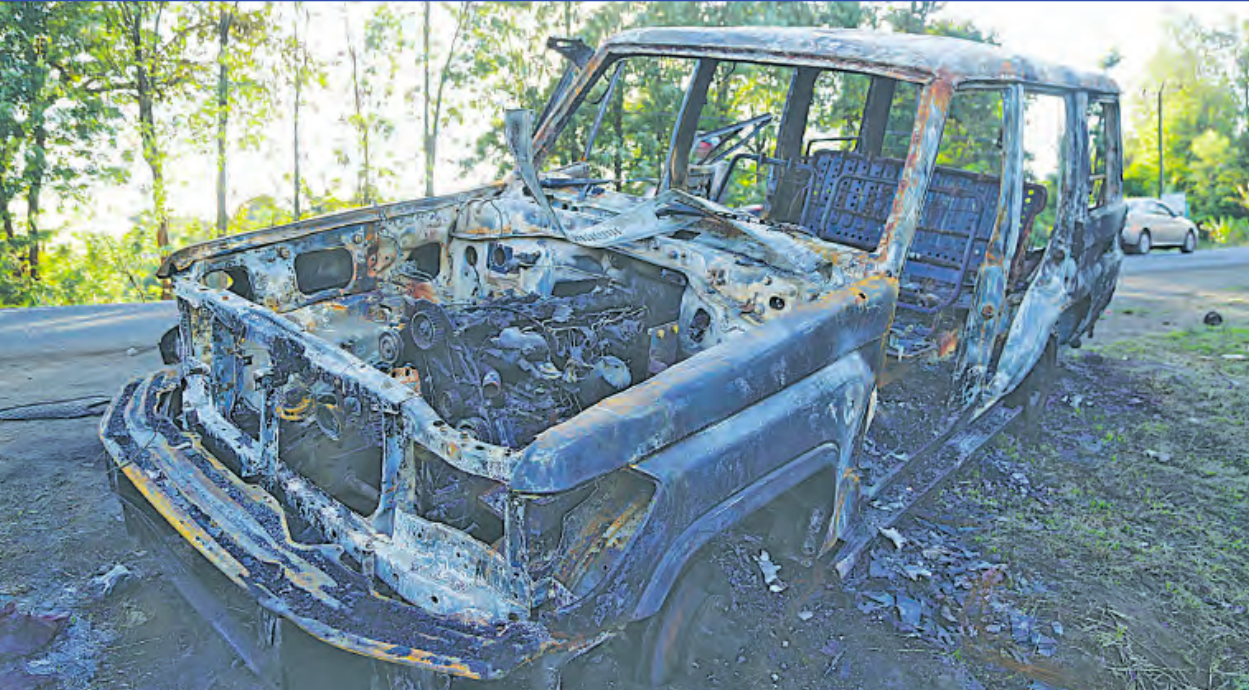

DAR ES SALAAM: AGAINST the backdrop of Tanzania’s long-cherished calm where the rhythm of daily life has often flowed like a gentle breeze across its towns and villages, voices from across society are urging the nation’s youths to guard the flame of peace with wisdom and restraint.
Stakeholders and political analysts have called on young Tanzanians to weigh their words and actions carefully, warning them against being easily swayed by individuals who may attempt to incite unrest and threaten the country’s stability.
They emphasised that peace and unity remain the strongest pillars holding together Tanzania’s social and national fabric. According to the stakeholders, history has shown that when these pillars weaken, instability quickly follows often leaving nations struggling for years to rebuild harmony and development.
Speaking to the Daily News recently, Professor of Economics and Founding Director of the Centre for Chinese Studies at University of Dar es Salaam, Humphrey Moshi, said the country has long enjoyed international recognition as an island of peace.
However, he noted that incidents reported after the recent general election have slightly shaken that image. He explained that the isolated acts of violence served as a reminder of how closely peace is tied to economic and social progress.
“Without peace and stability, there can be neither economic nor social development,” Prof Moshi said.
“For many Tanzanians, these experiences were new because such situations were often heard about only in other countries. We even witnessed an increase in commodity prices. We must continue praying that such events do not recur.”
Prof Moshi added that youths who make up between 60 and 70 per cent of the population—represent both a blessing and the backbone of the national workforce. He urged young people to actively participate in nation-building while calling on authorities to expand opportunities for sustainable employment.
“We must strengthen peace by all means and remove the seeds of misunderstanding so that the country continues to be guided by love, unity and stability,” he said.
Meanwhile, the President of the Tanzania Higher Learning Institutions Students’ Organisation (TAHLISO), Geofrey Kiliba, speaking to journalists in Dar es Salaam about a month ago, urged fellow youths to remain alert against incitement that could drag the country into conflicts similar to those experienced in Democratic Republic of the Congo and South Sudan.
He warned that the loss of peace would affect every citizen, especially young people who hold a significant responsibility in safeguarding national stability.
Mr Kiliba also encouraged youths to engage constructively with those spreading unrest, advising them with humility and respect about the potential consequences of their actions.
“I urge every young person and every Tanzanian to dedicate at least one to five minutes daily to pray for peace, security and unity in our country. As Christians, we believe the Scriptures which say, ‘Unless the Lord watches over the city, the watchmen stand guard in vain,’” he said.
Similarly, Athuman Mhuto, a resident of Dodoma, described peace as the foundation upon which all social systems function from culture and religion to politics and economic activity.
He stressed that sustainable development depends entirely on the presence of peace, making it a shared national responsibility.
On her part, a UDSM student, Sulaiya Mohamed young people need to reflect carefully before acting, noting that peace is the engine of national prosperity. She explained that when violence and hatred emerge, national resources are diverted toward security instead of improving citizens’ livelihoods.
“That is why every citizen has a duty to protect peace by respecting one another, engaging in calm dialogue, rejecting incitement and placing national interests above personal interests. A peaceful nation is a nation of hope, rapid development and opportunity for both present and future generations,” she said.
A ‘bodaboda’ rider, Dauson Msiru said the violence events demonstrated clearly that business cannot function without peace.
He noted that most Tanzanians depend on daily labour to support their families, meaning movement restrictions quickly translate into financial hardship.
“I earn my living from this motorcycle. When movement is limited, there are no passengers and no income. That directly affects my family,” he said.
Mr Msiru stressed that the country should avoid a repeat of the violence witnessed on October 29, calling on political actors, activists and social media influencers to pursue peaceful solutions to national challenges.
“The few days of unrest were enough to remind us of the true value of peace,” he said.
At Buguruni Rozana, fruit vendor Adelina Libent echoed similar concerns, urging citizens to protect the stability the nation has enjoyed for decades. She warned that peace can be lost quickly but takes years to rebuild.
ALSO READ: Samia sets out a case for stability, reform and national cohesion
“The calm we had cherished for years was shaken within hours, and properties built over many years were damaged in a very short time. We should not allow that path again,” she said.
Ms Libent explained that the disruptions caused her fruits to spoil, leaving her struggling to repay business loans.
“My goods were damaged because I couldn’t sell. Now I am operating at a loss while still expected to service my loans,” she said.
Meanwhile, a ‘daladala’ driver, Musa Habib said several of his colleagues were arrested or injured after being suspected of involvement in the unrest.
He recalled receiving a phone call from his mother in Mbeya advising him to stay away from the disturbances.
“At the time, I was driving from Mbagala to Mbezi mwisho, but we could not even pass Tazara. I had to turn back and later parked my ‘daladala’ near the National Stadium,” he said.
Mr Habib emphasised that young people should take the lead in promoting peace.
“As an innocent citizen, I do not support violence. That day many people especially ‘bodaboda’ riders were unfairly blamed. We hope such events never occur again,” he said. Religious leaders also weighed in, with Bishop Marco Maduhu of the Pentecostal Assemblies of God Tanzania (PAG) in Bariadi, Simiyu Region recently describing the events of October 29 as a critical lesson for the nation.
“Everyone has now seen that when peace disappears, the consequences affect all people. This should remind us that peace is everything, and playing with it is extremely dangerous,” he said