
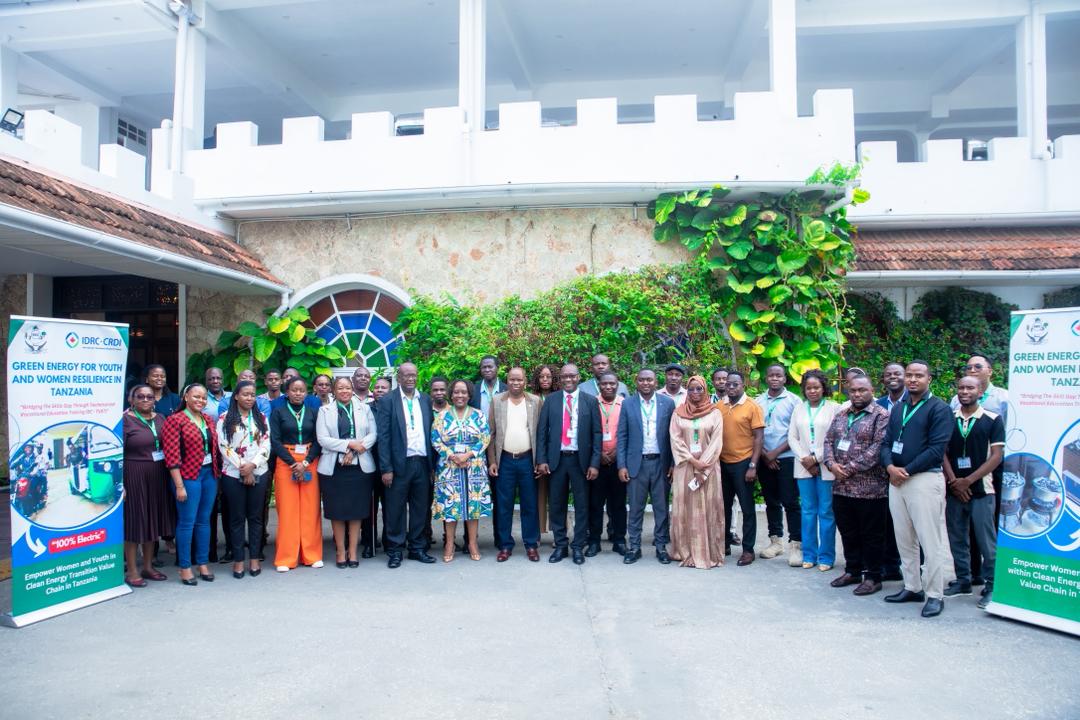

DAR ES SALAAM: AT least 1,600 women and youth across the country are set to benefit from green energy education under a new project jointly implemented by the government and the Relief for Development Society (REDESO).
The initiative, titled Green Energy for Women and Youth Resilience in East Africa: Bridging Energy Skills Gap through Technical and Vocational Education and Training (BES-TVET), aims to equip participants with technical, entrepreneurial, and business skills in the rapidly expanding clean energy sub-sector.
The project is funded by the International Development Research Centre (IDRC) and is being implemented in Tanzania and Uganda, with a strong focus on strengthening Technical and Vocational Education and Training (TVET) systems.
ALSO READ: Zanzibar’s Home Affairs orders a timely completion of its 25bn/- projects
Officiating at the project’s inception workshop in Dar es Salaam, REDESO Chief Executive Officer, Abeid Kasaizi said the project has four main pillars which are Developing curricula for short and long courses, Building the capacity of training centers especially those under TVET, Expanding the scope of beneficiaries and Ensuring the sustainability of the project, so that after time it can run itself through VETA systems.
He said before that they started with a pilot project involving 500 youth and women, who are now expanding to 1,600 beneficiaries.
“We designed this project after recognizing the challenges facing women and youth in our communities. They are a large part of society that needs support and empowerment. At the same time, the world is moving from the use of dirty energy like oil to clean energy. We asked ourselves: why are many Tanzanians, especially women and youth, not fully participating in this new sector?” he asked.
He added, “We realized that there is a skills gap. Then we designed a project that aims to build the capacity of women and youth in the clean energy sector.
He said they will build the capacity of six TVET centers to teach clean energy technologies, including Smart Stoves, Solar Systems, and Electric Transportation, including connectivity, maintenance, and charging infrastructure.
“We are not limited to technical skills, but also provide entrepreneurship training so that graduates do not rely solely on employment, but can be self-employed and start their own businesses in the renewable energy transformation value chain.
Kasaizi noted that this project is being implemented in various areas of the country, including Dodoma, Mwanza, Singida, Dar es Salaam, and Pwani regions.
” We did not want to focus only on Dar es Salaam, because energy needs differ between urban and rural areas. For example, smart stoves are in greater demand in areas that still use charcoal or firewood. Similarly, electric transportation can be an important solution for many urban and peripheral areas.
The Director General of the Vocational Education and Training Authority (VETA) said the programme seeks to bridge the growing skills gap in green technologies, including solar power systems, improved cookstoves and electric mobility solutions.
He noted that while demand for clean energy solutions is increasing across East Africa, inadequate technical capacity remains a key barrier to scaling up adoption and creating sustainable jobs.