
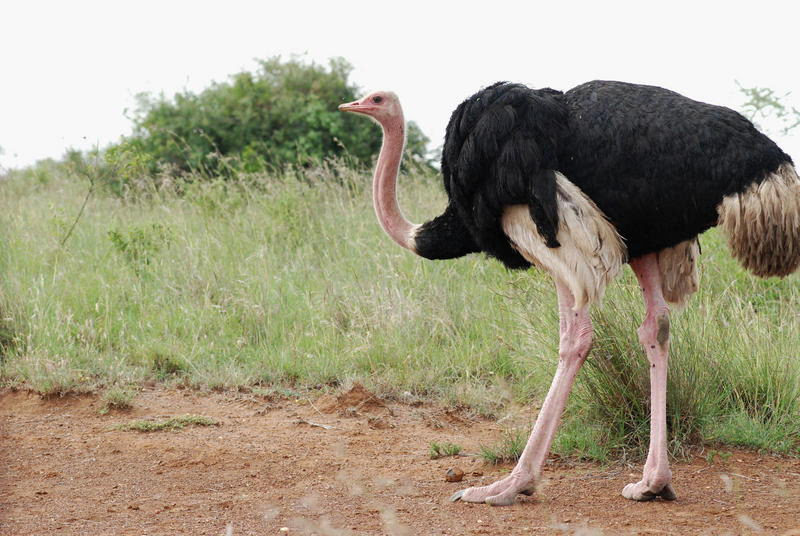

ARUSHA: NATURE Tanzania, a nongovernmental organisation (NGO) dedicated to wildlife conservation, has officially declared the Common Ostrich as Tanzania’s Bird of the Year 2026 after securing the highest number of votes in a nationwide campaign conducted last year.
The Common Ostrich garnered a total of 303 votes, outperforming three other contenders, the Kori Bustard, Red-necked Spurfowl and Southern Ground Hornbill in a conservation awareness initiative designed to spotlight species that inhabit Tanzania’s rangelands.
The results were announced over the weekend at Manyara Ranch Primary School in Makuyuni, Monduli District, Arusha Region.
Speaking during the event, Nature Tanzania’s Membership and Marketing Officer, Ms Gaudentia Mariki, said of the 303 votes cast, 186 were submitted through online platforms while 117 were cast physically.
She explained that the four shortlisted bird species were deliberately selected in line with the United Nations’ international theme for 2026, which recognises pastoralists and rangelands as critical ecosystems requiring enhanced conservation attention.
“All four birds are found in grazing lands. This aligns with the global focus on rangelands and pastoralist communities. Through this campaign, we want to emphasise that rangelands are productive ecosystems and not wastelands,” Ms Mariki said.
She noted that the Common Ostrich stood out because of its unique biological and ecological characteristics.
It is the largest living bird in the world, lives entirely on land, lays eggs on the ground and, unlike most birds, cannot fly.
“These characteristics make it a powerful conservation symbol. The ostrich thrives in open, flat landscapes with sparse shrubs and abundant grass. Such environments provide suitable nesting grounds and enable it to spot predators from a distance,” she said.
ALSO READ: While humans queue for passports, birds follow the wind
Ms Mariki added that its large eyes, long neck and remarkable running speed also make it visually striking and ecologically fascinating.
Beyond awareness, she said the Bird of the Year campaign is expected to generate important scientific data on the species, including information on its distribution, population size and habitat trends, which will help strengthen conservation planning.
“During the voting period, ballots were collected under the theme ‘Rangelands are not Wastelands.’ We expect the 2026 campaign to reach pastoralist communities across Tanzania and promote understanding of sustainable land management practices,” she added.
From a tourism perspective, Acting Monduli District Tourism Officer, Mr Jonas Nyange, said the Common Ostrich remains one of the most recognisable and attractive bird species in Tanzania’s plains.
He explained that the species displays sexual dimorphism with females appearing grey and males black, a trait that enhances survival during incubation.
“When eggs are laid, the female incubates them during the day while the male takes over at night. The male’s black colouring makes it less visible in darkness, helping protect the eggs from predators,” Mr Nyange said.
He further noted that ostriches possess only two toes, unlike most birds, a feature that allows them to run at high speeds across open plains.
Typically, one male coexists with several females, but only one dominant female known as the ‘Senior Hen’ incubates the eggs.
Local leaders from Esilalei Village, including Laigwanani Leeko Tayal and Laigwanani Tobiko Lesiara, emphasised the bird’s deep cultural significance within the Maasai community