
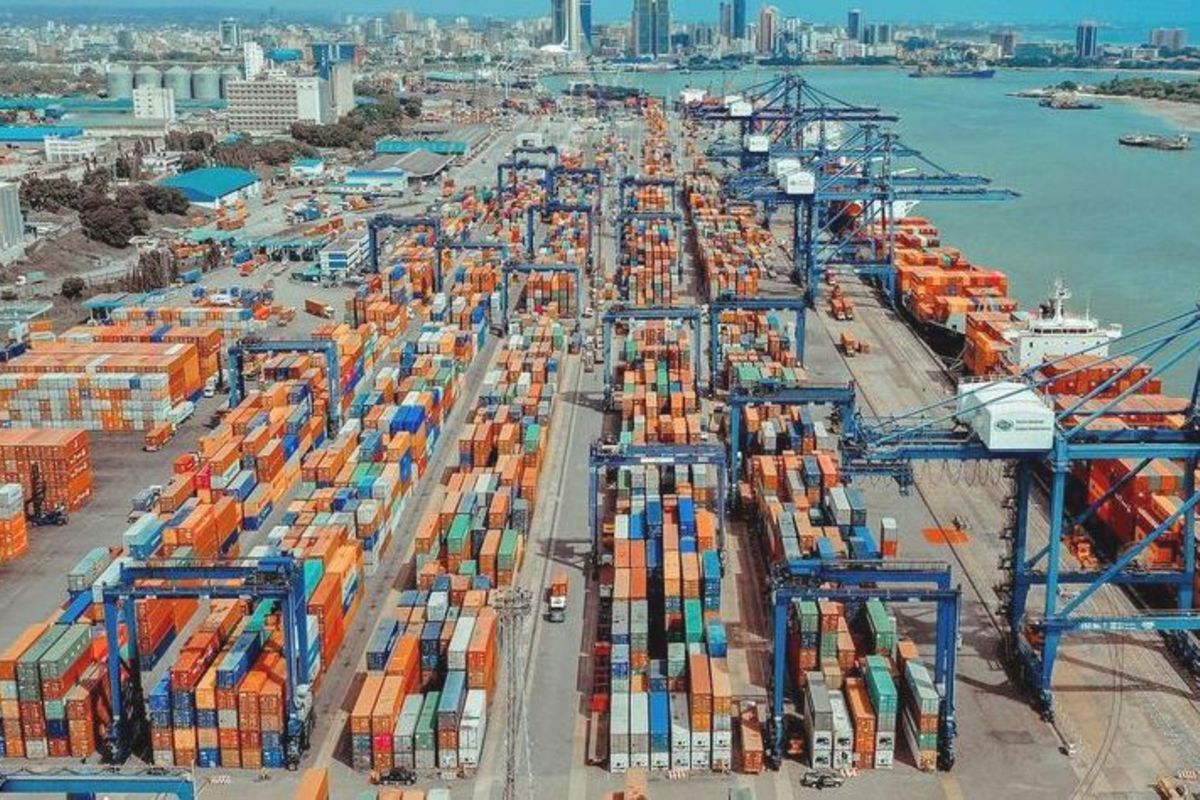

DAR ES SALAAM: TANZANIA’S export landscape reflects both continuity and measured transfor mation, with traditional markets maintaining dominance even as newer destinations steadily gain ground.
At the centre of this trade matrix remains South Africa, which has once again retained its position as Tanzania’s leading export destination, underscoring the strength of regional economic ties within the Southern African Development Community (SADC).
According to the Tanzania Trade Development Authority (TanTrade) report titled ‘Top 20 Tanzanian Export Products (2022–2024)’, South Africa accounted for 26.3 per cent of the country’s total exports.
Exports to South Africa, valued at 2.29 million US dollars, were largely driven by gold, tobacco and cotton T-shirts and vests. This pattern has remained consistent in recent years, underpinned by strong regional trade integration and logistical advantages.
The continued dominance of South Africa highlights the resilience of intra-African trade flows, particularly within SADC, where tariff preferences and geographic proximity provide Tanzanian exporters with relatively predictable market conditions.
India ranked second among Tanzania’s export destinations, importing goods worth 1.64 million units, mainly gold, cashewnuts and pigeon peas.
India’s sustained demand for agricultural commodities, particularly cashew nuts, reinforces Tanzania’s position as a key supplier to Asian markets.
The United Arab Emirates (UAE) emerged as the thirdlargest importer, with imports amounting to 625,152 units, dominated by gold and tobacco, alongside fresh or chilled lamb.
The prominence of gold exports to the UAE further illustrates Tanzania’s dependence on mineral exports to Middle Eastern markets, where demand for precious metals remains strong.
TanTrade Director General, Ms Latifa Khamis said the export growth signals positive momentum but underscored the need for targeted strategies to sustain gains and reduce reliance on imports.
“While export volumes are rising, strengthening local processing and manufacturing capacity will increase the value of exported goods and reduce the need to import finished or semi-processed products that can be produced domestically,” she said.
Additionally, TanTrade organises training sessions for entrepreneurs, including those in remote areas, and encourages their participation in domestic exhibitions to enhance market access and boost export readiness.
“With South Africa now accounting for a larger share of our exports, we will continue deepening access within strong markets such as SADC and African Continental Free Trade Area (AfCFTA) while expanding into new destinations to reduce overreliance on a few partners,” Ms Khamis said.
Meanwhile, China ranked fourth, importing goods worth 442,964 units, including sesame seeds, copper ore and fish.
Trade with China has remained relatively stable compared to previous periods, though exports continue to be concentrated in raw and semi-processed products reflecting limited domestic value addition in several sectors.
Within East Africa and neighbouring countries, Kenya, Uganda, Rwanda, Zambia and Burundi featured prominently among Tanzania’s top 20 export markets, remaining the strategic importance of regional trade.
Kenya imported 320,868 US dollars, mainly rice, maize and coal, while Uganda’s imports of 291,023 US dollars were led by rice and petroleum-related products. Regional trade flows have remained resilient, supported
by geographical proximity and ongoing regional integration initiatives under the East African Community (EAC) and the AfCFTA.
An Economist, Prof Kitojo Wetengera said that domestic goods are currently sold more within regional markets than in Europe, pointing that scaling production is essential if the country is to fully tap into African demand.
“Africa is a big market, but can we satisfy our own product demand and produce surplus to sell?” he asked.
“In trade, this is a fundamental issue.” He added that the country must prioritise surplus production before aggressively seeking new markets.
“We have to produce goods until they are redundant, then take them to others. African markets are there and their conditions are not as demanding as European ones, but they must produce in large quantities and have surplus.
“Markets do not just open by themselves, they are opened. What is important is for producers to focus on efficient production that aligns with African standards,” Prof Wetengera said.
European markets such as Belgium, the Netherlands, Germany and Switzerland also maintained their presence among Tanzania’s export destinations.
These countries continued to import coffee, tobacco, cocoa beans and avocados. Switzerland, in particular, imported 269,528 US dollars, largely gold, maintaining its long-standing role as a global hub for precious metals trade.
Beyond Europe, the US, Japan and Indonesia featured among Tanzania’s overseas markets, importing coffee, textiles, fish products and groundnuts. Although export volumes to these destinations remain relatively modest compared to
traditional partners, they signal emerging opportunities for value-added and processed goods.
Other notable markets included Vietnam and the Democratic Republic of Congo (DRC), each importing more than 300,000 US dollars.
Vietnam’s imports were driven by cashew nuts, tobacco and cotton, while the DRC imported cigarettes, water and wheat flour, underscoring the country’s dual role as a supplier of both agricultural commodities and manufactured consumer goods within the region.