
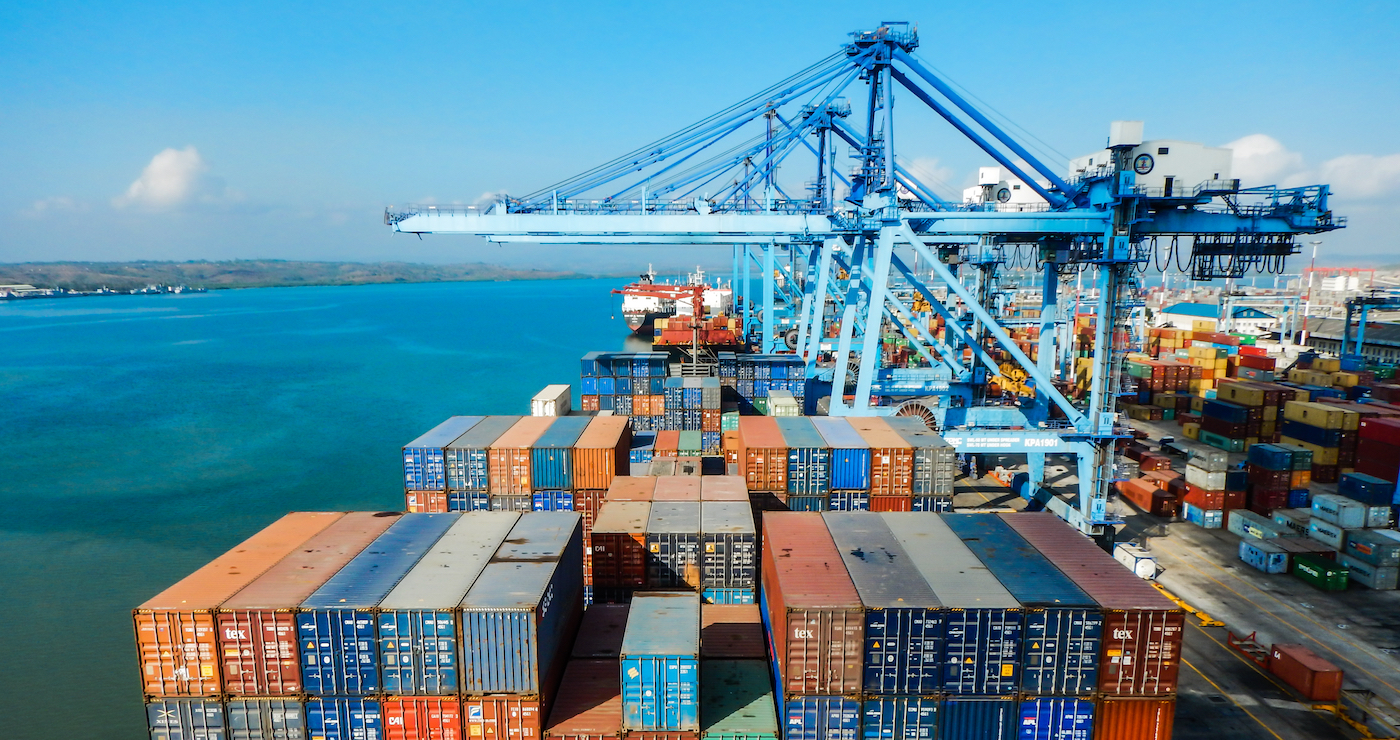

NAIROBI: BY any measure, the Port of Mombasa has been the beating heart of Kenya’s economy.
Mombasa was once East Africa’s largest maritime gateway, handling the overwhelming majority of Kenya’s imports and exports and serving landlocked neighbours such as Uganda, Rwanda, South Sudan, Burundi and parts of the Democratic Republic of Congo.
At the time, nearly all containers entering or leaving the country passed through this port.
Reliable reports from internationally recognised institutions, such as the World Bank, indicate that Mombasa Port’s reputation and popularity have declined significantly due to inefficiencies.
These inefficiencies are undermining Kenya’s economic growth, which had previously outpaced that of other East African countries but is now becoming a cost centre, resulting in revenue loss.
Those interested in understanding persistent operational inefficiencies at Mombasa Port can read the detailed World Bank report, the Container Port Performance Index (CPPI) 2020-2024, which was published in September 2025.
The report also aligns with another report released in conjunction with S&P Global Market Intelligence, which benchmarks 403 global ports by the speed with which container ships are turned around.
Mombasa Port ranked 375th out of 403 ports globally in the World Bank’s Container Port Performance Index (CPPI) 2020–2024, a very low position.
This reflects significant inefficiencies, delays and congestion in vessel and cargo management at Mombasa Port. The CPPI score for Mombasa was 89 in 2024, indicating longer turnaround times than its global counterparts.
Port competitiveness is diminished, shipping costs rise and regional trade is discouraged by slow transit. Poor global rankings are not merely symbolic.
Shipping lines consider efficiency and investment when making routing decisions and are guided by economists with expertise in port investment and efficiency.
ALSO READ: Dar port’s quiet revolution: Tanzania’s boldest play yet for trade dominance in Africa
As a result, Kenya is now at a disadvantage, and management is deteriorating, with little contribution to Kenya’s fiscal budget. Numbers are not deceptive.
Reports on the inefficiency costs borne by industry and shippers’ associations have been explicitly quantified by stakeholders such as the Kenya Ship Agents Association (KSAA) and the Shippers Council of Eastern Africa (SCEA), as evidenced by daily losses.
Despite Kenya’s desire to conceal such information, reports indicate that shipping lines operating in Kenya incur daily losses of 20,000 US dollars to 50,000 US dollars per vessel per day due to delays in berthing and cargo discharge at Mombasa.
Ultimately, these additional costs are passed through the supply chain, resulting in higher costs for importers, exporters and consumers.
My most recent visit to Mombasa, during which I evaluated on-the-ground reliability, revealed that delays are primarily attributable to cargo yard congestion, storage space shortages and the slow turnaround of empty containers, all of which are exacerbated by corruption at the port.
Undoubtedly, Kenya’s economy is incurring significant financial losses and reputational damage due to rising congestion stemming from inefficiencies.
Business Daily Africa’s most recent report emphasised that cargo congestion has led to substantial financial losses.
The report also revealed that some shipping lines are paying more than KSh5 million (40,000 US dollars) per day for vessels left unattended.
Source: File: National Media Group: Trucks waiting to depart the Port of Mombasa after collecting cargo.
Approximately 500 empty containers are currently stored on trailers due to space constraints, and approximately 20 vessels are frequently stranded offshore at any given time due to a lack of berth space.
The economic implications are substantial in the business and investment world.
The regional competitiveness that Kenya once possessed in the transportation and shipping of goods may be compromised by persistent congestion, which increases demurrage and detention charges, reduces cargo throughput efficiency and encourages some importers to divert to alternative ports, such as the Port of Dar es Salaam.
Further examination of the system reveals additional inefficiencies, including significant bottlenecks caused by malfunctions in the port’s customs system.
Separate reporting also highlights operational malfunctions that undermine the port’s cargo clearance capabilities.
For example, in early 2025, a Kenya Revenue Authority (KRA) IT system disruption left consignments valued at over KSh3.25 billion (25 million US dollars) stranded at the port for several days.
Even brief system malfunctions, stemming from inefficiency, increase demurrage, storage costs and workflow disruptions, with ripple effects across supply chains, resulting in unnecessary additional costs for logistics companies and shippers.
The inefficiencies at the Mombasa port are not the result of a daydream.
SCEA and industry observers have reported that logistics costs through Mombasa are alarmingly high, accounting for 35– 42 per cent of landed costs, compared with 8–10 per cent in Europe.
These costs are attributable to the involvement of multiple government agencies in the clearance process, frequent system downtime that is believed to facilitate unethical transactions, complex permit processes and the slow movement of cargo through gates and yards.
These inefficiencies drive up storage and demurrage charges. According to a study, the Kenya Ports Authority alone receives KSh6 billion in storage fees, with an additional KSh25 million in detention fees per week at inland depots.
The report’s findings are unfavourable for Kenya, as they disclose significant financial costs associated with shipping lines and trade, which reveal the economic hardships faced by individuals and the nation as a whole due to inefficiencies.
According to a reputable source, while collecting data for this piece at the port last week, I was informed that the cost of vessel waiting time at Mombasa Port ranges from 20,000 to 50,000 US dollars per day.
In the event of a delay, ships may depart without their full cargo loads, thereby reducing trade capacity.
From an economic perspective, it is evident that the costs of goods and logistics for Kenyan businesses are increased by shipment inefficiencies.
These expenses have diminished Kenya’s import competitiveness and have unnecessarily imposed inflationary pressure on consumer prices, thereby harming more Kenyan citizens.
Many, especially the majority of Kenyans, don’t realise the hidden cost of port inefficiency.
In addition to the rising logistics burden that increases costs for operators, Kenyan producers and importers face a competitive disadvantage relative to producers whose ports operate more efficiently, owing to high logistics costs (35–42 per cent of the landed value of products).
In Kenya, this deters new investment in export-oriented sectors and undermines export potential, thereby limiting the capacity to generate job opportunities for young people.
In addition, there is a strategic loss, particularly through regional competition and diverted trade. Kenya is losing cargo to other regional ports due to declining efficiency.
Evidence indicates that certain shipping lines have relocated or rerouted via Dar es Salaam port, which is currently fully operational and efficient due to significant port improvements implemented in response to congestion in Mombasa.
The genuine economic cost of inefficiencies is detrimental to Kenya. The economic costs of inefficiencies at the Port of Mombasa are quantifiable, as evidenced by numerous independent reports, industry assessments and analyses.
These include direct operational losses for shipping lines and traders, increased logistics and supply chain costs for Kenyan businesses and missed revenue and revenue leakage due to stuck cargo and system disruptions.
Behind its strategic importance, Mombasa Port in Kenya faces a troubling reality.
Unquestionably, persistent operational inefficiencies are costing Kenya millions of dollars annually in lost revenue, higher logistics costs, reduced competitiveness and diminished investor confidence.
This is not merely a port management issue. It is a national economic problem.
The economic cost of inefficiencies at the Port of Mombasa amounts to tens of millions of dollars annually when direct and indirect impacts are combined.
More importantly, it has eroded Kenya’s competitive edge in a region where logistics performance increasingly determines economic leadership