

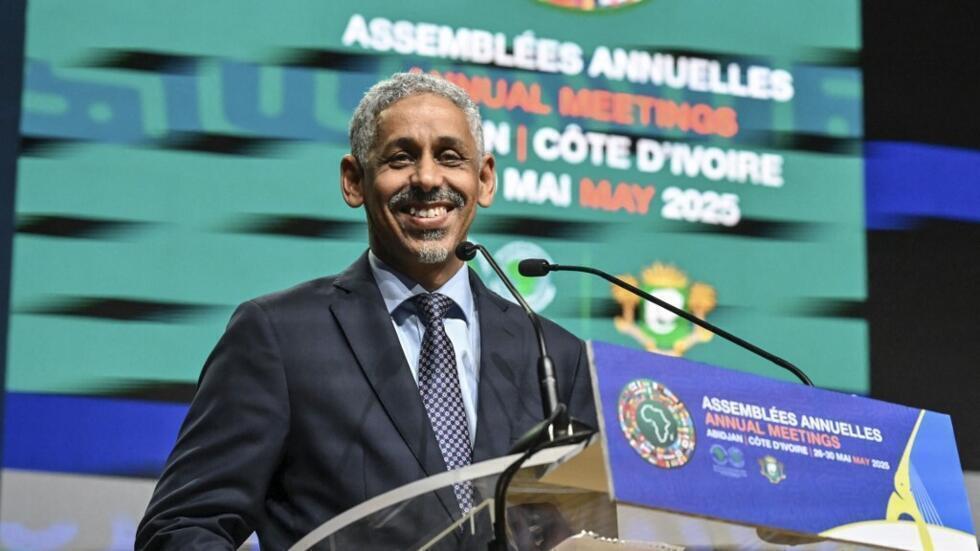
BRAZZAVILLE: AFRICAN Development Bank (AfDB) President Dr Sidi Ould Tah has called for urgent and coordinated reforms to strengthen the continent’s development finance systems, warning that fragmented global conditions and persistent financing gaps continue to limit the continent’s transformation agenda.
During the opening of AfDB Annual General Meetings Dr Tah underscored the need for a more connected, responsive and efficient development finance architecture capable of addressing today’s complex economic and social challenges.
He said the Bank is committed to improving implementation capacity, simplifying processes, and building integrated platforms that can generate catalytic impact across sectors and regions.
“This is about fighting for implementation and improving how we work with governments and partners,” he noted, adding that development finance must be tailored to the realities of African countries.
He further announced plans to strengthen the AfDB’s presence across the continent through regional hubs designed to enhance institutional coordination and efficiency.
The Africa’s challenge is not a lack of potential, but the need to properly recognise, organise and scale it. He argued that the continent has long been underestimated despite its demographic strength, vast natural resources, and early adoption of circular economy principles.
“Innovation is not always about invention; sometimes it is about recognising value earlier and organising it better,” he said.
ALSO READ: ATE reshuffles employer award to drive efficiency
He pointed to critical global shifts, including the growing demand for critical minerals, agricultural transformation, and the transition to a sustainable global economy, positioning Africa as a key driver rather than a passive participant in global growth.
A major focus of his address was Africa’s financing gap, estimated at over 400 billion US dollars annually. Dr Tah called for bold action to mobilise domestic resources and reduce dependence on external funding systems that often impose restrictive conditions.
He urged better utilisation of pension funds, insurance sectors, sovereign wealth funds, green bonds and digital finance instruments to unlock long-term development capital.
He also endorsed the African Union’s push for a new African financial architecture, including the establishment of African credit rating institutions to replace external agencies that often misjudge African risk profiles. Such reforms, he said, would reduce borrowing costs, attract investment, and strengthen financial sovereignty. He also said progress toward an African financial institute that will support monetary convergence and reduce cross-border transaction costs.