
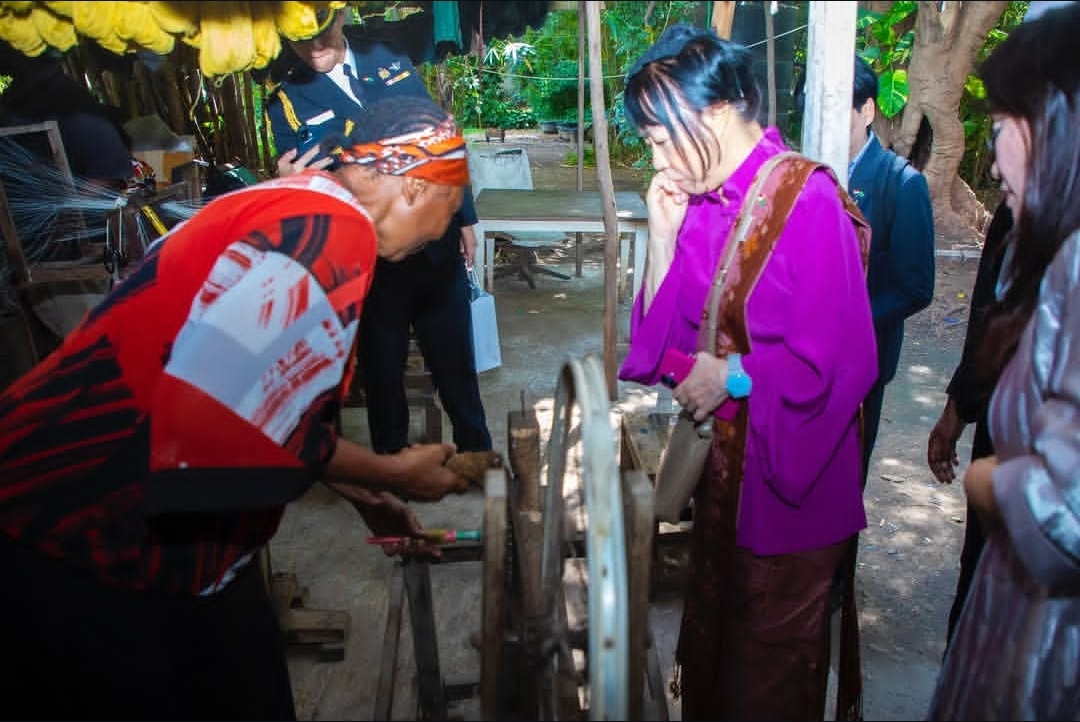

DAR ES SALAAM: FROM handwoven cotton threads to finished garments destined for international shelves, the Msasani handmade cotton clothing production centre in Dar es Salaam offered the First Lady of Singapore, Ms Jane Ittogi Shanmugaratnam, a vivid experience of Tanzania’s growing textile industry during her official visit.
According to information from the Ministry of Foreign Affairs and East African Cooperation, she toured the facility and was taken through the full production chain, starting from cotton processing, spinning, and design, through to the final production of quality garments that meet both local and international standards.
The centre is recognised for blending traditional craftsmanship with modern technology, enabling workers to produce high-quality cotton products that respond to changing market demands while maintaining environmental sustainability practices.
During the visit, Ms Shanmugaratnam expressed admiration for the creativity and skill of local artisans, praising their effective use of locally sourced raw materials. She also emphasized the importance of strengthening international cooperation to promote trade, investment, and sustainable development between Tanzania and Singapore.
Her visit comes as the President of Singapore, Tharman Shanmugaratnam, is on a three day state visit to Tanzania aimed at deepening economic, trade, and investment ties between the two countries.
The visit highlights growing cooperation between Tanzania and Singapore in value addition, skills development, and green manufacturing initiatives.
It also reflects increasing interest in supporting small and medium scale industries that contribute to job creation and export growth.
Business and officials from both sides are expected to continue discussions on expanding investment opportunities in textiles, agro processing, and other manufacturing sectors, with emphasis on innovation, sustainability, and inclusive economic growth for local communities.
The collaboration is seen as a positive step towards strengthening bilateral economic relations and positioning Tanzania as a competitive hub for quality textile production in the region, benefiting local communities and artisans sustainably.