
ARUSHA: EDUCATION is widely regarded as the foundation of national development, the engine that drives economic growth, social transformation and individual opportunity.
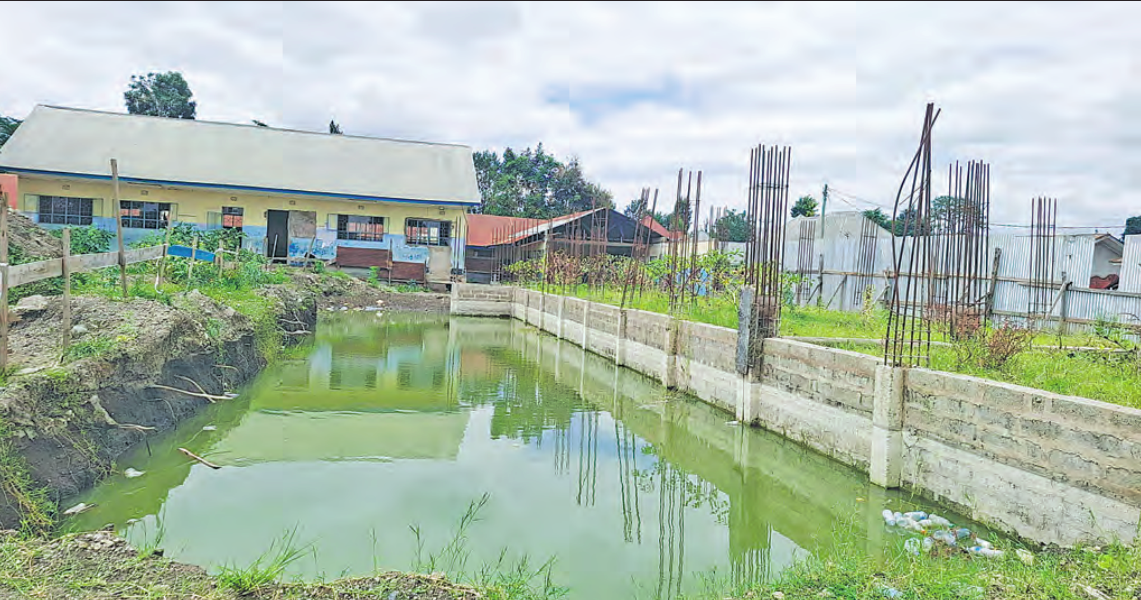
Yet at Osunyai Primary School in Arusha City, that foundation is being tested daily as thousands of pupils struggle to learn in overcrowded classrooms amid delays in a major infrastructure project.
The situation has reignited concerns about the gap between expanding access to education and providing the facilities needed to support quality learning.
While Tanzania has made notable progress in increasing school enrolment, education stakeholders argue that enrolment alone cannot guarantee success if pupils lack adequate classrooms and a conducive learning environment.
These concerns were brought into sharp focus during an inspection of the implementation of the Chama Cha Mapinduzi (CCM) Election Manifesto in Osunyai Ward, where local leaders, parents and education stakeholders voiced frustration over delays affecting a long awaited classroom construction project.
Leading the call for urgent action was the Chairperson of the Parents’ Association in Arusha District, Ally Mwinyimvua, popularly known as Meku, who urged the Arusha City Council to expedite the release of funds needed to kick-start construction works.
According to Mwinyimvua, the prolonged delay has placed thousands of pupils in difficult learning conditions, with some classes operating under shift systems due to an acute shortage of teaching space.
“Education cannot flourish in congested classrooms,” he emphasised.
“The City Council must ensure that funds are released on time so that the contractor can begin work immediately. Completing these classrooms will restore a conducive learning environment for our children and improve teaching efficiency.”
His remarks reflect a growing concern among parents who fear that continued delays could undermine the quality of education at one of the city’s largest public primary schools.
Osunyai Primary School currently serves more than 3,000 pupils, making it one of the most populated public primary schools in Arusha City.
The high enrolment is, in many ways, a success story. It reflects increased access to education and growing public confidence in government schools.
However, success has brought its own challenges. As pupil numbers continue to rise, pressure on existing infrastructure has intensified.
The shortage of classrooms became even more severe after more than eight old classrooms were demolished to make way for the construction of a modern multistorey classroom block.
The project was designed as a long-term solution to overcrowding.
Instead, delays in implementation have left the school with fewer classrooms than before, creating an even greater strain on available facilities.
In practical terms, this means more pupils squeezed into limited space, teachers struggling to manage larger classes and learners competing for attention in environments not designed to accommodate such numbers.
The challenges facing the project are not entirely financial. Osunyai Ward Councillor Elirehema Nnko explained that more than 360m/- was allocated during the 2024/2025 financial year for the classroom block construction.
However, progress stalled after technical flaws were identified in the original architectural designs.
The discovery required intervention from the President’s Office – Regional Administration and Local Government (PO-RALG), which had to prepare and submit revised plans before construction could move forward.
“Following the approval of the new designs, the initial contractor suspended the works, a new contractor has now been secured, and all administrative procedures have been completed. What remains is the release of funds to enable construction to commence officially,” said Nnko.
His explanation has provided some reassurance to parents and community members who feared the project had been abandoned altogether. Still, for teachers and pupils, the delay remains a daily reality.
Speaking on behalf of the school administration, Academic Teacher Rebecca Shoo described the difficult conditions educators face while trying to deliver quality instruction.
According to her, some classrooms currently accommodate more than 100 pupils in a single stream, a situation that makes effective teaching increasingly difficult.
ALSO READ: The missing hours in Tanzania’s education story
“When classrooms are overcrowded, it becomes challenging for teachers to provide individual attention to learners. The learning environment is compromised, and academic performance can be affected,” she said.
Anyone who has ever tried to hold the attention of more than 100 children at once can appreciate the challenge. Even the most dedicated teacher would struggle to ensure every pupil receives the support they need.
Beyond the obvious discomfort, overcrowded classrooms have far-reaching consequences for learning outcomes. Education specialists have consistently identified classroom congestion as one of the major barriers to quality education in developing countries.
Large class sizes reduce opportunities for teacher-pupil interaction, limit continuous assessment, affect concentration levels and make it difficult to identify learners who may require additional support.
When pupils are packed into classrooms beyond their intended capacity, learning often becomes an exercise in endurance rather than engagement. Teachers spend more time managing numbers and less time nurturing individual potential.
For younger learners, the impact can be particularly significant. Early primary education is a critical stage for developing literacy, numeracy and social skills.
Overcrowding can limit opportunities for participation and reduce the quality of classroom experiences that shape a child’s educational journey.
Parents who attended the inspection exercise expressed optimism that construction would resume soon and provide lasting relief to the school community.
Many believe improved learning facilities will not only enhance academic performance but also strengthen attendance rates, boost learner motivation and improve overall school management.
Their optimism is rooted in a simple reality: children learn better when they have adequate space, proper facilities and an environment that supports concentration and participation.
The challenges facing Osunyai Primary School also highlight a broader issue confronting many rapidly growing urban communities across Tanzania.
Population growth continues to place increasing pressure on public services, including education.
According to the 2022 Population and Housing Census, Osunyai Ward is home to more than 29,507 residents, a figure that continues to rise as Arusha expands.
With growing populations come growing demands for classrooms, teachers, desks, sanitation facilities and other educational infrastructure. Local authorities therefore face the difficult task of ensuring that development projects keep pace with population growth.
The delayed classroom project at Osunyai illustrates how even well-intentioned investments can fall short when implementation timelines are disrupted. Yet it also presents an opportunity.
Once completed, the multistorey classroom block has the potential to transform the learning environment for thousands of current and future pupils.
It could significantly reduce congestion, improve teaching conditions and help the school accommodate growing enrolment more effectively. For many stakeholders, the project represents more than bricks and mortar.
It symbolises a commitment to the future of the community and an investment in the next generation of leaders, professionals and innovators.
As Tanzania continues pursuing its vision of inclusive and quality education for all, the completion of stalled education projects must remain a priority.
Infrastructure delays do not merely postpone construction schedules; they postpone opportunities. Every month of delay means thousands of pupils continue learning under conditions that fall short of what they deserve.
For the children of Osunyai Primary School, the issue is straightforward. They need classrooms, not promises. They need learning spaces that match their ambitions and support their potential.
The good news is that the groundwork has largely been completed. Revised designs have been approved, a contractor is in place and administrative procedures have been finalised.
What remains is the release of funds needed to begin construction. For parents, teachers and pupils, that moment cannot come soon enough. Because every child deserves more than a seat in a crowded room.
Every child deserves a classroom where learning thrives, curiosity is encouraged and dreams are given the space to grow. And for the more than 3,000 pupils of Osunyai Primary School, that future may be waiting just beyond the construction fence.