
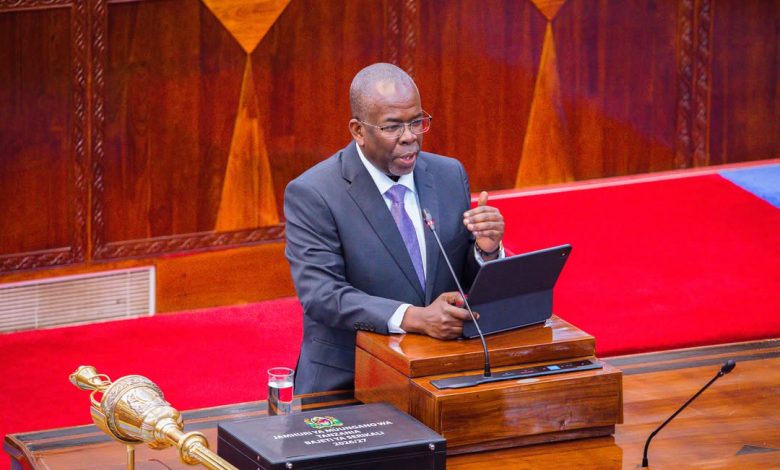
DAR ES SALAAM: MANY Tanzanians, following the parliamentary debate on the FY2026–2027 budget, continue to question whether it marks the start of the nation’s journey toward its 2050 vision. Some even ask whether there are still vital areas that require additional focus or effort for the country’s success.
Scholars at the Institute of Development Studies along the UDSM corridor, the business community in Kariakoo, Mama and Baba Lishe in Temeke-Dar es Salaam, and boda boda motorcycle riders in Tegeta-Dar es Salaam are discussing how the budget aligns with long-term goals and which remaining steps are necessary.
Despite their differing views, the suggestions from these groups reflect Tanzanians’ expectations for this budget, which differ markedly from those we have seen in previous budgets.
Broadly, what is emerging from the ongoing debate and discussion in the National Assembly in Dodoma, is that future historians examining Tanzania’s economic growth might view the FY2026/27 national budget as one of the first major fiscal plans to openly align the country with Vision 2050.
Unlike earlier budgets, which mainly aimed to reach middle-income status, expand infrastructure, and stabilise macroeconomic conditions, the 2026/27 budget seems to set a different course: laying the groundwork for a more competitive, industrial, techdriven, and self-sustaining economy.
Reiterating previously expressed views, the central question remains: Is this budget a suitable starting point for the Vision 2050 journey? The answer is largely yes, though with significant caveats. A detailed examination of each line proposal in the FY2026- 2027 national budget yields the following insights.
A Budget Built Around Structural Transformation
Vision 2050 will ultimately be judged not by economic growth alone, but by whether Tanzania successfully transforms the structure of its economy.
Countries that achieve high-income status typically go through multiple stages, including agricultural modernisation, industrialisation, technological upgrades, export diversification, and the development of a knowledgebased economy.
The 2026/27 budget includes policy measures targeting these sectors. The government remains committed to strengthening agricultural value chains, particularly in edible oils, cotton, textiles, and agro-processing. Notably, substantial support is directed to the domestic oilseed and cotton industries, to reduce imports and increase local value addition.
This approach is crucial because Vision 2050 cannot be realised solely through raw commodity exports. Countries become wealthy by processing, manufacturing, and exporting higher-value products.
The budget emphasises industrialisation, underscoring the significance of manufacturing and boosting industrial competitiveness. The government continues to support the textile and apparel industries through VAT exemptions on garments produced from locally grown cotton, duty relief on machinery and industrial supplies, and import duties to shield domestic textile producers.
These measures indicate that Tanzania is increasingly adopting an industrial policy approach that promotes local production rather than dependence on imported finished goods.
Vision 2050 requires a significant expansion of manufacturing’s contribution to GDP. The budget, therefore, aligns well with the country’s long-term ambition to move up regional and global value chains.
However, industrialisation will require far more than tax incentives. Reliable power, skilled labour, innovation systems, and export competitiveness must also improve substantially over the next decade.
Clean Energy and Future Industries is another area where the budget aligns strongly with Vision 2050, which is the energy transition.
The government continues to provide incentives for electric mobility, natural gas technologies, and clean energy infrastructure. VAT exemptions are extended to electric vehicle charging equipment, Liquefied Petroleum Gas (LPG) smart meters, and various natural gas-related technologies. This is significant because future global competitiveness will increasingly depend on green technologies.
Investors, multinational corporations, and export markets are placing growing emphasis on sustainability and carbon reduction. By beginning to build a clean-energy ecosystem now, Tanzania is positioning itself for future competitiveness rather than responding under pressure later.
The most notable change in the budget is its acknowledgment that the government alone cannot realise Vision 2050. Instead, the private sector needs to take the lead in fostering investment, innovation, and employment opportunities.
Several measures support this objective. New businesses will receive a 12-month tax holiday to reduce startup costs and encourage entrepreneurship. The presumptive tax threshold is increased to support small enterprises and facilitate growth.
VAT deferment on imported capital goods continues because domestic production is still not enough to meet investment needs. These measures acknowledge that realising Vision 2050 depends on a dynamic private sector that can invest alongside the government. The key challenge is to ensure that access to finance, land, skills, and markets increases simultaneously.
Youth and Human Capital Development
No country has achieved high-income status without major investment in human capital. The budget contains several measures that support youth entrepreneurship and employment.
Local government authorities will raise their allocations from 10 to 15 per cent of revenues for programmes supporting women, youths and persons with disabilities. Notably, some of these funds will be used to finance markets, entrepreneurship facilities, and business infrastructure.
This is a positive development. Nonetheless, Vision 2050 will require significantly greater investments in science and technology education, engineering, artificial intelligence, advanced manufacturing skills, research and development, as well as technical and vocational training.
The budget begins to address employment and entrepreneurship challenges, but a comprehensive human-capital revolution will still be necessary.
Digitalisation as a Foundation for Future Growth. A major strength of the FY2026- 2027 budget is its embrace of digital transformation. The government is accelerating the transition to a cashless economy through digital payment systems, mandatory digital transactions, and the expanded use of platforms such as Lipa Namba and TANQR.
In addition, the Tanzania Revenue Authority (TRA) will strengthen the use of artificial intelligence, big data, and blockchain technologies to improve efficiency and transparency. These reforms are critical.
Future economic competitiveness will depend increasingly on digital infrastructure and data-driven governance. Countries that successfully integrate technology into public administration, finance, and commerce are more likely to achieve sustained productivity growth.
Domestic Resource Mobilisation and Economic Sovereignty: A key goal for Vision 2050 is creating an economy able to fund its own development. The budget steadily advances towards this aim.
The government is strengthening tax administration, broadening the tax base, integrating digital systems and improving compliance mechanisms. These reforms are expected to generate an additional 1.72tri/- in revenue. This is an important signal.
Long-term economic sovereignty depends on reducing excessive dependence on aid and unstable external financing. Vision 2050 requires a fiscally resilient state, capable of financing infrastructure, education and industrial transformation through domestic resources. The budget begins advancing this agenda.
What Structural Reforms Are Still Missing? Despite its strengths, the budget also reveals areas where deeper reforms remain necessary.
Innovation and Research Ecosystem. The budget promotes technology adoption but does not yet provide a comprehensive framework for creating a national innovation economy.
Vision 2050 will require stronger university-industry partnerships, technology commercialisation, venture capital ecosystems, and research financing mechanisms. Without innovation-led growth, Tanzania risks remaining a technology consumer rather than a technology creator.
Labour productivity reforms are essential, as economic growth alone cannot ensure high-income status. Significant increases in labour productivity are necessary. While the budget promotes business growth, it offers only limited discussion of reforms aimed at boosting productivity through education, skills certification, workforce development and industrial training.
Capital Market Deepening. Vision 2050 will require significantly larger pools of long-term domestic capital. While the budget supports investment, stronger reforms are still needed to deepen capital markets, expand pension fund participation, encourage venture capital, and strengthen SME financing mechanisms.
Regarding export competitiveness, the budget encourages domestic production, but Tanzania must also become more export-oriented. Future reforms should focus on improving logistics efficiency, export financing, trade facilitation, regional market integration and industrial export zones. Countries that reach high-income status typically grow through exports rather than domestic demand alone.
What needs to occur in the next five years? Starting with the FY 2026/27 budget, this period will be crucial. Several key priorities arise directly from the policy framework set by the budget.
ALSO READ: Vision 2050 to take off with 86.3tri/- national plan
First, industrial value chains need to grow well beyond just raw commodity production. Second, digital transformation should go beyond tax systems and into areas like education, healthcare, manufacturing, and public service delivery.
Third, private sector investment needs to accelerate, backed by regulatory reforms, improved infrastructure, and better access to finance. Fourth, energy infrastructure must keep expanding to support industrial growth and emerging technologies. Fifth, Tanzania should enhance its innovation ecosystem, research capabilities, and advanced skills base.
Ultimately, enhancing implementation capacity within government institutions is crucial. While many reforms in the budget are technically well-designed, their effectiveness will rely heavily on proper execution.
Overall, for FY2026- 2027, it offers a solid start but not the full roadmap. The FY 2026/27 national budget is among the strongest foundations Tanzania has established toward its Vision 2050 goals.
Its emphasis on industrialisation, private-sector growth, digitalisation, clean energy, domestic resource mobilisation, and youth entrepreneurship aligns with the characteristics of economies that have successfully transformed over time.
However, Vision 2050 will need more than just fiscal measures. It calls for structural reforms that boost productivity, encourage innovation, expand capital markets, reinforce institutions, and develop globally competitive industries. Therefore, the budget should not be seen as the final goal.
Rather, it should be seen as the opening chapter of a much longer story of economic transformation. If the reforms announced in 2026/27 are implemented effectively and followed by deeper structural changes over the next five years, Tanzania will have taken a credible first step towards becoming the competitive, industrialised and prosperous economy envisioned for 2050.