
DODOMA:THE government is preparing sweeping amendments to more than 1,000 laws as part of efforts to align Tanzania’s legal framework with the implementation of the Tanzania Development Vision 2050 and create a modern legal environment that supports investment, industrialisation and economic transformation.
Minister for Constitution and Legal Affairs, Dr Juma Homera, said the reforms are being undertaken in close collaboration with the Office of the Attorney General, line ministries and the Law Reform Commission to ensure existing legislation responds to the country’s evolving development priorities.
“The major task underway is to review our laws together with the Attorney General’s Office, relevant ministries and the Law Reform Commission so that Tanzania has a legal framework capable of supporting national development under Vision 2050,” Dr Homera told journalists in Dodoma on Tuesday.
He said the review will cover key sectors, including investment, company registration, revenue administration, industrial development and other strategic areas aimed at creating a business-friendly legal environment while strengthening access to justice.
The minister also announced that government lawyers will soon begin nationwide legal awareness campaigns following the translation of more than 446 laws into Kiswahili.
He said the exercise follows President Samia Suluhu Hassan’s directive issued during the Annual General Meeting of the Tanzania Public Service Bar Association (TPBA) in Arusha, requiring lawyers to educate wananchi on the newly translated laws and their practical application in courts.
“Many citizens have limited understanding of the law. By explaining these laws in Kiswahili across all regions, we expect more citizens to understand their legal rights and procedures, making justice more accessible,” he said.
Dr Homera said the use of Kiswahili in legal proceedings will improve public understanding, noting that court judgments and legal documents have traditionally been dominated by English, creating challenges for many litigants.
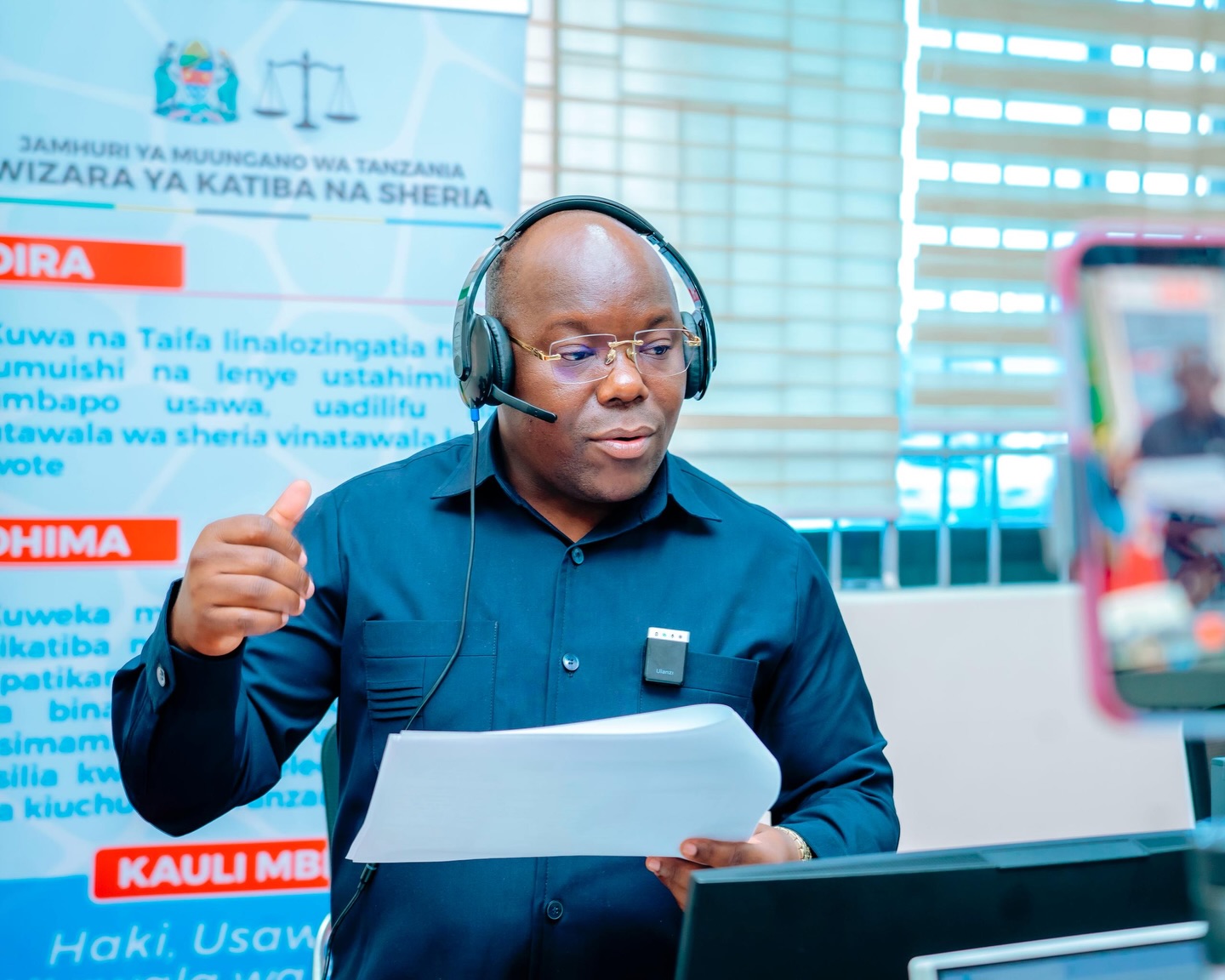
Meanwhile, the minister continued receiving and resolving public complaints through the ministry’s ‘Sema na Waziri’ programme.
He said the ministry handled 29 complaints during the latest reporting period, while others remain under follow-up with relevant ministries, departments and local government authorities.
Among cases discussed was a complaint from farmers in Masasi District, Mtwara Region, who questioned delays in using contributions collected for construction of a warehouse.
Dr Homera said investigations established that the funds had been temporarily withheld after authorities detected irregularities in the proposed land purchase, where some individuals allegedly sought to inflate the price from 9m/- to 16m/-.
ALSO READ:Govt demands swift judgement enforcement
He said consultations involving the village government, district council and the Prime Minister’s Office—Regional Administration and Local Government (PMO-RALG) are continuing to ensure the project proceeds transparently.
The minister also cited a long-standing complaint from a Liwale resident who sought compensation after losing his arm following a shooting involving game rangers in 2015.
He said the ministry’s review established that the matter had already been determined by the courts, which found that the rangers had acted in self-defence after being attacked by villagers.
Dr Homera reiterated that the ministry remains committed to ensuring citizens obtain timely responses to their grievances through the public engagement platform.
“We will continue receiving and following up citizen’s complaints carefully because our objective is to ensure every citizen obtains justice through the appropriate legal process,” he said.
During the programme, the minister also intervened in a transfer request involving a clinical officer from Kakonko District whose family sought her relocation to care for her ailing mother.
After contacting the relevant local authority, Dr Homera reminded public institutions that civil servants who meet all legal requirements should not be unnecessarily prevented from transferring.
“No public servant should be denied a lawful transfer after fulfilling all the required conditions. The law is clear, and institutions must comply,” he said.