

DAR ES SALAAM: A FEW days ago, I found myself doing what communication professionals often do when confronted with an issue attracting international attention: I stopped reading the headlines and went directly to the source. I sat down and carefully read the proposed legislation before the United States Senate seeking a reassessment of relations between the United States of America and the United Republic of Tanzania.
Like many Tanzanians, I wanted to understand not only what was being proposed, but also what it might mean for a relationship that has existed for generations and touched the lives of millions of people in both countries.
As I moved through the document, I found myself reflecting on something much larger than the contents of a Bill. I was thinking about relationships. Not relationships between governments alone, but relationships in the broader human sense. The kind of relationships that survive because people choose understanding over assumption, engagement over withdrawal, and conversation over silence.
Anyone who has been married, raised children, led an institution, managed a team, or maintained a friendship knows that relationships are not tested when everyone agrees. They are tested when differences emerge. It is easy to walk together when travelling in the same direction. The real challenge comes when perspectives diverge and yet both sides still recognise the value of remaining at the same table.
That is why my first reaction to the proposed legislation was neither outrage nor alarm. Instead, it was a belief that moments like these should encourage deeper dialogue rather than greater distance.
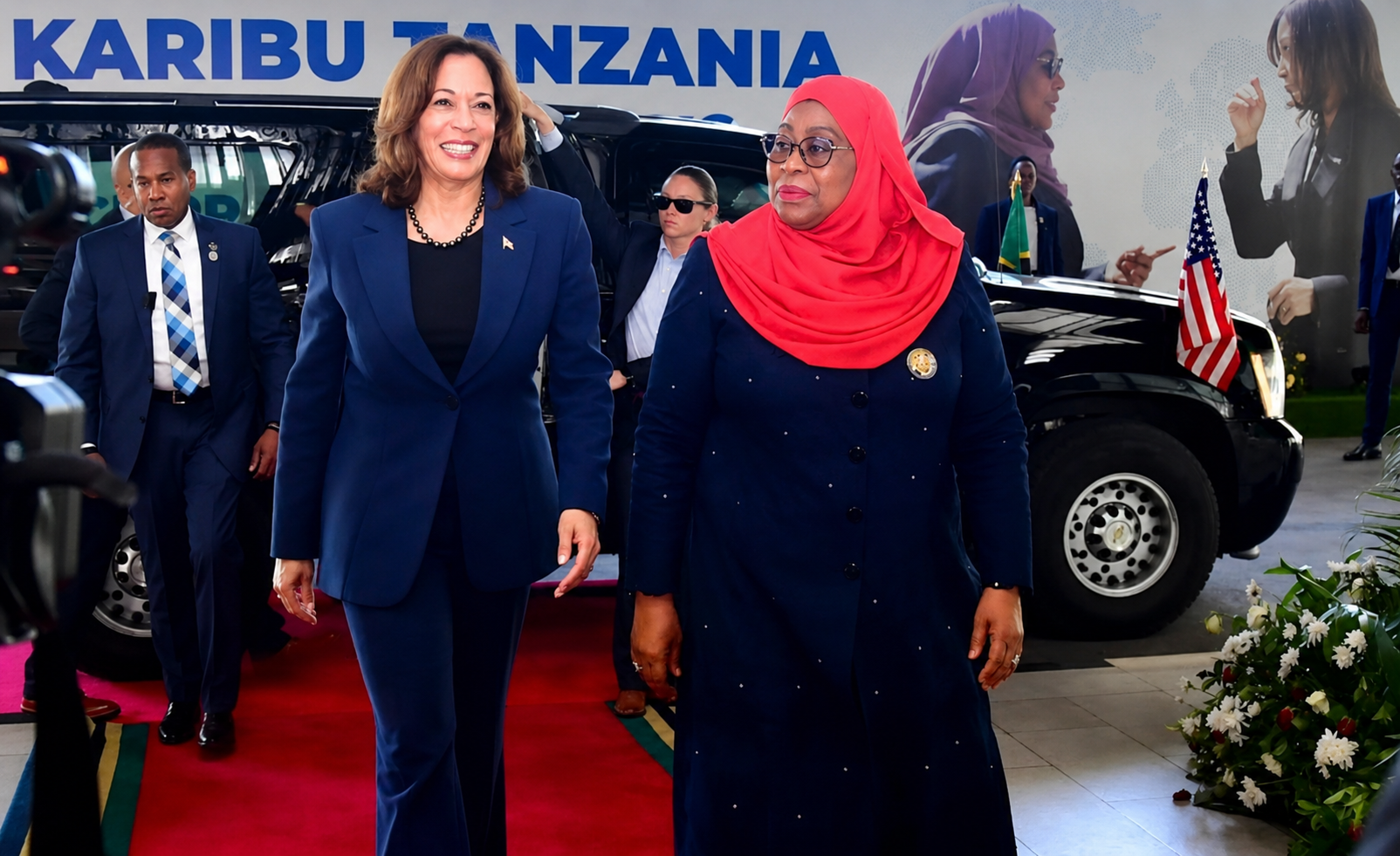
The relationship between the United Republic of Tanzania and the United States of America is neither new nor insignificant. It is a relationship built over decades through development cooperation, trade, investment, education, health programmes, tourism, security collaboration, cultural exchange, and countless personal connections between ordinary citizens. Thousands of Tanzanians have studied in American institutions, learned from American innovations, built professional relationships with American colleagues, and benefited from partnerships supported by the American people. Likewise, American businesses, researchers, development practitioners, tourists, and investors have found opportunities and partnerships in Tanzania. T
hese connections matter because they remind us that international relations are ultimately about people before they are about politics.
Naturally, every sovereign nation has the right to express concerns about developments in another country and to determine its own foreign policy priorities. That principle is fundamental to international relations. The United States has every right to evaluate its partnerships through the lens of its own national interests and values. Equally, Tanzania has the right to expect that any evaluation of its progress, challenges, and aspirations reflects the complexity of its national reality rather than a single narrative.
This is where I believe an important distinction must be made. There is a difference between assessing a country and understanding it.
Assessment often relies on indicators, reports, observations, and findings. Understanding requires context. It requires history. It requires listening. It requires recognising that nations, like people, cannot be fully understood through isolated incidents or selective observations.
Tanzania’s story is more complex than any single report can capture.
For more than six decades since independence, Tanzania has remained one of Africa’s most stable and peaceful nations. In a continent that has at various moments witnessed civil wars, military coups, constitutional crises, political upheavals, and ethnic conflicts, Tanzania has largely maintained national unity and peaceful coexistence among more than 120 ethnic communities. This achievement is not accidental. It is the product of deliberate nation-building, sustained investment in social cohesion, and a political culture that has historically valued dialogue and consensus.
This does not mean Tanzania is without challenges. Every nation faces challenges. Democracies evolve. Institutions mature. Citizens demand more accountability. Governments face scrutiny. These realities are not unique to Tanzania. They are part of the ongoing democratic journey experienced by countries across the world, including some of the oldest democracies on earth.
Indeed, recent history reminds us that no nation has a monopoly on democratic perfection. Across the globe, societies continue to wrestle with issues of political polarisation, misinformation, electoral disputes, declining trust in institutions, social inequality, and the growing influence of digital platforms on public discourse. These challenges have become defining features of our time. They are not confined by geography, ideology, or economic status.
For this reason, international partnerships should be guided not only by criticism when shortcomings emerge but also by humility and mutual respect. The most productive partnerships are those that create space for honest conversations without reducing one side to a subject of judgment and the other to a position of permanent authority.
As someone who has spent much of his professional life working in communication and public affairs, I have learned that perception is one of the most powerful forces in public life. Perceptions influence decisions. They shape reputations. They affect confidence. They determine whether investors choose one destination over another, whether tourists feel welcome, whether businesses expand, and whether citizens trust institutions.
Unfortunately, perceptions can sometimes travel faster than facts. Once a narrative takes hold internationally, it often becomes difficult to introduce nuance. Complex realities become simplified into headlines. Achievements disappear behind controversies. Context is lost. Public opinion hardens.
This is why diplomacy matters.
Diplomacy is not merely the exchange of official statements between governments. At its best, diplomacy is structured listening. It is the recognition that understanding another perspective does not require abandoning one’s own. It creates opportunities to challenge assumptions, clarify misunderstandings, share concerns, and identify common ground.
History consistently demonstrates that engagement produces more lasting outcomes than isolation.
The transformation of relations between former adversaries such as the United States and Vietnam stands as a powerful example of how dialogue can replace suspicion and create mutually beneficial partnerships. Across the world, peace agreements, democratic transitions, and economic partnerships have often succeeded because communication channels remained open even when disagreements were profound.
The same principle applies today.
Where concerns exist, they should be discussed candidly. Where reforms are needed, they should be encouraged constructively. Where differences arise, they should become the beginning of a conversation rather than the end of a relationship.
anzania’s diplomatic philosophy has long reflected this belief. From the era of Mwalimu Julius Nyerere to the present day, our country has consistently advocated peaceful engagement, regional cooperation, respect for sovereignty, and dialogue as instruments for resolving differences. Tanzania earned international respect not because it possessed overwhelming economic or military power, but because it chose principles over confrontation and conversation over coercion.
Those principles remain relevant in today’s increasingly fragmented world.
The enduring interests that unite Tanzania and the United States are far greater than any temporary disagreement. Both countries share an interest in economic growth, technological innovation, regional stability, educational advancement, public health, investment, environmental sustainability, and the prosperity of future generations. These are objectives that neither country can achieve fully in isolation and which are best pursued through cooperation rather than estrangement.
Perhaps this moment therefore presents an opportunity rather than a crisis.
It offers both nations an opportunity to listen more carefully, communicate more openly, and engage more honestly. It provides an opportunity to move beyond perceptions and rediscover the shared interests that have sustained the relationship for decades. Most importantly, it offers an opportunity to demonstrate that mature partnerships are capable of accommodating disagreement without sacrificing mutual respect.
At a time when the world seems increasingly divided, the temptation to retreat into opposing corners is understandable. Yet history repeatedly teaches us that progress is rarely achieved by those who stop talking to one another.
Strong nations, like strong individuals, do not fear conversation. They embrace it.
As Tanzania and the United States look to the future, the question should not simply be whether relations deserve reassessment. Every partnership benefits from periodic reflection. The more important question is whether that reassessment will strengthen understanding or deepen distance.
My hope is that it strengthens understanding.
Because in diplomacy, as in life, relationships endure not because differences never arise, but because both sides recognise that the bridge connecting them is more valuable than the argument separating them.