
AGRICULTURE remains the backbone of Tanzania’s economy, engaging more than 75 percent of the population according to government statistics. This broad sector includes both agroecological or natural farming systems and modern agricultural practices that rely heavily on chemical inputs, including pesticides.
While modern inputs are often used to boost yields, concerns continue to grow over their potential environmental and human health impacts, prompting increasing interest in sustainable alternatives such as agroecology.
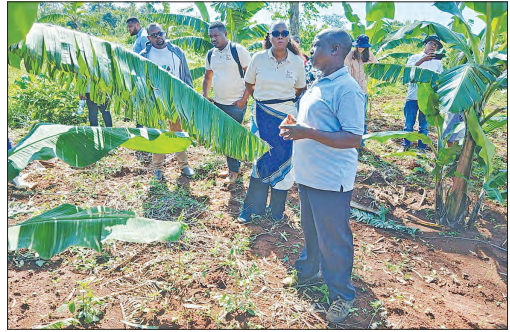
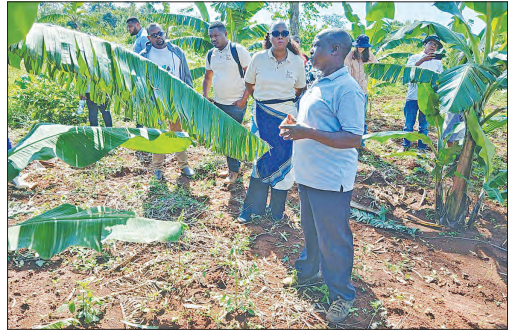
Across the country, agroecology is gaining attention as a farming approach that emphasizes ecological balance, soil health, biodiversity, and reduced dependence on synthetic chemicals. It is within this context that farmers like Nuhu Mwita from Magange Hamlet in Kiwawamba Village, Kiyore Ward, Ing’ano Division, Tarime District in Mara Region are demonstrating how natural farming can transform livelihoods.
A farmer’s shift from mining to agroecology
Mwita, now 58 years old, did not start his career in agriculture. He spent decades working in mining from 1983, an occupation he eventually left in 2014 after realizing it no longer offered sustainable benefits for his life and family. That same year, he made a decisive shift into farming, specifically agroecology, a move he now describes as life-changing.
He explains that the transition has transformed his life economically, socially, and in terms of health. What he once considered uncertain labor in mining; he now views farming as his true “gold.” For Mwita, agroecology is not just a farming method but a sustainable livelihood that continues to support his household and community.
He believes agroecology is a “savior” for farmers, particularly when there is a supportive environment that includes training, access to knowledge, and reliable markets for produce.
Building a diversified agroecological farm
Mwita began his agricultural journey with cassava cultivated through natural farming methods.
The results were highly successful, enabling him to educate his children and construct a modern house. Encouraged by these outcomes, he expanded his farm into a diversified agroecological system. Today, he cultivates multiple crops, including four varieties of local maize, which ensure he has a steady supply of seeds every year.
He also manages a 4.5-acre banana farm where he grows several varieties such as Bukoba, Nitwishe, Shakala, Mzuzu, Ng’ombe, Mshale, and Buganda—all of which perform well in the market. His banana enterprise alone includes approximately 1,200 banana pits, generating an estimated income of over 250,000/- per week, equivalent to around 1m/- per month and nearly 10m/- annually.
He notes that this is only part of his earnings, as maize, cassava, and other crops also contribute significantly to his income. In addition to staple crops, Mwita grows beans such as Kitenge, Njano, and Choroko, which provide additional income streams. His farming system is based on intercropping, a method that combines different crops on the same land. This approach improves soil fertility, enhances biodiversity, and contributes to environmental conservation.
Natural inputs and environmental conservation
Mwita’s agroecological system relies on manure-based fertilizers and natural pesticides rather than synthetic chemicals. He emphasizes soil health as the foundation of productive farming. By integrating livestock into his farm system, he produces manure that is reused as fertilizer, creating a closed-loop agricultural cycle.
He also practices mulching and encourages leaving crop residues in the field after harvest. According to him, banana leaves and other plant residues act as natural fertilizers when they decompose, enriching the soil and improving long-term productivity. Despite his success, Mwita faces challenges, particularly unreliable access to water during periods of low rainfall. However, he notes that Tarime’s soil has strong water retention capacity, which helps sustain agricultural productivity even under difficult weather conditions.
Training and institutional support
Mwita’s progress in agroecology has been supported by training from the Mogabiri Center for Agricultural and Environmental Development (MFEC) over the past 12 years. He acknowledges that continuous education has played a key role in strengthening his farming practices and improving productivity.
He has also contributed to knowledge sharing within his community, training more than 500 farmers and distributing seeds, some of which have become locally recognized under his name, “Nuhu seeds.” His journey reflects how small-scale farmers can evolve into key agricultural knowledge providers within rural communities. Mwita, however, highlights several structural challenges facing agroecological farmers. He calls for government support in transportation, particularly for moving natural fertilizers, which he says is costly.
ALSO READ: Dr Samia invites Russian investors to tap into Tanzania’s vast mineral wealth
For example, he notes that transporting a load of organic fertilizer currently costs around 220,000/-. He also raises concerns about market systems, pointing out that farmers often lack stable prices and are forced to accept prices set by buyers. In addition, he criticizes the use of buyer-controlled weighing scales, which he believes disadvantage farmers.
Call for stronger agroecology support
Mwita advocates for greater government investment in agroecology, arguing that it is more affordable and healthier compared to chemical-intensive farming. He believes modern farming inputs are expensive and often produce lower yields relative to their cost. He further urges policymakers to prioritize consumer health by promoting farming systems that minimize chemical exposure. In his view, agroecology offers a more sustainable and productive alternative that benefits both farmers and consumers.
Beyond production, Mwita has become a strong advocate for food sovereignty and rural self-sufficiency. He encourages young people to embrace agriculture, arguing that farming offers more stability than urban migration.
He has also expanded his land holdings through farming profits, further increasing his income and production capacity.
Institutional perspectives on agroecology
Agricultural officers and development organizations are increasingly supporting agroecological approaches in Tarime and beyond.
According to Christina Matutu from MFEC, the center has been educating farmers on sustainable agriculture practices, including research on banana varieties such as Shakala, which has shown strong performance in local conditions. MFEC promotes the use of manure-based fertilizers, emphasizing their safety and effectiveness for both consumers and the environment.
The center also produces seedlings for vegetables and fruit crops, supporting farmers with high-quality planting materials. Matutu notes that proper spacing, soil conditions, and water availability are essential for maximizing banana yields, all of which align with Mwita’s farming practices.
The Acting Manager of MFEC, Peter Mwita, highlights that the center’s work has been supported by international partners, including the French Embassy. Through the Agro Farming Project coordinated by Island of Peace (IDP), the embassy provided TZS 35 million to support irrigation infrastructure for agroecological farming systems.
This funding enabled the construction of water storage facilities with two 20,000-litre tanks used to irrigate demonstration farms throughout both rainy and dry seasons. These model farms serve as training sites for farmers across Tarime District. The project also promotes knowledge exchange among agroecology stakeholders and strengthens demonstration farming systems that support practical learning.
MFEC continues to train farmers on agroecology and irrigation, with a long-term vision of ensuring that every farmer in Tarime and Tanzania adopts sustainable farming practices that produce safe and nutritious food. Since its establishment in 1986, MFEC has expanded its reach significantly, training more than 35,000 farmers across 33 villages.
Demand for training has now extended beyond the region. Broader stakeholder collaboration The Agro Farming Project brings together multiple stakeholders including SJS Mwanga, RECODA, Sustainable Agriculture Tanzania (SAT), Bihawana Dodoma, and PPIZ Zanzibar. According to IDP Executive Director Ayesiga Buberwa, the initiative focuses on promoting sustainable food systems from production to consumption. He emphasizes that food security requires collaboration across institutions, research centers, and development partners.
The French Embassy’s financial support is described as a key contribution to advancing human and environmental health through agroecology. Representative of the French Government Professor Jean Luc Paul highlights France’s long-standing cooperation with Tanzania’s agricultural sector, including collaboration with Sokoine University of Agriculture (SUA).
He notes that support for agroecological initiatives is expected to transform farming systems and strengthen resilience. Meanwhile, Mikidadi Omari from the Government Agricultural Research Center in Bihawana emphasizes that agroecology aligns with national agricultural development goals.
He notes that the Ministry of Agriculture supports initiatives that increase productivity while ensuring environmental sustainability. He further stresses that achieving the national target of contributing 10% to GDP by 2030 will require inclusive participation from all agricultural stakeholders, including agroecology practitioners.
The experience of farmer Nuhu Mwita and supporting institutions demonstrates that agroecology is more than a farming method—it is a pathway to sustainable livelihoods, improved health, environmental conservation, and rural empowerment. While challenges remain in markets, infrastructure, and policy support, growing collaboration between farmers, government institutions, and international partners signals a strong future for sustainable agriculture in Tanzania.