
PANGANI: AS dawn breaks over the Indian Ocean in Pangani District, Sofia Waziri carefully tends rows of seaweed growing beneath the shallow waters.
For years, her work was limited by a lack of knowledge, markets and opportunities to learn from others facing similar challenges along Tanzania’s coast. Today, things are different.
Through the Tanga–Pemba Multi-Stakeholder Forum, Sofia is part of a growing network of coastal communities stretching from mainland Tanzania to the islands of Pemba, united by a shared commitment to protecting marine resources while improving livelihoods. “The forum has benefited us greatly,” she says.
“Today, communities from Pangani, Mkinga and Pemba work together because we understand that the ocean is interconnected.”
Her story reflects a broader transformation taking place across one of East Africa’s most important marine ecosystems.
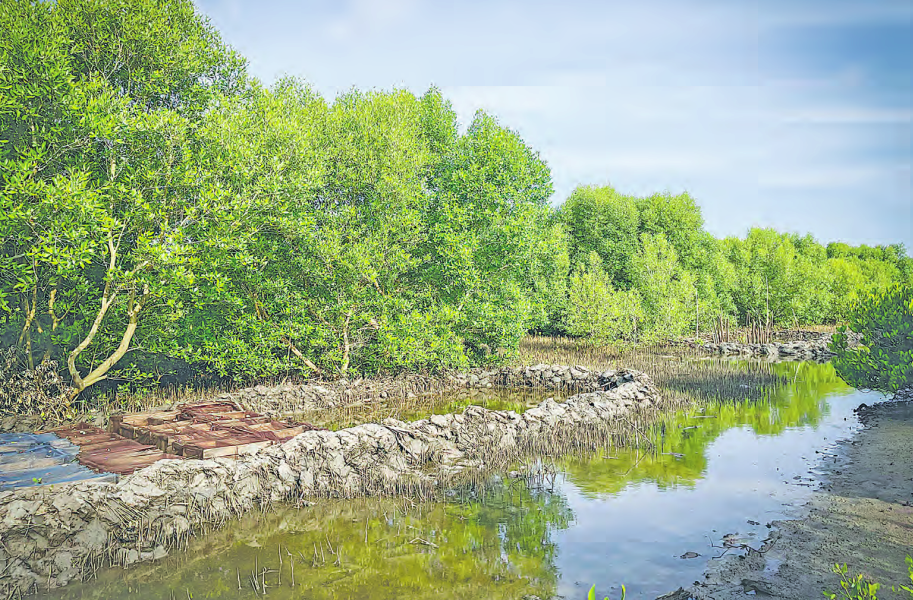
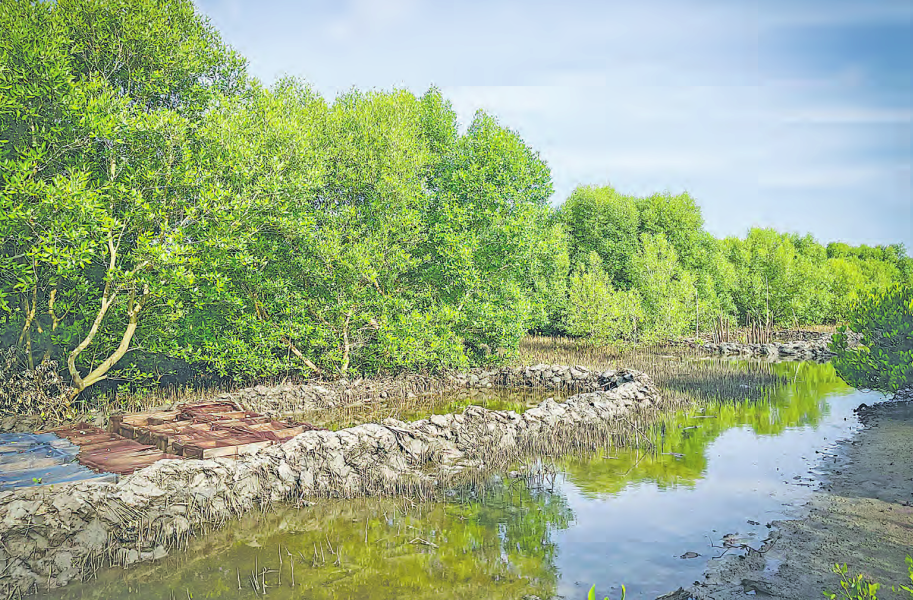
Stretching from Tanzania’s northern coastline to the islands of Pemba, the Tanga– Pemba Seascape is home to extensive coral reefs, mangrove forests, seagrass meadows and productive fishing grounds. Thousands of families depend on these resources for food, income and employment.
Yet the Seascape faces growing threats from climate change, overfishing, habitat degradation and increasing pressure on natural resources.
Coral reefs that serve as breeding grounds for fish are vulnerable to warming seas, while mangrove forests that protect coastlines and store vast amounts of carbon continue to face human pressures in some areas.
For coastal communities, environmental decline is not simply an ecological concern. It directly affects livelihoods, food security and economic opportunities.
Recognising that no single institution could address these challenges alone, stakeholders established the Tanga–Pemba Multi-Stakeholder Forum in 2022 to create a coordinated approach to managing the shared marine ecosystem.
The initiative has since emerged as one of Tanzania’s most promising examples of collaborative marine conservation and sustainable blue economy development. Marine ecosystems do not recognise administrative boundaries.
Fish migrate freely between the waters of Tanga and Pemba. Ocean currents connect distant communities. Coral reefs, seagrass beds and mangrove forests form an ecological network that links people and places separated by hundreds of kilometres.
It is this reality that inspired the creation of the forum. Bringing together representatives from government institutions, local authorities, civil society organisations, research institutions, international conservation agencies, private sector actors and community groups, the platform provides a space where stakeholders can jointly discuss challenges and develop solutions.
According to the forum’s Co-Chairperson, Davis Mkotwa, one of the first priorities was to establish operational guidelines and create a framework capable of coordinating conservation and development efforts across the Seascape.
“As stakeholders, we meet to discuss issues related to conservation. The Tanga– Pemba area possesses enormous marine resources. Our objective is to strengthen collective action and ensure positive results for both people and nature,” he says.
The success of the initiative has attracted attention beyond the region. A similar platform has already been established in Mtwara, while plans are underway to create another forum in Zanzibar.
For many coastal residents, the forum’s greatest achievement has been giving communities a stronger voice. Before its establishment, many villages and community groups worked independently despite facing similar challenges.
Opportunities to exchange experiences, share innovations or collectively advocate for solutions were limited. Today, that situation is changing.
Sofia Waziri says the forum has created opportunities for seaweed farmers to learn from one another and improve their businesses through value addition and entrepreneurship.
“We previously had little experience in value addition for seaweed products in Tanga. Through the forum, we have been able to learn from others and improve our activities,” she explains.
She credits support from the International Union for Conservation of Nature (IUCN) and the Seascape initiative for helping establish ten entrepreneurship groups that are creating new economic opportunities for local residents. Across the channel in Pemba, communities report similar benefits.
Shekhan Amani Shekhan says the forum has transformed relationships between communities that once operated largely in isolation.
“Before the forum, each area worked independently. Today, we exchange experiences and learn from one another,” he says.
Community members have gained knowledge in mangrove restoration, seaweed farming, processing technologies and value addition for marine products. But perhaps the most important achievement, he says, is the ability to address common challenges collectively.
“The greatest benefit is that it gives us the power to discuss challenges together and present them to the relevant authorities.”
The result has been improved livelihoods, increased incomes and stronger community participation in marine resource management.
One of the strongest messages emerging from the forum is that conservation and economic development are not competing priorities. Rather, they are inseparable. Healthy marine ecosystems support fisheries, tourism, seaweed farming and countless other economic activities that form the foundation of the blue economy.
Without conservation, those opportunities cannot endure. “Without conserving marine resources, all other economic activities become meaningless because they cannot be sustainable,” says Mr Mkotwa.
ALSO READ: Project turns youth into active marine conservation advocates
his philosophy sits at the heart of the blue economy concept, which seeks to generate economic growth while ensuring that marine ecosystems remain healthy and productive for future generations.
The forum has therefore become an important bridge connecting conservation objectives with practical economic opportunities for coastal communities. Beyond community engagement, the forum is also playing an increasingly important role in shaping policy and strengthening governance.
Technical Adviser at Mwambao Coastal Community Network, Ali Thani, says the platform has become significantly more active and influential in recent years.
“The number of members has increased and new issues have emerged through discussions that have contributed to policy development,” he notes.
Officials from both Tanzania Mainland and Zanzibar say the forum has improved coordination among institutions that previously worked separately.
Assistant Director of Fisheries, Christian Nzowa, recalls that growing concerns over environmental degradation prompted authorities to seek a more integrated approach.
What began as collaboration between fisheries authorities and Zanzibar’s blue economy institutions later expanded to include local government authorities, conservation organisations such as WWF and IUCN, researchers and coastal communities.
The discussions initially focused on environmental policy but eventually broadened to include governance, awareness creation and sustainable financing mechanisms. Specialised working groups now focus on issues such as mangrove restoration, coral reef rehabilitation and sustainable fisheries management.
The forum has also contributed to identifying and supporting critical conservation areas for formal protection. Knowledge sharing has become another important pillar of the forum’s success.
Scientists, conservation practitioners and community members regularly interact through the platform, helping ensure that scientific research informs practical solutions on the ground.
At the same time, local experiences and traditional knowledge help shape conservation strategies. Forum members have participated in learning exchanges and study tours to countries with extensive experience in Seascape management, including Indonesia and Fiji.
These visits have exposed stakeholders to innovative approaches for balancing biodiversity conservation with community development.
According to Dr Salim Mohamed Hamza, Principal Officer in Zanzibar’s Ministry of Blue Economy and Fisheries, the forum evolved from the earlier Bahari Mali initiative.
Initially designed to support entrepreneurs in Pemba, Mkinga and Pangani, stakeholders soon realised the need for a broader platform capable of delivering long-term conservation and development outcomes.
“The blue economy cuts across many sectors. We needed a platform for consultation and information sharing because many institutions are working within the Tanga–Pemba Seascape,” he explains.
Ultimately, he says, the initiative is about improving people’s lives.
“When marine ecosystems are degraded, it is the communities who suffer first.”
Among the forum’s most ambitious goals is securing international recognition for the Tanga–Pemba Seascape as a UNESCO Man and Biosphere Reserve.
The designation would place the area among globally recognised landscapes where conservation, scientific research and sustainable development are integrated.
Stakeholders believe the recognition could strengthen conservation efforts, attract investment, promote sustainable tourism and create new opportunities for local communities.
More importantly, it would showcase the Tanga– Pemba Seascape as an international model of collaborative marine management. Evidence of progress is increasingly visible across coastal districts.
In Mkinga District, Community Development Officer Elizabeth Dickson Malale says the forum and associated projects have stimulated entrepreneurship and economic activity.
More than 270 groups have been established and registered, with 68 focusing specifically on processing marine products.
At the same time, communities have reported encouraging signs of ecological recovery, including increases in fish populations and other marine species in some areas.
While challenges remain, these developments suggest that efforts to combine conservation and livelihood improvement are beginning to bear fruit.
Across the waters that connect Pangani, Mkinga and Pemba, fish, currents and coral reefs ignore political boundaries. Increasingly, the people who depend on them are doing the same.
The Tanga–Pemba MultiStakeholder Forum has demonstrated that protecting the ocean is not solely the responsibility of governments or conservation organisations.
It is a shared undertaking that links fishermen, seaweed farmers, entrepreneurs, researchers, policymakers and conservationists.
In a world where marine ecosystems face mounting pressure from climate change and human activity, the experience of the Tanga–Pemba Seascape offers an important lesson.
When communities are empowered, institutions coordinate their efforts and conservation is linked directly to livelihoods, both people and nature can thrive.
For the thousands of families who depend on the waters of the Tanga–Pemba Seascape, that lesson is already helping shape a more sustainable and resilient future.