
ALGIERS: Tanzania’s growing reputation as one of Africa’s most promising investment destinations is attracting increasing attention from international businesses, with several leading Algerian companies now seeking partnerships in the country’s expanding manufacturing and agricultural sectors.
The latest wave of interest emerged during the ongoing 57th Algiers International Fair (FIA), where Tanzanian representatives are actively promoting the country’s vast investment opportunities, export potential, and strategic position as a gateway to regional markets.
The annual fair, officially inaugurated by Algerian President Abdelmadjid Tebboune on June 22, 2026, at the Exhibition Center of the Algerian Fairs and Export Company (SAFEX) in Algiers, remains the largest international trade and investment exhibition in Algeria. It serves as a major platform for connecting businesses, governments, and investors from across Africa and beyond.
This year’s event has attracted an impressive 731 exhibitors, including 529 Algerian companies representing a broad range of economic sectors and 202 foreign companies from 36 countries, among them 16 African nations. The scale of participation reflects the growing importance of intra-African trade and investment as countries seek to deepen economic cooperation and capitalize on opportunities presented by the African Continental Free Trade Area (AfCFTA).
Among the most notable developments at the fair is the strong interest shown by Algerian companies in establishing business partnerships with Tanzanian enterprises and investing directly in key productive sectors of the economy.
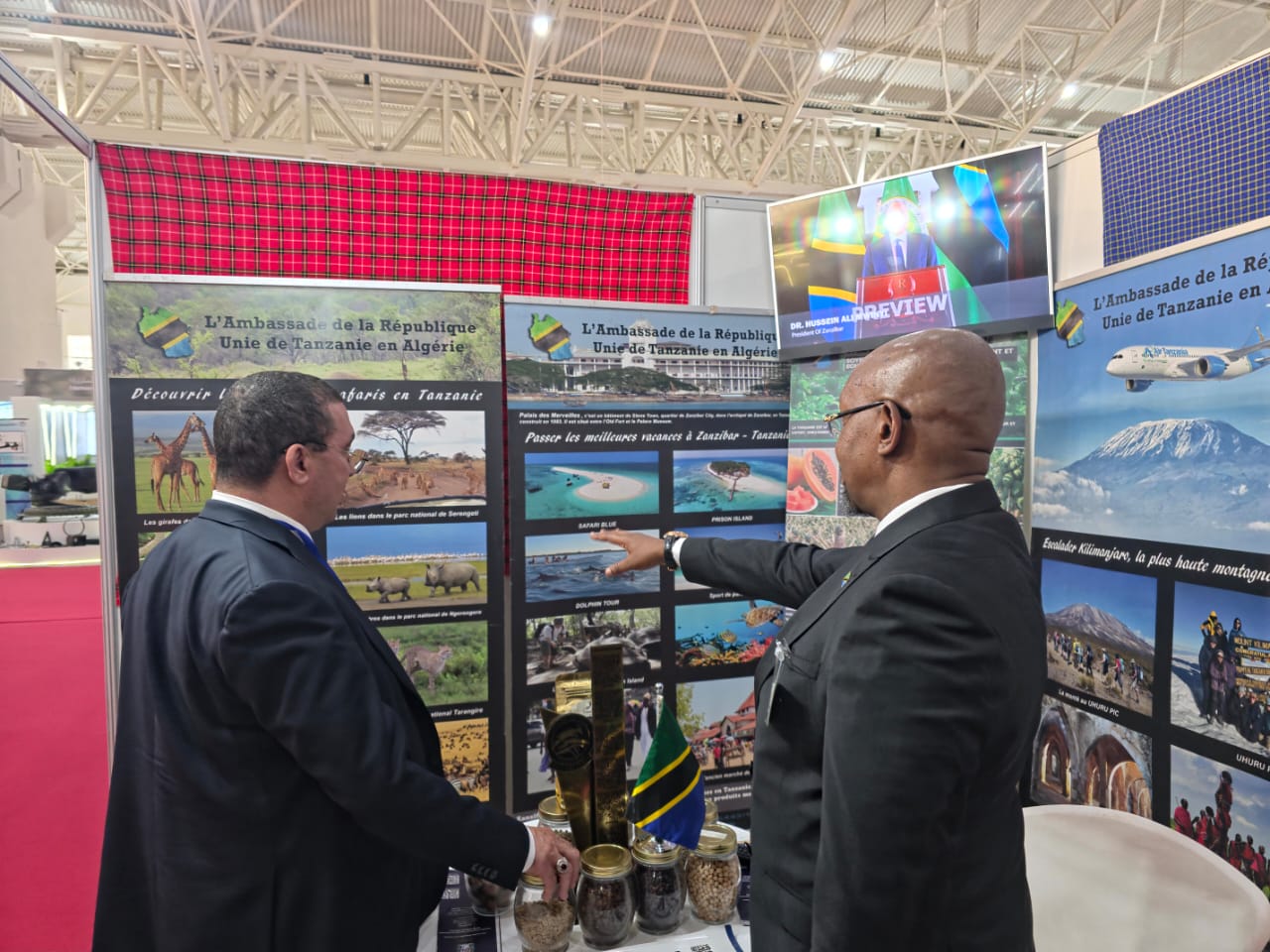
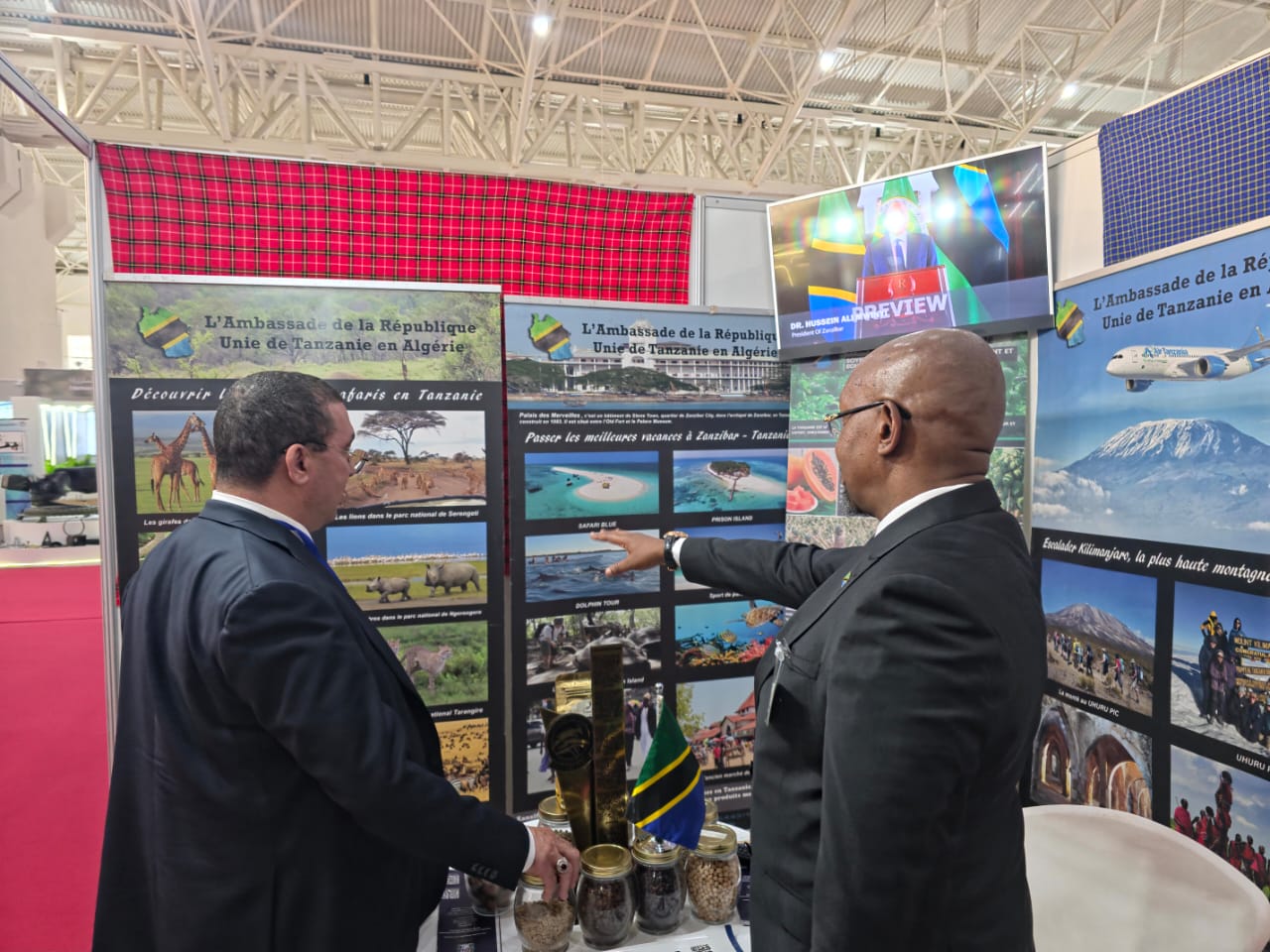
Speaking at the Tanzania Pavilion on the second day of the exhibition, Tanzania’s Ambassador to Algeria, Mobhare Matinyi, highlighted several Algerian companies that are already taking concrete steps toward building commercial and investment relationships with Tanzania.
One of these is the GISB Group of Companies, a diversified Algerian conglomerate that plans to begin by exporting electrical equipment and household appliances to Tanzania. The company is also exploring the possibility of investing in electrical cable manufacturing within the country.
The interest in cable production is largely driven by Tanzania’s growing industrialization agenda and the availability of raw materials, particularly copper, which is essential for electrical cable manufacturing. Such an investment could contribute significantly to local value addition, job creation, and industrial development.
Another major Algerian conglomerate, GETEX, has expressed interest in sourcing agricultural products from Tanzania, particularly sisal and cotton. Beyond trade, the company is also exploring investment opportunities in Tanzania’s leather-processing industry.
The leather sector has emerged as one of Tanzania’s strategic industrial priorities due to the country’s large livestock population and the availability of raw hides and skins. Investments in leather processing and manufacturing are expected to increase value addition while reducing the export of raw materials.
According to Ambassador Matinyi, discussions between Tanzanian and Algerian companies have already advanced beyond preliminary conversations.
“Following his first visit to Tanzania in May 2026, the Chief Executive Officer of GISB, Dr. Mohamed Khelifa, is scheduled to return in July 2026 to continue discussions on potential investment opportunities,” Ambassador Matinyi said.
Similarly, senior executives from three subsidiaries of the GETEX Group are planning to visit the Kilimanjaro International Leather Products Factory (KLICL) in October 2026 to explore potential collaboration opportunities and assess the feasibility of future investments.
The growing interest from Algerian businesses extends beyond manufacturing and agriculture.
Several other companies participating in the fair are also exploring opportunities to export products to Tanzania while assessing prospects for future investments.
Among them is Tapidor, a company renowned for producing carpets and FIFA-certified artificial turf used in football stadiums and sports facilities. Such products could find growing demand in Tanzania, where sports infrastructure development continues to expand.
Another company, Optimaflex, specializes in mattress manufacturing and is evaluating opportunities within Tanzania’s rapidly growing consumer market.
Géant Electronics, one of Algeria’s leading producers of electrical appliances and consumer electronics, has also shown interest in the Tanzanian market, reflecting increasing demand for modern household technologies across East Africa.
Bellat, a company involved in meat processing and residential construction projects, is similarly exploring potential partnerships and investment opportunities within Tanzania.
Meanwhile, SARL CPC, an Algerian company operating in the fisheries and food- processing sector, has expressed interest in importing sardines and tuna from Tanzania.
As part of efforts to strengthen business relations, the company’s General Manager, Samir Benhamada, is expected to visit the Zanzibar Fisheries Company (ZAFICO) in July 2026 to explore areas of cooperation and potential supply arrangements.
Ambassador Matinyi noted that Algerian demand for Tanzanian products extends well beyond fisheries.
Several companies have expressed interest in importing agricultural commodities and food products that are either produced in large quantities in Tanzania or have significant export potential.
These include coffee, cashew nuts, bananas, soybeans, rice, powdered milk, and various livestock products, including beef, goat meat, and sheep meat.
The demand for livestock products is particularly significant given Algeria’s substantial domestic consumption requirements.
As an example, Ambassador Matinyi cited the recent Eid Al-Adha celebrations, during which the Algerian government imported approximately one million sheep from international markets to meet demand.
This presents an important opportunity for Tanzanian livestock producers and exporters to access one of North Africa’s largest consumer markets.
Beyond facilitating trade discussions, the Tanzania Pavilion has also served as a showcase for the country's diverse investment opportunities and tourism attractions.
Visitors to the pavilion have been introduced to Tanzania’s world-famous national parks, pristine Indian Ocean beaches, iconic mountains, historical landmarks, and rich cultural heritage.
At the same time, Tanzanian representatives have promoted investment opportunities across a range of strategic sectors, including mining, agriculture, manufacturing, energy, logistics, tourism, and services.
The country’s stable political environment, expanding infrastructure network, strategic geographical location, and commitment to economic reforms continue to strengthen its attractiveness to foreign investors.
The exhibition has also provided an opportunity for Tanzanian institutions to engage directly with potential partners and investors.
Alongside the Embassy of Tanzania in Algeria, two government institutions are participating in the fair.
ALSO READ: Algiers Trade Fair: A chance Tanzanians shouldn’t miss
The Tanzania Fertilizer Regulatory Authority (TFRA) is represented by ICT and Statistics Manager Robert Mtendawema, while the Warehouse Receipts Regulatory Board (WRRB) is represented by Acting Chief Accountant Gilbert Lyimo and Principal Accounting Officer Omary Mafita.
Their participation underscores Tanzania’s commitment to promoting investment, facilitating trade, and strengthening commercial partnerships with international stakeholders.
As business engagements continue at the Algiers International Fair, the growing interest from Algerian companies signals a promising chapter in economic relations between Tanzania and Algeria.
The discussions taking place today have the potential to translate into long-term investments, technology transfer, job creation, industrial growth, and expanded export markets for Tanzanian products.
For Tanzania, the fair is more than just an exhibition. It is an opportunity to position itself as a competitive investment destination and a reliable trade partner within Africa. For Algerian companies, it represents a gateway to one of the continent’s fastest-growing economies and a strategic entry point into the East African market.
With several company visits already scheduled and investment discussions gaining momentum, the foundations are being laid for stronger economic cooperation between the two nations, creating new opportunities for businesses, investors, and citizens alike.