

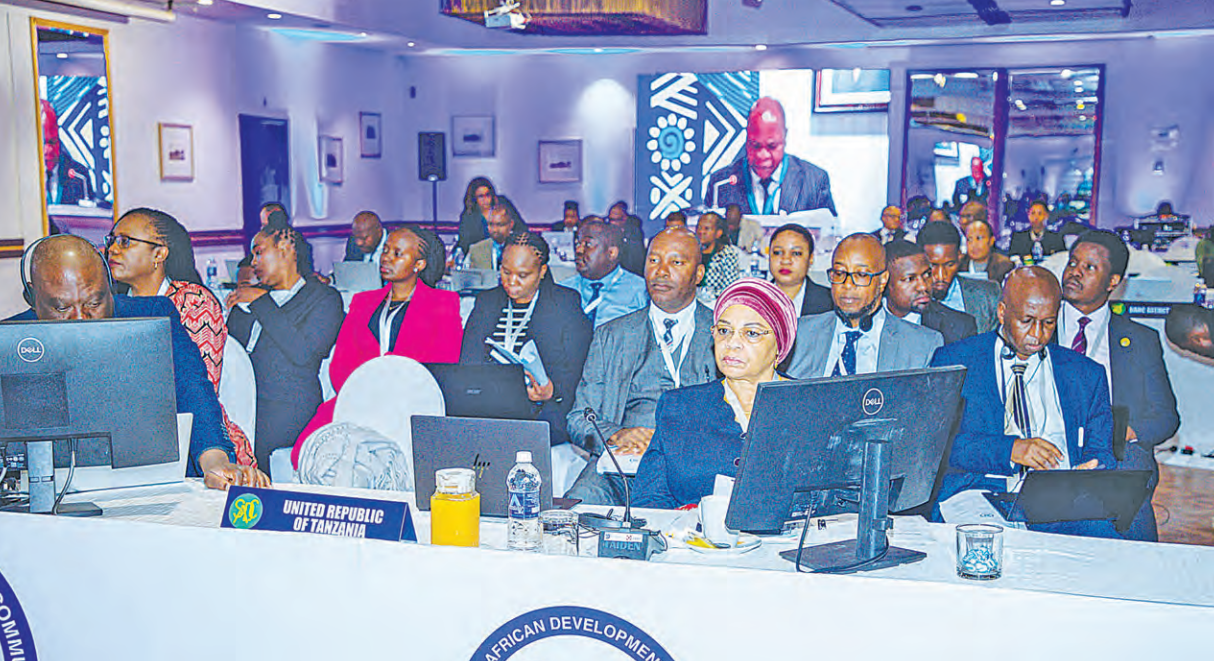
HARARE: TANZANIA has reaffirmed its dedication to regional economic integration, financial stability, and sustainable development following its participation in the SADC meeting in Harare, Zimbabwe, this week, which brought together senior treasury, central bank, and health officials.
The Tanzanian delegation, led by the Permanent Secretary to the Treasury, Dr Natu ElMaamry Mwamba, deliberated on critical issues affecting the region’s economic and social development.
The meeting brought together senior officials from ministries of finance, central banks, and health departments across SADC member states to review progress in regional integration and develop coordinated responses to emerging economic, financial, and public health issues.
It provided a key platform for members to share experiences, evaluate regional economic performance, and recommend actions to SADC ministers responsible for finance and investment.
From a regional economic standpoint, this meeting is critically important. The global economy faces ongoing uncertainty due to challenges such as geopolitical tensions, climate shocks, rising public debt, inflation, supply chain disruptions, and shifting trade dynamics.
These issues significantly impact African economies, particularly in the SADC region, highlighting the importance of enhanced regional cooperation.
Tanzania’s presence at the meeting highlights its growing influence in regional economic matters and its ongoing commitment to collaborating with neighbouring countries. This cooperation aims to boost economic growth, ensure financial stability and promote sustainable development.
Led by President Samia Suluhu Hassan, Tanzania has consistently supported efforts to enhance regional integration and strengthen cooperation among African nations.
During the opening speeches and discussion, officials reviewed the implementation of the SADC Protocol on Finance and Investment, a key regional framework for promoting economic cooperation.
The protocol seeks to align financial and investment policies among member states, promote cross-border investments, reinforce financial markets, and support economic integration. Discussions focused on ways to speed up implementation while ensuring member states gain the greatest benefits from regional cooperation.
A key discussion point at the opening speeches was the status of regional and global economic conditions. Participants observed that although many SADC economies have shown resilience recently, notable challenges persist. These include increasing debt-servicing costs, climate change effects, fluctuating commodity prices, and external shocks, all of which threaten economic growth and fiscal stability.
Officials highlighted the need for careful macroeconomic management and stronger policy coordination among member states. From the opening remarks, it was underscored that stable economic conditions encourage investment, job creation, and growth in the private sector. Participants concurred that sound fiscal and monetary policies are essential for maintaining economic growth and shielding economies from external shocks.
The presence of senior central bank officials emphasised the importance of sustaining financial-sector stability for achieving regional development objectives. The meeting covered a range of topics, including monetary policy coordination, financial inclusion, the resilience of the banking sector, and the modernisation of payment systems.
The main emphasis was on advancing regional payment systems to facilitate faster and more efficient cross-border transactions. Participants were told that robust payment systems are essential for increasing trade, reducing transaction costs, and improving financial integration within the region. As intraAfrican trade expands via the African Continental Free Trade Area (AfCFTA), the importance of seamless regional payment mechanisms grows even more.
The meeting also offered an update on the efforts of member states to enhance their AntiMoney Laundering and CounterTerrorism Financing (AML/ CFT) frameworks. Participants appreciated the advancements made by several nations in aligning with international financial standards and highlighted the need to uphold robust financial governance systems to safeguard the integrity of regional financial markets.
In Tanzania, improving financial governance is crucial as the nation aims to attract investments, boost financial inclusion, and build trust in its financial sector. Strong AML/CFT frameworks are increasingly seen as vital for a country’s investment environment and economic competitiveness.
Health officials at the meeting emphasised the increasing importance of incorporating public health into wider economic planning. The Covid-19 pandemic showed the strong link between health systems and economic performance, underscoring the necessity for resilient healthcare systems that can handle future public health crises.
Participants explored ways to strengthen health financing, improve regional disease surveillance, boost preparedness for future outbreaks, and foster cooperation among member states on cross-border health issues. Officials highlighted that investing in health systems is not just a social expense but also a vital investment in economic resilience and human capital.
Climate change was a key topic during discussions. Member states recognised that extreme weather events, droughts, floods, and other climate shocks still impact the economy, food security, and public finances in the region. They urged for more investment in climate adaptation and stronger collaboration to mobilise climate finance for sustainable development.
The meeting examined progress in establishing the SADC Regional Development Fund, a key initiative aimed at mobilising resources for regional infrastructure and development projects. This fund is expected to play a vital role in financing efforts that improve regional connectivity, promote economic growth and support social development.
Infrastructure development continues to be a key focus for the region. Participants agreed that investing in transport networks, energy systems, digital connectivity, and logistics is crucial for unlocking economic potential and boosting regional competitiveness. Better infrastructure is anticipated to promote trade, attract investments, and support industrialisation in member states.
In Tanzania, these discussions are especially important considering the country’s significant investments in key infrastructure, such as the Standard Gauge Railway (SGR), port modernisation efforts, energy developments, and road network expansion. These projects closely align with regional goals to enhance connectivity and promote economic integration.
Leading the Tanzanian delegation, Dr Natu El-Maamry Mwamba contributed to discussions on strengthening regional cooperation and advancing Tanzania’s national development priorities. Her participation, as leader of the Tanzanian team, reflects the Ministry of Finance’s continued engagement in regional policy dialogues that influence economic and financial developments across Southern Africa.
The meeting enabled Tanzania to exchange experiences and learn from the best practices of other SADC member states. These interactions are important for countries to enhance policy effectiveness and discover innovative solutions to shared development issues.
Aside from technical talks, the Harare meeting emphasised how crucial collective effort is in tackling growing regional and global challenges. Whether it involves economic shocks, health crises, climate change, or financial risks, countries cannot effectively manage these problems alone.
Regional cooperation, especially under the envisaged RDF when it becomes operational, will provide SADC member states with valuable opportunities to pool resources, exchange knowledge, align policies, and enhance resilience. For Tanzania, actively engaging in SADC processes supports national goals of fostering sustainable economic growth, attracting investments, generating jobs, and raising living standards.
From the opening remarks, the meeting’s outcomes are anticipated to guide future discussions by SADC ministers responsible for finance and investment. Recommendations from senior officials will influence regional policies and initiatives aimed at enhancing economic cooperation and fostering regional development critical to SADC member states.
ALSO READ: SADC security talks: Tanzania signals continued regional cooperation
As Southern Africa faces an ever-evolving global landscape, forums like the SADC Meeting of Senior Treasury, Central Bank, and Health Officials remain vital for encouraging dialogue, reaching consensus, and promoting common development goals.
Led by PST, Dr Natu ElMaamry Mwamba, Tanzania’s involvement showcases its dedication to regional collaboration and its aim to play a vital role in fostering a more prosperous, resilient, and unified Southern African region. By maintaining active participation in these initiatives, Tanzania positions itself not just as a recipient of regional integration benefits but also as a proactive supporter of the area’s long-term economic growth and sustainable development.