

RUVUMA: WHEN billions of shillings are invested in development projects, the public expects more than freshly painted signboards and ceremonial ribbon-cutting. Communities want schools that educate, health centres that heal, roads that last and water projects that actually deliver water.
In Ruvuma Region, ensuring that public resources translate into meaningful development has become a shared responsibility, with the Prevention and Combating of Corruption Bureau (PCCB) playing a central role in safeguarding both public funds and public trust.
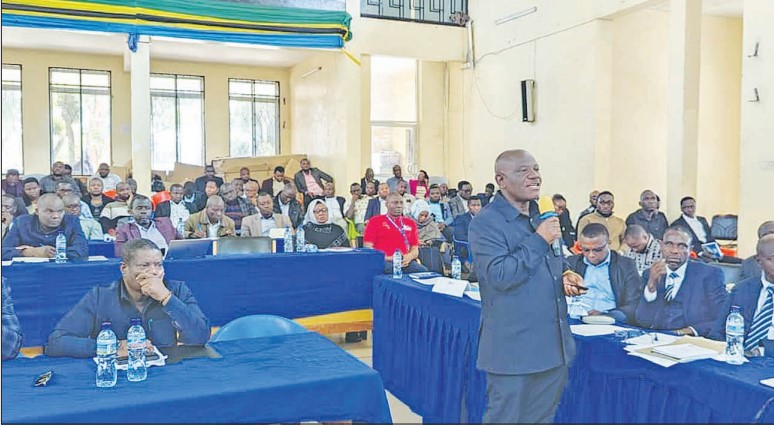
That commitment was once again brought into focus on June 30, 2026, when the Ruvuma Regional PCCB presented the findings of its monitoring exercise covering development projects implemented during the 2025/2026 financial year.
The report, presented during a regional meeting to evaluate the implementation of development programmes at Songea Municipal Hall, painted a balanced picture one that acknowledged commendable progress while identifying weaknesses requiring continued vigilance. Presenting the report, Ruvuma Regional PCCB Commander Hamza Mwenda said the bureau monitored 290 development projects with a combined value of 358.41bn/-.
The monitoring exercise also covered funds allocated for implementing the projects together with other public expenditures across the region. Given the scale of public investment involved, the bureau’s task extended well beyond simply checking whether buildings had been completed or roads had been constructed.
It also sought to determine whether financial resources were being used for their intended purposes and whether project implementation complied with established procedures designed to prevent corruption. The assessment revealed that 188 projects showed corruption risk indicators, commonly referred to as “red flags.”
However, the presence of risk indicators did not automatically imply corruption had occurred. Rather, the findings identified areas requiring closer examination to establish whether procurement procedures, contract management or financial controls had been properly followed. Following further assessment, 43 projects were subjected to detailed investigations, while 20 cases progressed to court for legal determination.
Mwenda said the remaining 102 projects showed no signs of corruption risk, reflecting compliance with established procedures during implementation. The bureau’s work, however, did not stop at identifying shortcomings. Following the investigations, PCCB identified deficiencies in the projects that displayed weaknesses and issued recommendations aimed at improving implementation and strengthening accountability.
According to Mwenda, recommendations were provided for all 188 projects where shortcomings had been identified and corrective measures have since been implemented. In addition to recommending improvements, the bureau also focused on prevention through education.
Stakeholders responsible for implementing and supervising development projects received training on sound project management practices and corruption prevention measures, reinforcing the principle that preventing corruption is often more effective than prosecuting it after public resources have already been lost. After all, repairing a procedural mistake is usually less expensive than repairing a halffinished building.
Mwenda explained that PCCB’s oversight role is firmly grounded in law. Under Section 7(a) and (c) of the Prevention and Combating of Corruption Act, Chapter 329, as revised in 2023, the bureau is mandated to examine systems and operational procedures within government institutions, public bodies and the private sector to identify loopholes that may facilitate corruption.
The law also empowers PCCB to detect corruption risk indicators commonly known as red flags and implement preventive measures before weaknesses evolve into actual cases of corruption. According to Mwenda, this preventive approach forms an important pillar of the bureau’s broader mandate.
Beyond conducting criminal investigations, PCCB is responsible for ensuring that funds allocated to development programmes and projects are utilised strictly for their intended purposes.
ALSO READ: From Ambition to Execution: Infinity power pushes Africa’s clean energy agenda
This responsibility is carried out through a combination of research, systems analysis, corruption risk assessments and Public Expenditure Tracking Surveys (PETS), all of which help determine whether public resources are delivering the intended benefits to citizens. Earlier in his presentation, Mwenda acknowledged the cooperation the bureau continues to receive from various government departments and stakeholders.
He thanked them for supporting PCCB’s efforts to strengthen transparency and accountability in the implementation of development projects across Ruvuma Region. The monitoring exercise also revealed several practical shortcomings that affected project implementation. Some projects were executed below the required quality standards.
Others lacked formal contracts for contractors, while in certain instances contractors were awarded contracts only after work had already commenced. Although these deficiencies pointed to weaknesses in project administration, Mwenda emphasised that they represented only a small proportion of the projects assessed.
Overall, he noted, most development projects across Ruvuma Region had been implemented to satisfactory quality standards. The findings suggest that while there remains room for improvement, significant progress has also been made in strengthening accountability within the region’s development programmes.
The guest of honour, Ruvuma Regional Commissioner Brigadier General Ahmed Abbas Ahmed, welcomed the bureau’s report and commended the professionalism demonstrated by Commander Mwenda and the entire PCCB team.
He said their commitment to monitoring and investigating development projects plays an important role in protecting public interests and ensuring that government resources benefit the citizens for whom they are intended.
According to the Regional Commissioner, the report itself provided encouraging evidence that the majority of development projects implemented across Ruvuma Region had been managed responsibly by the various implementing stakeholders. He noted that such findings should inspire confidence among citizens while motivating project implementers to maintain high standards of accountability.
Brigadier General Ahmed Abbas Ahmed also expressed appreciation to the President of the United Republic of Tanzania, Dr Samia Suluhu Hassan, for continuing to allocate substantial financial resources to development projects in Ruvuma Region.
He observed that the current financial year’s allocation had increased compared to previous years, a development expected to accelerate project implementation and contribute to improving the welfare of public servants. The Regional Commissioner further highlighted the region’s performance in revenue collection.
He said Ruvuma had successfully met its revenue collection targets, with 60 per cent of the collected dividend remitted to the Government. The achievement, he said, reflects continued efforts to strengthen financial management while supporting national development priorities.
Speaking before the guest of honour, Ruvuma Regional Administrative Secretary Mary Makondo emphasised that development projects should never be judged solely by the amount of money invested. Instead, she said, projects must be implemented to high-quality standards while delivering genuine value for money. Makondo urged all stakeholders involved in planning, supervising and implementing development projects to fulfil their responsibilities diligently.
Effective supervision, she noted, is essential to ensuring projects meet expected standards and ultimately deliver the intended benefits to citizens. Her remarks echoed one of the meeting’s central messages: accountability is not the responsibility of one institution alone but requires collective commitment from every stakeholder involved in the development process.
The discussions in Songea reflected a broader shift in public sector governance, where success is increasingly measured not only by the number of projects completed but also by the quality of implementation, compliance with procedures and responsible stewardship of public resources.
For PCCB, the objective extends beyond uncovering wrongdoing. Its preventive work seeks to strengthen systems, improve transparency and close loopholes before corruption takes root.
And while contractors might sometimes wish paperwork could travel as quickly as construction equipment, the bureau’s message was unmistakable: in public projects, proper documentation should arrive before the cement mixer not after it.
Ultimately, the report presents a cautiously optimistic assessment of development in Ruvuma Region. Most projects have been implemented satisfactorily, significant public investments continue to reach communities and institutions are working together to strengthen oversight.
At the same time, the identified shortcomings serve as an important reminder that safeguarding public resources requires constant vigilance, strong institutions and an unwavering commitment to accountability, ensuring every shilling invested delivers lasting value to the people it is intended to serve.