
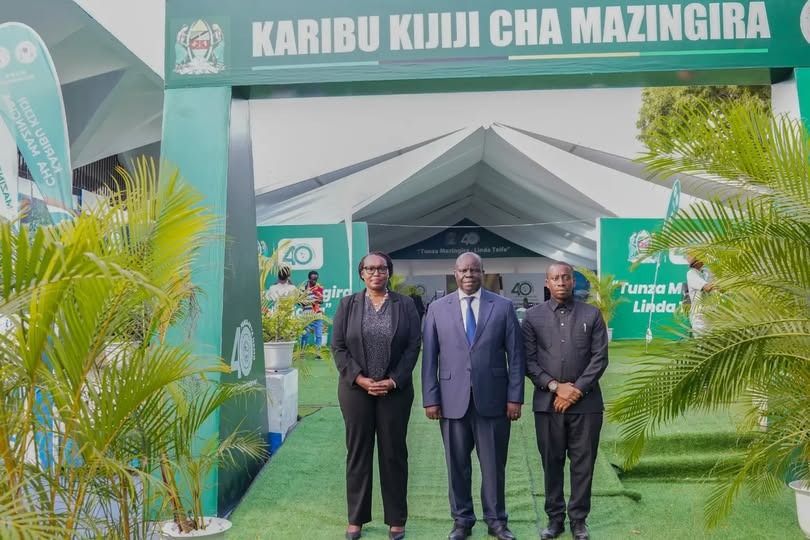
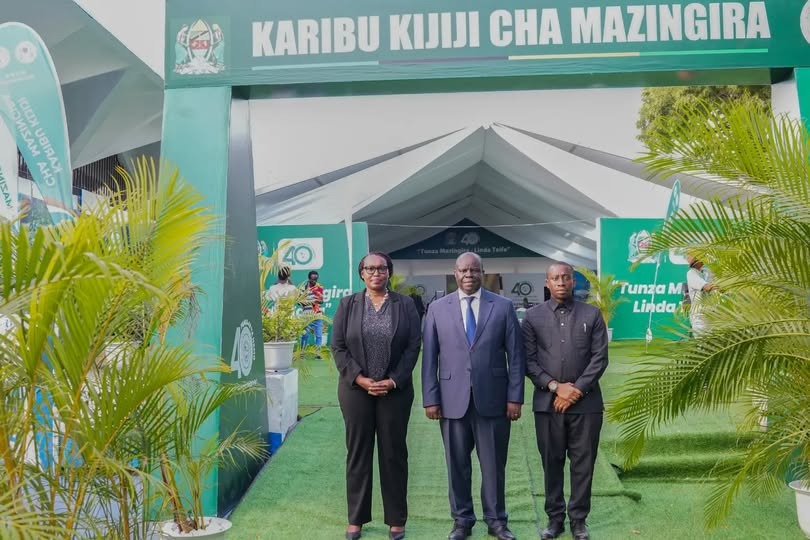
DAR ES SALAAM: THE government is stepping up efforts to attract private investment into green industries, renewable energy and sustainable natural resource projects as it seeks to position itself as a regional hub for environmentally responsible economic growth.
The Permanent Secretary in the Vice-President’s Office, Dr Richard Muyungi said during Environment Day celebrations at the 50th Dar es Salaam International Trade Fair (DITF), that the government is encouraging domestic and foreign investors to expand investments in mineral beneficiation, the blue economy, carbon trading, sustainable tourism, clean energy and emerging technologies to boost industrialisation, create jobs and attract long-term capital while protecting the environment.
“Tanzania should no longer be viewed solely as a country rich in natural resources, but as a hub for green investment, sustainable trade and environmentally responsible industrial development,” Dr Muyungi said noting that said Tanzania’s abundant natural resources provide a strong platform for developing a competitive green economy.
He said expanding investment in environmentally sustainable industries would not only strengthen conservation efforts but also support economic diversification, industrial development and improved livelihoods.
Tanzania possesses a unique mix of strategic minerals, natural gas reserves, renewable energy resources, biodiversity, carbon trading opportunities and a growing blue economy that offers significant investment potential.
He noted that the country has set aside about 48.1 million hectares of forests equivalent to 38 per cent of its land area making Tanzania one of Africa’s leading countries in forest conservation and providing opportunities for carbon markets and climate-related investments.
Tanzania’s environmental assets also include Lake Tanganyika, which contains about 17 per cent of the world’s freshwater resources and the Serengeti ecosystem, whose annual migration of more than 1.5 million wildebeest and other wildlife remains one of the world’s premier tourism attractions.
Dr Muyungi said strategic resources, including nickel and natural gas, would continue supporting Tanzania’s industrialisation while contributing to the global transition toward cleaner energy and low-carbon development.
“These resources will form the foundation of our economy in the decades ahead,” he said. He added that sustainable management of natural resources is central to the implementation of Tanzania’s Development Vision 2050, which seeks to build a resilient, inclusive and environmentally sustainable economy capable of raising household incomes while safeguarding natural assets for future generations.
ALSO READ: Prime Minister pushes green agenda
Meanwhile, National Environment Management Council (NEMC) Director General, Dr Immaculate Semesi called for stronger collaboration among government institutions, the private sector, academia, young people and local communities to advance environmental protection and climate resilience.
The event concluded with awards recognising winners of the Environment Challenge and the signing of cooperation agreements between NEMC, Zanzibar’s Environmental Management Authority (ZEMA) and Environment Ambassadors to strengthen conservation initiatives and promote sustainable environmental management across the country.