
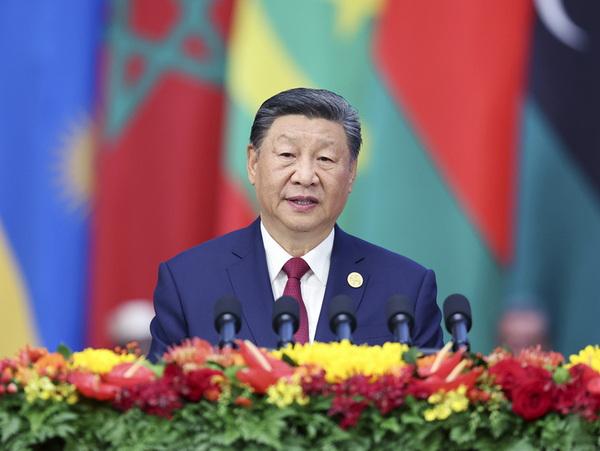
CHINA: WHEN the General Secretary of the Communist Party of China (CPC) and President of the People’s Republic of China, Xi Jinping, introduced the concept of the Chinese Dream, many observers initially viewed it as a domestic political slogan focused primarily on China’s national rejuvenation.
However, more than a decade later, the concept has evolved into a broader vision extending beyond China’s borders. It has become a framework through which China presents its aspirations for national development while simultaneously promoting international cooperation, shared prosperity, and peaceful coexistence.
As the leader of China’s fifth generation leadership, Xi Jinping inherited a nation experiencing steady economic growth, technological advancement, and increasing global influence.
Under his leadership, China has witnessed a stronger emphasis on economic development, while advancing a vision that connects national strength with improving the lives of ordinary citizens and fulfilling China’s responsibility to contribute to global development.
Fundamentally, the Chinese Dream is built around three major objectives: national rejuvenation, national prosperity, and improved living standards for the Chinese people.
However, Xi Jinping has consistently argued that China’s development should not take place in isolation. Instead, he maintains that China’s rise should create opportunities for other nations, particularly developing countries seeking sustainable growth and modernization.
ALSO READ: Local electric vehicle revolution begins with landmark manufacturing investment, innovation
This perspective distinguishes the Chinese Dream from many traditional approaches to national development. While every country naturally pursues its own interests, Xi’s vision repeatedly emphasizes that development becomes more meaningful when it generates mutual benefits.
China therefore presents itself not only as a beneficiary of globalization but also as an active contributor to global peace, economic cooperation, technological innovation, and shared development. One of the most notable features of the Chinese Dream is its emphasis on dialogue rather than confrontation.
Xi Jinping has consistently promoted peaceful development, arguing that long-term prosperity can only be achieved through cooperation among nations. His vision encourages countries to resolve differences through consultation, strengthen partnerships, and pursue mutually beneficial outcomes instead of engaging in zero-sum competition.
This philosophy has become increasingly relevant in an era characterized by geopolitical tensions, economic uncertainty, and global challenges that no single nation can address alone. Issues such as infrastructure development, public health, climate change, and technological transformation require collective responses. From this perspective, the Chinese Dream presents China’s development as interconnected with the progress of the wider international community.
Science, technology, and innovation occupy a central position in Xi Jinping’s vision. China has invested significantly in digital technology, artificial intelligence, renewable energy, advanced manufacturing, scientific research, and modern infrastructure.
These achievements have improved the lives of millions of Chinese citizens while also creating opportunities for international scientific cooperation, technology transfer, educational partnerships, and economic connectivity.
A defining characteristic of the Chinese Dream is its people-centred approach. Xi Jinping has repeatedly emphasized that national development must ultimately improve the lives of ordinary citizens.
The Chinese Dream envisions a society where young people have opportunities to realize their potential, entrepreneurs are encouraged to innovate, workers can advance through dedication, and individuals can contribute to national progress.
In this sense, the Dream is not merely a government objective but also a personal aspiration shared by millions of Chinese people. Unlike visions that focus solely on individual achievement, the Chinese Dream connects personal success with collective national development. It encourages individuals to pursue their ambitions while recognizing that their achievements contribute to broader social progress.
In this way, it links personal opportunity with collective responsibility, reflecting important elements of China’s historical and cultural traditions.
ALSO READ: Varsity launches EU climate project
The international dimension of the Chinese Dream is equally significant. Xi Jinping has repeatedly stated that China’s rejuvenation should contribute to humanity rather than pose a threat. Shortly after assuming national leadership, he emphasized that the Chinese people “love peace” and that China would remain committed to peaceful development, mutually beneficial cooperation, and fulfilling its international responsibilities.
These statements highlight China’s intention to present its rise as a force for stability rather than conflict. This vision has particular relevance for countries in the Global South.
Many developing nations face similar challenges related to infrastructure development, poverty reduction, industrialization, technological advancement, and investment in human capital. China’s experience demonstrates how longterm planning, innovation, education investment, and institutional development can contribute to economic transformation.
Although each country must follow its own unique development path, valuable lessons can be drawn from China’s experience. For Africa, Xi Jinping’s vision provides opportunities for deeper South-South cooperation. China has expanded partnerships across the continent through infrastructure development, industrial cooperation, education, technology, agriculture, and trade.
These engagements have generated important discussions about how developing countries can pursue modernization while maintaining national sovereignty and adapting development strategies to local realities. The Chinese Dream also carries a strong civilizational dimension.
It reflects China’s confidence in its history, culture, and development path while encouraging dialogue among nations rather than promoting a single model of modernization.
Xi Jinping has consistently argued that countries should respect one another’s historical experiences, cultural identities, and development choices. Rather than presenting a universal model that every nation should copy, the Chinese Dream encourages countries to draw strength from their own histories and traditions while pursuing transformation.
It suggests that nation-building does not require abandoning local values in favour of externally imposed models, but rather finding development approaches that align with each country’s circumstances. Comparisons are often made between the Chinese Dream and the American Dream.
While both concepts emphasize opportunity and national progress, they differ in important ways. The American Dream traditionally places greater emphasis on individual achievement and personal success, whereas the Chinese Dream places stronger emphasis on shared national rejuvenation alongside individual advancement. However, Xi Jinping has argued that different nations should pursue their own dreams based on their unique historical, cultural, and social conditions while contributing to global peace and prosperity.
Perhaps the greatest strength of the Chinese Dream lies in its message of a shared future. It promotes the belief that discipline, determination, innovation, and national unity can overcome historical challenges. Xi Jinping has repeatedly reminded both Chinese citizens and the international community that “all happiness is created through hard work.” This message carries universal relevance because it reflects values that extend beyond political systems and cultural differences.
The Chinese Dream therefore represents more than an aspiration for one nation. It proposes that national success should generate international opportunities, that development should be inclusive rather than exclusive, and that peace provides the foundation for lasting prosperity.
Regardless of whether one fully agrees with every aspect of China’s approach, there is no doubt that Xi Jinping’s vision has significantly influenced contemporary global discussions on development, modernization, and international cooperation.
As the world continues searching for new pathways toward technological advancement, sustainable development, and peaceful coexistence, the Chinese Dream remains one of the most influential political visions of the 21st century.
Its longterm significance will ultimately be measured not only by China’s continued progress but also by the extent to which it contributes to cooperation, shared development, mutual respect, and a more peaceful, prosperous, and interconnected world.
The writer can be contacted via +255764161180 or Email: erardmp91@gmail.com