
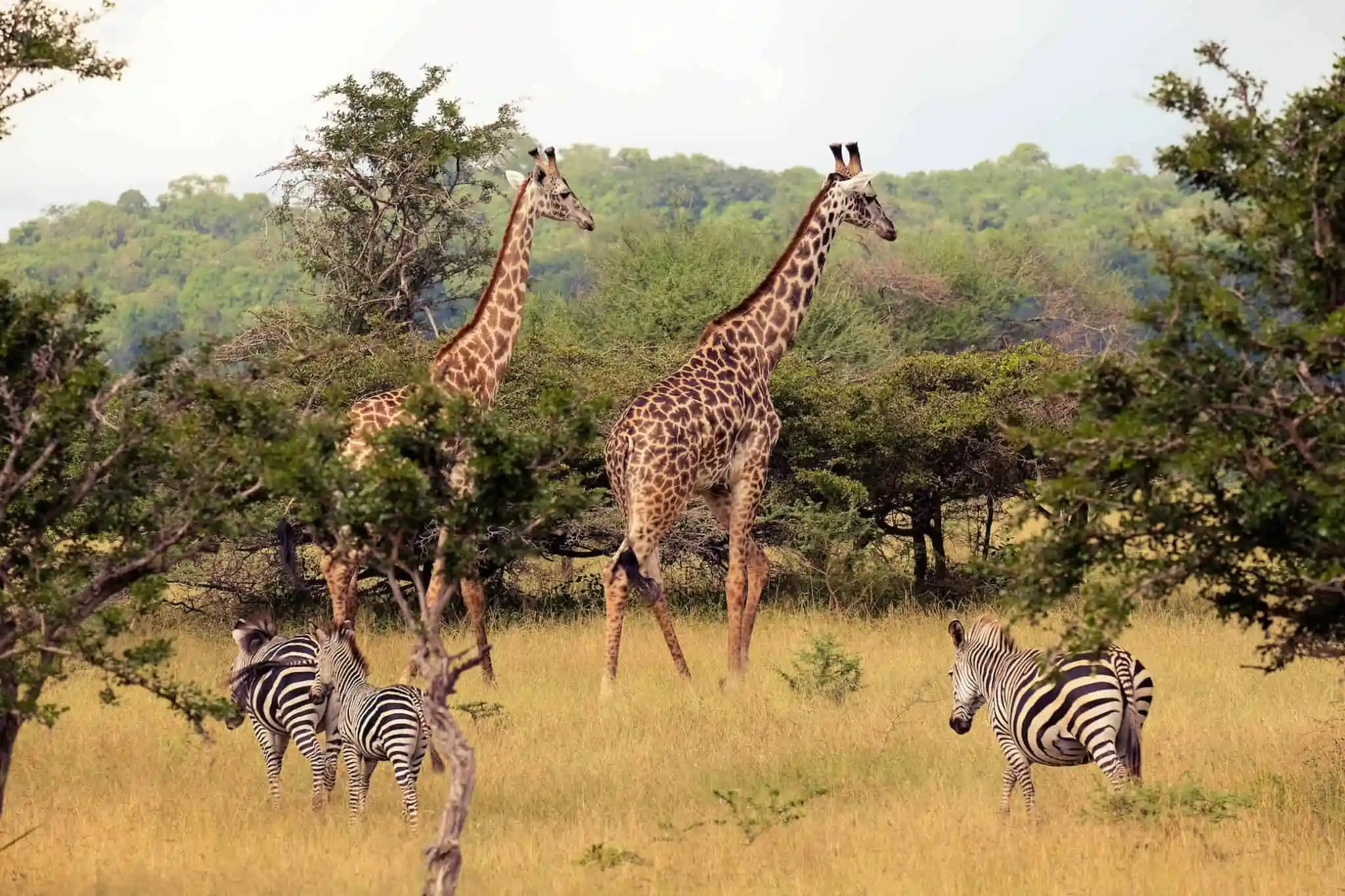
MOROGORO: TRAVERSING through the legendary and mighty Nyerere National Park would be a lifetime and memorable event for visitors on safari in Southern Tanzania circuit by its most wild or wildest animals not found in most national parks in Tanzania.
Carved from the Selous Game Reserve, Nyerere National Park is now under development to modernize its roads which traverse through its wilderness, also camping sites and other tourist facilities. But most areas in this park are accessible all the year round except the wet or rainy seasons. \The park is currently the biggest wildlife conservation sanctuary in East Africa, occupying some 30,893 square kilometres (30,893 sq.km), making it bigger than Serengeti National Park in Northern Tanzania
Nyerere National Park’s panoramic plains are decorated with golden grass, savannah forests, riverine marshes and boundless lakes. Rufiji River, the biggest river in Tanzania cuts through the park with its brownish waters flowing into the Indian Ocean.
The river adds more romance in the park and is best known for its thousands of crocodiles. Rufiji is the most crocodile infested inland water in Tanzania.
The park stands as the biggest and a leading in Africa with biggest concentration of hippos and buffaloes than any other known wildlife park in the entire African continent, the Wardens said.
Like the Serengeti in Northern Tanzania, all animal species are easily seen in Nyerere National Park. It is easy to spot animals closer as they contemplate at the tourist vans.
African wild dogs are among the most attractive animals in the park, mostly seen roaming from various areas. Unlike other parks in Tanzania, these hunting dogs are found roaming in most parts of the park, attracting many visitors.
Unlike other wildlife parks in Tanzania, animals in Nyerere National Park are shier and less accustomed with visitors.
Wardens said that most animals found in this park have never been used to see fleets of tourist vans and people, taking into a reality that this park is one among the most remote or remotest wildlife sanctuaries in Africa.
Other than elephants abound in its wilderness, the park harbours the biggest concentration of hippos and buffaloes than any other known wildlife park in the entire African continent, the Wardens said. Tourists visiting the park can observe big herds of elephants looking cautiously with great care.
The Park’s panoramic plains are decorated with golden grass, savannah forests, riverine marshes and boundless lakes. River Rufiji, the longest river in Tanzania cuts through the park with its brownish waters flowing into the Indian Ocean.
“It is easier to view many animals in a single area, mostly hunting dogs, elephants and antelopes”, said Mr Ben Sitta, Director of the Imperial Lodge that is located outside Nyerere National Park. Imperial Lodge is among springing accommodation facilities near Nyerere Nationa Park.
Imperial Lodge is among springing accommodation facilities near Nyerere Nationa Park.
Unlike Serengeti National Park and Ngorongoro Conservation Area in northern Tanzania where animals move closer to the visitors’ vans even jumping on the roof of a safari vehicle, animals in Nyerere National Park are not used with vehicles and humans.
Mr Sitta said that his clients, both local and foreign tourists enjoy the natural scenery and geographical features inside the park, Rufiji River, lakes and the legendary Stiegler’s Gorge where Julius Nyerere Hydro-power Station has been established.
Lodges inside the park organize motorboat excursions for tourists wishing to sail downstream the river on late afternoons, passing amid the awesome hippos and crocodiles.
Like Serengeti in Northern Tanzania, all animal species are easily seen. It is easier to spot animals closer as they contemplate the tourist vans. Big herds of buffaloes, elephants, Thomson gazelles and giraffes are found grazing at one place.

For birders or bird lovers, there are more than 440 bird species having been spotted then recorded.
Some of these birds spotted include the pinkbacked pelicans, giant kingfishers, African skimmers, white-fronted beeeaters, ibises, yellow-billed stork, malachite kingfishers, purple-crested turaco, Malagasy squacco heron, trumpeter hornbill, fish eagles and many other more birds.
The picturesque and attractive Stiegler’s Gorge with a depth of 112 metres, 50 metres wide and a length of eight kilometers on the Rufiji River reminds us of the Swiss hunter by the single name Stiegler who was killed by an elephant in 1907 which survived his gun shot.
Wardens said that Stiegler had shot the elephant near the gorge which fell down half-dead. Thinking the jumbo was totally dead, sooner as Stiegler approached it, the elephant rose up, wrapped him in its trunk then smashed him into the gorge which is now named after him.
Stiegler’s Gorge is among beautiful tourist attractive sites worth a visit in Nyerere National Park. Its view and location give a true picture of nature and secrets of the world creation.
The park is located between 230 kilometres and 300 kilometres from Dar es Salaam, and it takes between five and six hours to drive from the city to the park, making it easily accessible to visitors during the forthcoming African Cup of Nations 2027 (AFCON 2027).
The parks panoramic plains are decorated with golden grass, savannah forests, riverine marshes and lakes.
River Rufiji adds more romance in the park and is best known for its thousands of crocodiles. Rufiji River is the most crocodile infested inland water in Tanzania.
On February 11, 2026, Prime Minister Mwigulu Nchemba presided over the launch of the new Mtemere airstrip and terminal within Nyerere National Park, making it easier for visitors from various corners of Tanzania and other countries to access the park easily.