
DAR ES SALAAM: THE 16th Excellence in Journalism Awards Tanzania (EJAT 2025), organised by the Media Council of Tanzania (MCT), once again underscored the indispensable role of journalists and media institutions in strengthening democracy, promoting accountability and safeguarding public interest across Tanzania and the wider East African region.
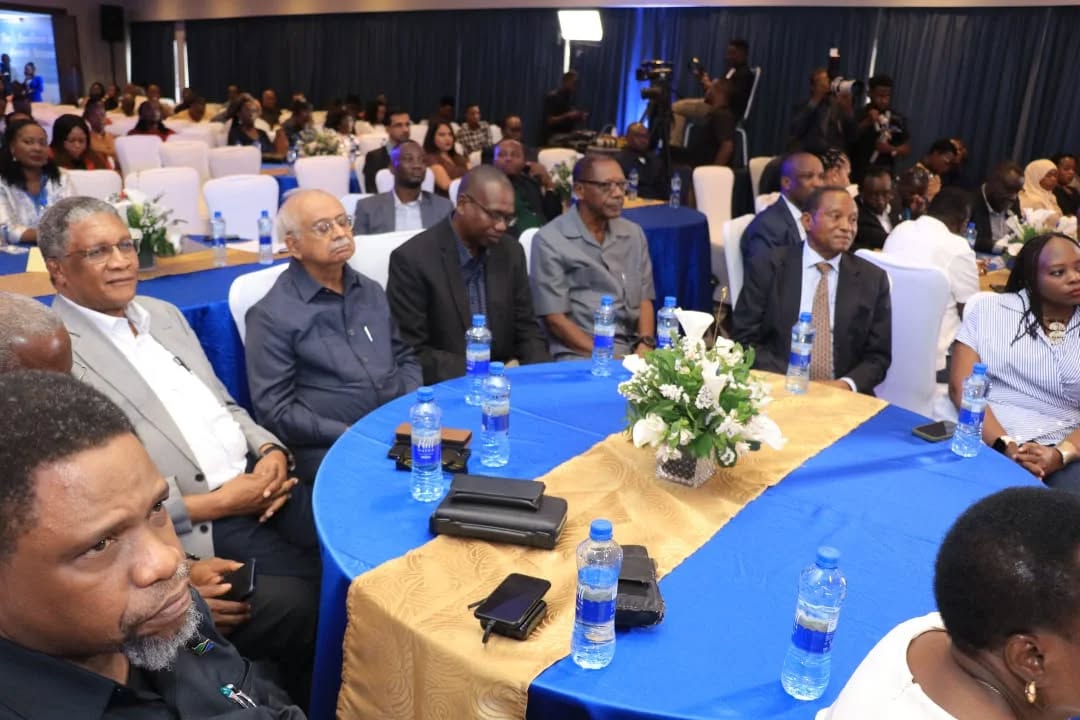
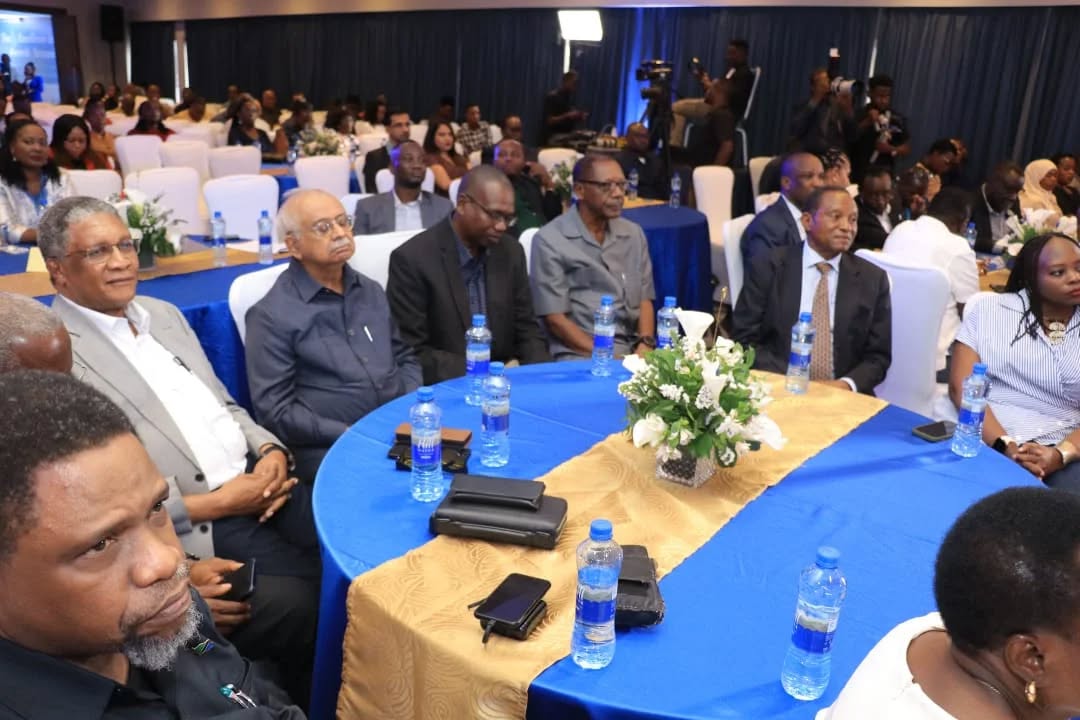
Held in Dar es Salaam on Friday, the vibrant ceremony brought together journalists, editors, media owners, policymakers and development partners in a shared celebration of journalistic excellence.
Beyond the glittering awards and recognition, the event also served as a moment of reflection on the evolving responsibilities of the media in an era defined by rapid digital transformation and increasing information complexity.
Delivering the keynote address as Guest of Honour, the President of the East African Court of Justice, Judge Nestor Kayobera, delivered a powerful reminder of the media’s ethical duty in society. He described journalists as essential partners in the justice system and custodians of truth.
He said the media remains a critical pillar in promoting accountability, protecting human rights and strengthening the rule of law within the East African Community, stressing that citizens cannot meaningfully participate in social, political and economic development without access to credible and verified information.
“A journalist is an assistant to the courts and a guardian of justice in society. The pen should be used to defend truth, justice and human dignity,” said Judge Kayobera.
His remarks reinforced the growing expectation that journalism must extend beyond the simple narration of events to actively shaping transparency and accountability.
He warned that in the absence of rigorous verification, misinformation and fake news, especially on digital platforms, pose a serious threat to public trust and institutional credibility.
While acknowledging that technological advancement has significantly expanded access to information, Judge Kayobera noted that it has also introduced complex challenges related to ethics, credibility and verification.
He urged journalists to remain vigilant, rely on credible sources and consistently place public interest at the centre of their reporting.
He further called for stronger collaboration between media development institutions and stakeholders in safeguarding journalism standards, emphasising the continued importance of supporting bodies such as the MCT in promoting professional ethics and defending media freedom across the region.
Adding to the discussion, MCT Board Chairperson, Judge (rtd) Bernard Luanda, observed that while the media industry continues to face significant challenges, ongoing legal and regulatory reforms are gradually reshaping the sector and opening new opportunities.
He cited the Online Content Regulations issued by the Tanzania Communications Regulatory Authority (TCRA), formally known as the Electronic and Postal Communications (Online Content) Regulations, 2020, together with their 2025 amendments, as a key example of reforms that have reduced registration costs and licensing fees.
According to him, this development has made it easier for journalists and digital content creators to enter and operate within the online media space, thereby expanding participation and innovation in the sector.
However, Judge Luanda cautioned that while these reforms have opened new doors of opportunity, they have also introduced heightened competition.
He said that individuals without formal journalism training are now competing directly with established media houses by producing fast, attentiongrabbing content.
“This is a major challenge for the media industry, as such competition may undermine professionalism and journalistic ethics if reporters abandon professional standards and instead rush toward sensational or lightweight content for quick financial gain,” he warned.
His concerns reflected a broader industry debate on how to balance innovation and accessibility in the digital space with the need to preserve editorial integrity, credibility and ethical reporting standards.
On his part, MCT Executive Secretary, Mr Ernest Sungura, highlighted that journalists in Tanzania continue to operate under challenging conditions, including unstable employment and the rapid digital transformation that is reshaping how news is produced, distributed and consumed.
He called on media practitioners to remain firmly committed to ethical reporting and public service journalism, stressing that responsible journalism has a direct and lasting impact on society.
“Stories that serve public interest save lives, strengthen accountability and contribute to national development,” said Mr Sungura.
He further cautioned journalists against external influence from politicians, religious leaders and wealthy individuals, warning that such pressures risk undermining editorial independence and weakening public trust in the media.
“Journalists hold not only the pen, but also the future of the nation,” he added.
One of the most significant highlights of EJAT 2025 was the introduction of a fully digital judging system, widely praised for improving transparency, efficiency and accountability in the evaluation process.
EJAT Judges’ Panel Chairperson, Jese Kwayu, explained that the system allowed each judge to work independently through secure personal accounts and passwords, ensuring full confidentiality and fairness throughout the process.
He said that once scores were submitted, they could not be altered, a feature that significantly strengthened the integrity of the awards while eliminating opportunities for interference or manipulation. The system, he added, also reduced operational costs and improved efficiency in managing submissions and evaluations.
“Once a judge completed the assessment within the system, there was no possibility of altering scores or decisions afterward,” he said.
Mr Kwayu further explained that the digital Media excellence awards highlight truth, accountability, democracy platform strengthened accountability by creating a clear audit trail, ensuring that every action taken within the system was recorded and traceable, thereby preventing collusion or bias.
He added that while the competition was highly competitive, a small fraction of submissions progressed to the final stages. Out of 594 entries received, only about three percent advanced to the final round due to stricter evaluation criteria.
“Each submission was assessed based on evidence, impact, public interest, accountability, as well as creativity and professionalism in writing, production and broadcasting,” he said.
A major highlight of the evening was the presentation of the Lifetime Achievement in Journalism Award (LAJA), which for the eighth time honoured Dr Samwilu Mwaffisi, a lecturer at Tumaini University Dar es Salaam College (DarTU), in recognition of his outstanding contribution to journalism education and professional development in Tanzania.
The ceremony also saw Tanzania Standard Newspapers (TSN) named the Most Law-Compliant Government Media House of 2025. TSN Managing Director, Ms Asha Dachi, expressed appreciation to MCT for recognising the institution’s commitment to professional journalism.
She said the achievement was a result of collective effort across editors, journalists and management, all working together to uphold the founding principles of government media.
“We have always worked as a team to uphold the values and objectives that led to the establishment of government newspapers,” she said.
Ms Dachi encouraged journalists across TSN platforms, including DailyNews, HabariLEO and digital outlets, to actively participate in journalism awards as a way of benchmarking performance and enhancing professional growth.
ALSO READ: TSN wins top compliance award
“These awards provide an opportunity for self-assessment and professional development,” she said, adding that journalists should also invest more in investigative reporting that addresses societal challenges and drives meaningful change.
The overall winner of EJAT 2025, Mr Simon Mhina of Pambazuko Online, expressed gratitude for the recognition, noting that the competition was highly competitive and brought together some of the country’s most talented journalists.
He observed that despite their potential, many journalists sometimes limit themselves due to fear of backlash or uncertainty about how their work will be received by powerful stakeholders.
“Sometimes we limit ourselves by wondering whether a particular story will upset certain people. This makes us hold back, yet we have tremendous capacity to achieve much greater things in this profession,” he said.
Mr Mhina, who has been involved in journalism training for nearly a decade, said it is particularly rewarding to see many of his former students excelling in the industry.
Other awards recognised excellence across multiple categories, including health, education, politics, sports, governance, multimedia and environmental reporting. Azam Media was named the Most Law-Compliant Private Media House of 2025, while Nukta Africa secured the second runner-up position in the same category.
As the curtain fell on EJAT 2025, one message resonated strongly throughout the event: Journalism remains a cornerstone of democracy. Its strength lies in integrity, courage and an unwavering commitment to truth.
Through the continued efforts of MCT and the dedication of journalists across the country, the profession continues to evolve, adapt and reaffirm its vital role in shaping society.