
DAR ES SALAAM: TANZANIA is set to strengthen bilateral trade and investment with Russia, following President Samia Suluhu Hassan’s recent State Visit to Moscow, as part of government efforts to mobilise international capital for the implementation of the National Development Vision 2050.
Following the visit, Tanzania aims to increase exports to Russia to 500 million US dollars (about 1.3tri/-) by 2030, up from the current 70 million US dollars (about 184bn/-), while also attracting significant foreign direct investment (FDIs) from Moscow.
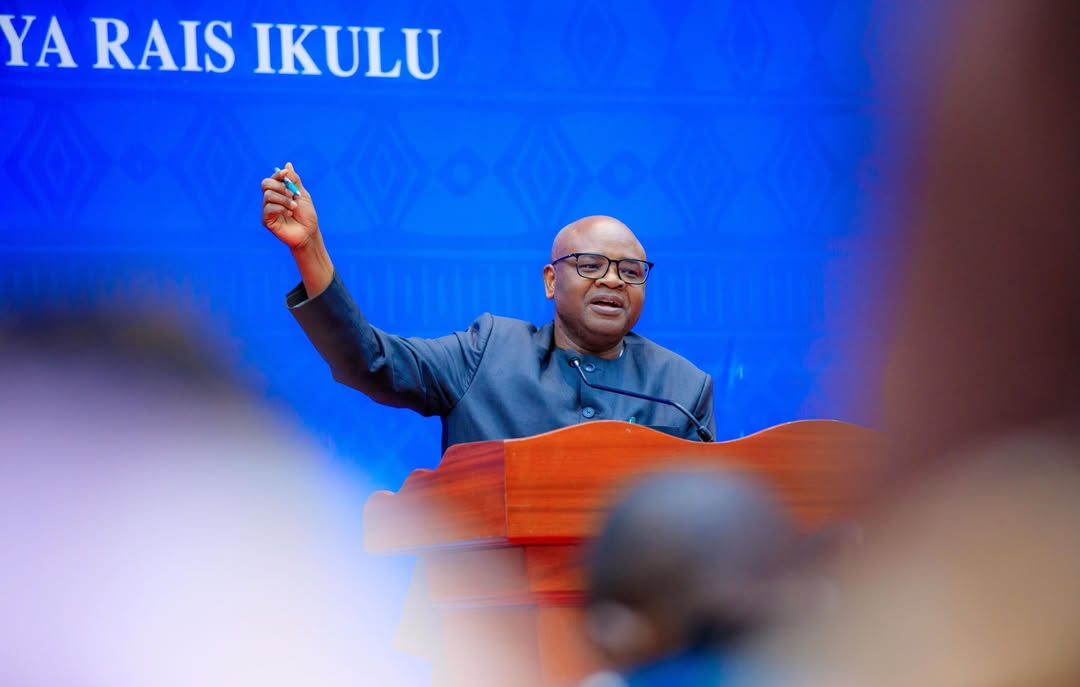
Speaking to journalists yesterday on the impact of the visit, Minister of State in the President’s Office (Planning and Investment), Professor Kitila Mkumbo, described the diplomatic mission as an “economic trip” that heighten ties and opened new markets and investment opportunities for both countries.

Prof Mkumbo said the visit supports Tanzania’s broader industrialisation agenda under Vision 2050, which seeks to mobilise global stakeholders for capital, technology and expanded trade.
“As a country implementing Vision 2050, we are mobilising partners from across the world to access the capital and technology, needed to boost trade and investment,” he said. “Following this diplomatic mission, we expect Russian investment in Tanzania to increase significantly.”
He said the visit also enhanced Tanzania’s global visibility, noting that President Samia addressed the St Petersburg International Economic Forum (SPIEF 2026), which brought together leaders from 130 countries and about 24,000 participants, including top global business executives.
Prof Mkumbo added that Tanzania’s pavilion attracted about 200 visitors, including 50 representatives from foreign companies, who held discussions with Tanzanian counterparts on future investment opportunities.
He said Russian firms have shown interest in investing in key sectors, including fertiliser manufacturing, tourism, energy, pharmaceuticals and mining, following engagements with the Tanzania Investment and Special Economic Zones Authority (TISEZA).
Other areas of interest include poultry farming, coffee processing, wheat farming, construction of a state-of-the-art hotel and assembly of modern train wagons to support expansion of the Standard Gauge Railway (SGR) network.
“They have a strong interest in establishing fertiliser production in Tanzania, which will help address one of the key challenges facing our agricultural sector,” he said.
Prof Mkumbo noted that 13 Russian companies are currently operating in Tanzania, with investments worth about 400 million US dollars (over 1tri/-), while the ongoing Mkuju uranium project alone is expected to contribute 1.2 billion US dollars (over 3.1tri/-) in capital.
He also highlighted cooperation in the mining sector, particularly uranium development, noting that both countries have reached an understanding on nuclear energy development.
“For the first time, Tanzania has entered into arrangements that will pave the way for nuclear power generation within the next ten years. This is a major milestone,” he said.
Prof Mkumbo said Tanzania aims to become the first country in the region to generate nuclear energy, a move expected to support long-term industrialisation.
“As we move towards 2050, Tanzania targets 70,000 megawatts of electricity generation capacity. This cannot be achieved through hydropower and natural gas alone. Nuclear energy offers an important opportunity to diversify our energy mix and support economic growth,” he said.
He expressed confidence that Russia will support Tanzania’s economic transformation, noting that Moscow previously supported African political liberation movements.
Prof Mkumbo also observed that Russia’s advanced industrial capabilities in agriculture, pharmaceuticals and machinery align with Tanzania’s development priorities.
He said Tanzania’s Vision 2050 targets a trillion-dollar economy, while TISEZA aims to raise foreign direct investment inflows from the current 9 billion US dollars (about 24tri/- ) to 15 billion US dollars (over 39tri/-), with Russia expected to play a key role.
Ministry of Foreign Affairs and East African Cooperation Director of International Trade Coordination and Economic Diplomacy, Ambassador John Ulanga, said current bilateral trade remains relatively low at about 300 million US dollars (788bn/-), with Tanzania’s exports standing at about 184bn/-, mainly agricultural products such as coffee, cashew nuts and tobacco.
He said Russia primarily exports manufactured goods, including fertilisers, while expressing interest in establishing production facilities in Tanzania.
Amb Ulanga said Tanzania is working to increase exports of value-added products to 1.3tri/- within the next five years, noting that the visit has reopened markets for Tanzanian producers.
He added that future export growth will include goods and services, particularly tourism. He also noted that previous exports to Russia were often routed through intermediaries, who rebranded Tanzanian agricultural products before selling them in the Russian market.
He said Tanzania’s exports will be boosted by expected direct flights by Air Tanzania Company Limited (ATCL) from Dar es Salaam and Zanzibar to Moscow, scheduled to begin on July 2, 2026.
Minister for Foreign Affairs and East African Cooperation, Ambassador Mahmoud Thabit Kombo, described the visit undertaken at the invitation of Russian President Vladimir Putin as a historic milestone that has strengthened bilateral relations and opened a new chapter of cooperation in strategic sectors.
Amb Kombo said the visit reaffirmed Tanzania’s long-standing foreign policy of non-alignment and maintaining friendly relations with all nations.
He added that the visit revived historical ties between the two countries, noting that Russia was the first country to recognise independent Tanganyika on December 11, 1961 and was also among the first to recognise Zanzibar after the 1964 Revolution.
He noted that despite concerns from some quarters over global geopolitical tensions, the visit proved timely and beneficial. He added that President Putin reaffirmed Russia’s commitment to constructive international cooperation.
ALSO READ: Samia courts Russian investors
Amb Kombo said both countries agreed on strategic cooperation areas with wide benefits for Tanzanians. He revealed that Tanzania presented seven cooperation proposals, while Russia tabled nine areas of collaboration.
He encouraged Tanzanians to take advantage of emerging opportunities in the Russian market, particularly agricultural exports such as bananas and avocados, which are in high demand.
President Samia is only the second Tanzanian Head of State to visit Russia in 57 years, following Mwalimu Julius Kambarage Nyerere’s visit to Moscow in October 1969.