
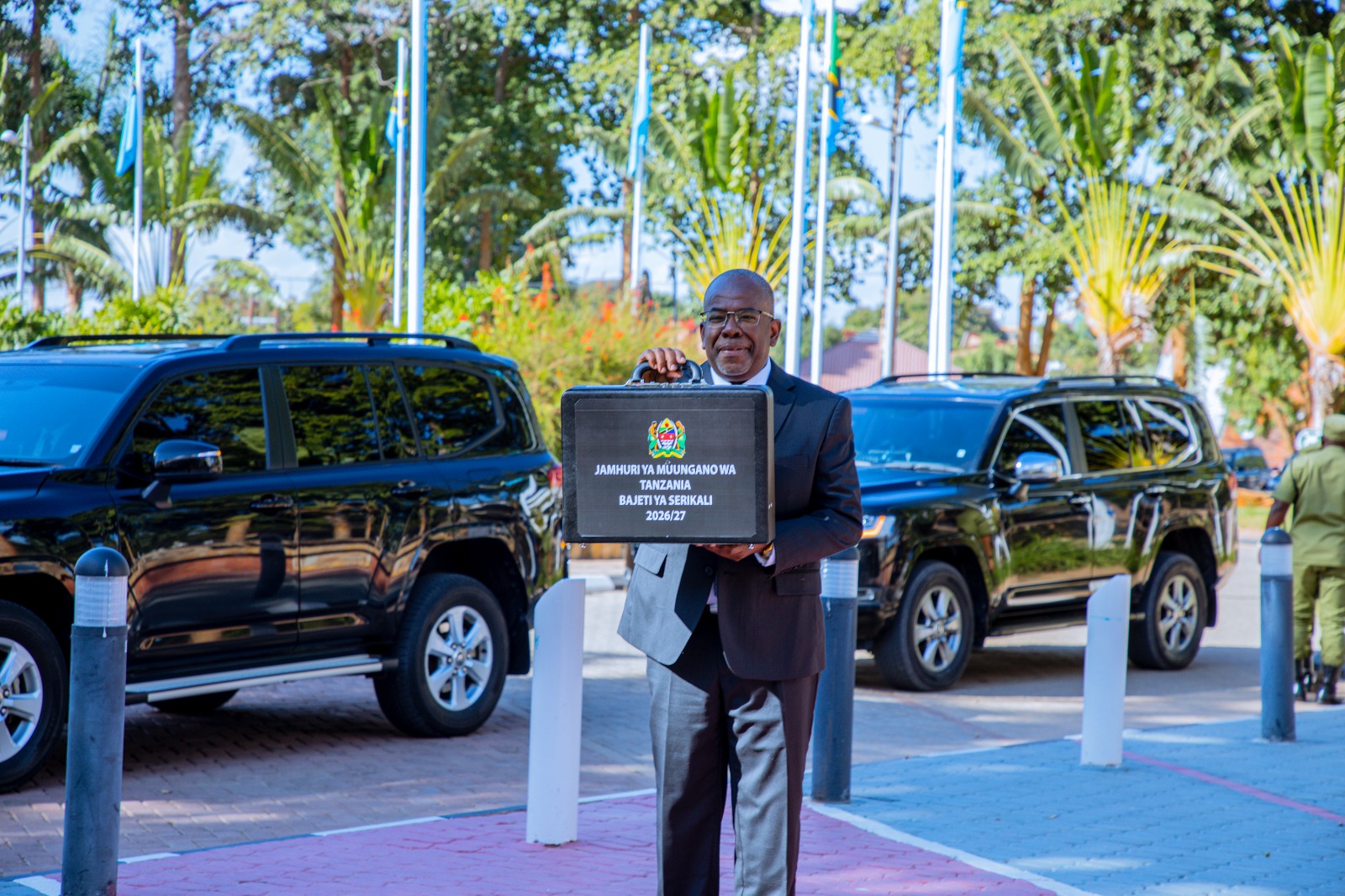

DODOMA: THE Tanzanian government has reaffirmed the country’s debt position and continued fiscal stability, revealing that it had borrowed a total of 11.29 tri/- from domestic and external sources as of April 2026, representing 89.5 per cent of the annual borrowing target.
The Minister for Finance, Ambassador Khamis Mussa Omar revealed this at the parliament in Dodoma today, June 11, 2026, when presenting the budget estimates for the 2026/27 financial year in stating that domestic borrowing accounted for 5.08 tri/-, of which 2.55 tri/- was used to roll over maturing obligations, while 2.53 tri/- financed development projects.
Elaborating, he said that external borrowing stood at 6.20 tri/-, comprising 4.61 tri/- in concessional loans and 1.59 tri/- in non-concessional borrowing.
“The funds were channeled into strategic sectors aimed at stimulating economic growth, particularly transport, energy and communication infrastructure development,” he stated.
Additionally, he told the lawmakers that as of March 2026, Tanzania’s total public debt stood at 114.34 tri/-, with domestic debt accounting for 38.45 tri/- (33.6 per cent) and external debt at 75.89 tri/- (66.4 per cent).
Despite the rising debt stock, the Minister assured Parliamentarians that debt levels remain sustainable and within safe limits, following a Debt Sustainability Analysis conducted in November 2025.
ALSO READ: Tax reforms to boost local investment
According to the analysis, the present value of public debt to GDP stands at 39.6 per cent, below the threshold of 55 per cent; external debt to GDP is 24.4 per cent, against a threshold of 40 per cent; while external debt to exports is 123.1 per cent, below the ceiling of 180 per cent.
“These indicators demonstrate that our country has a strong capacity to manage and sustain its debt without compromising macroeconomic stability,” he said.
The Minister also noted that international credit rating agencies, Moody’s Investors Service and Fitch Ratings Ltd, have confirmed Tanzania’s creditworthiness in their latest assessment for 2026, citing strong economic growth, improved business environment reforms and prudent public spending.
He further highlighted that Tanzania emerged as the overall winner of the Government Debt Management Award among Commonwealth countries, attributing the achievement to institutional reforms under the Sixth Phase Government led by President Samia Suluhu Hassan, including improved oversight of loan-funded development projects.
The Minister assured the Parliament and the public that the government will continue to safeguard debt sustainability through economic reforms, stronger domestic revenue collection, prioritisation of concessional financing, and increased production and value addition to boost exports and foreign exchange earnings.