
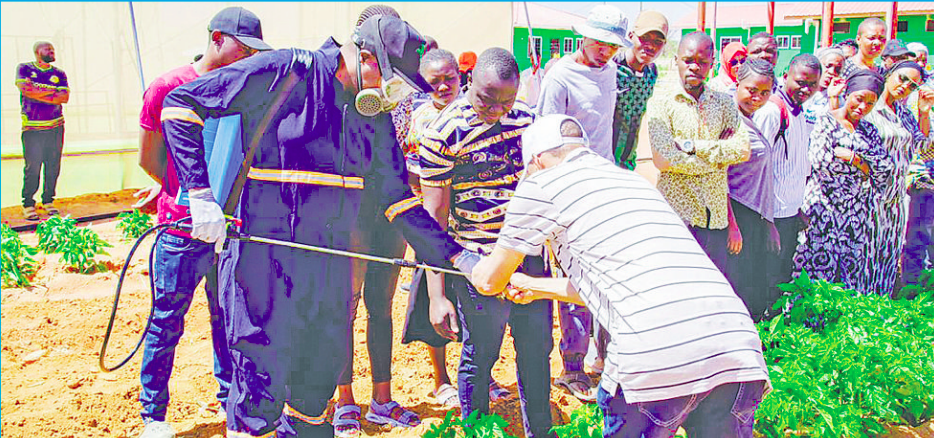
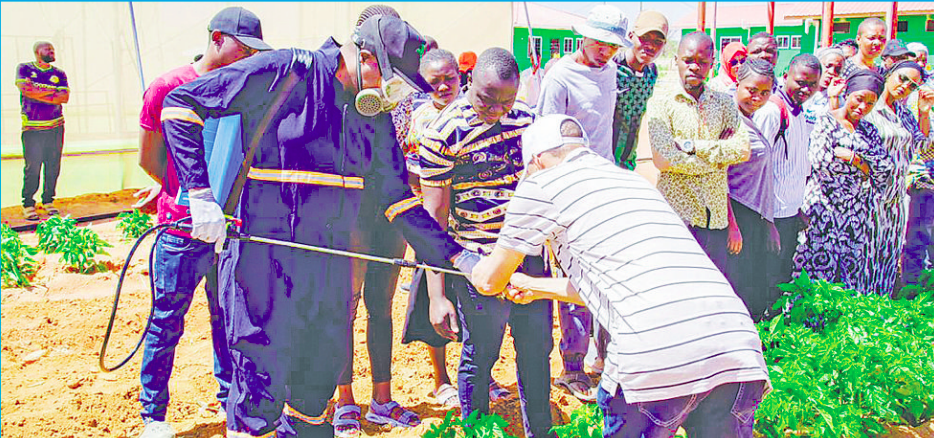
DODOMA: AGRICULTURAL modernisation has recorded significant progress in the country during the implementation of the Vision 2025, driven by increased investment in irrigation, mechanisation and technology adoption.
As Tanzania prepares to embark on the implementation of Development Vision 2050 from July 1 this year, it is an opportune moment to reflect on one of the most important pillars of the outgoing Tanzania Development Vision (TDV) 2025, modernisation of agriculture through mechanisation, technology adoption and improved productivity.
Agriculture has remained the backbone of Tanzania’s economy throughout the implementation period of Vision 2025, employing the majority of the population, contributing significantly to Gross Domestic Product (GDP), supporting industrial development and ensuring food security.
Since the launch of Vision 2025, successive governments have recognised that transforming agriculture from a largely subsistence activity into a modern, productive and commercially viable sector was essential for achieving middle-income status and improving livelihoods.
The journey towards agricultural transformation was implemented through three medium-term development frameworks: the First FiveYear Development Plan (FYDP I) from 2011/12 to 2015/16, the Second Five-Year Development Plan (FYDP II) from 2016/17 to 2020/21, and the Third Five-Year Development Plan (FYDP III) from 2021/22 to 2025/26.
While significant progress has been recorded, the experience of the past 15 years also demonstrates that challenges remain in accelerating the adoption of modern farming technologies among millions of smallholder farmers.
When the First Five-Year Development Plan (FYDP I) was launched in 2011, Tanzania’s agricultural sector was characterised by low productivity and limited use of modern technology.
Despite possessing approximately 44 million hectares of arable land, only 23 per cent was being utilised, while of the 29 million hectares suitable for irrigation, only one per cent was irrigated.
More than 70 per cent of farmers depended on hand hoes, making mechanisation almost nonexistent.
Farming was largely rain-fed, leaving millions of producers vulnerable to droughts and erratic weather patterns. The use of improved seeds and fertilisers remained low, agricultural research received limited investment and extension services lacked sufficient personnel and resources.
Most agricultural exports were sold in raw form due to weak agro-processing industries, limiting value addition and income generation. To address these challenges, FYDP I prioritised agricultural transformation as one of the country’s strategic growth drivers.
The government promoted irrigation development, commercial agriculture, high-value crops and the Southern Agricultural Growth Corridor of Tanzania (SAGCOT), while encouraging private sector participation in agricultural investment. However, despite establishing a strong policy foundation, many structural bottlenecks persisted.
Agriculture remained heavily dependent on rainfall, mechanisation levels remained low and value addition continued to be limited.
These shortcomings informed the design of the Second Five-Year Development Plan, which shifted attention from policy foundations to large-scale investments in productivity-enhancing infrastructure.
The FYDP I successfully established the policy and institutional foundations for more ambitious reforms in subsequent years.
The second development plan FYDP II sought to consolidate gains and accelerate agricultural modernisation.
Government interventions concentrated on expanding irrigation systems, strengthening agricultural research and development, improving extension services, enhancing land-use planning and increasing market access. Priority commodities included maize, rice, sunflower, pulses, cotton, sisal, grapes and floriculture products.
One of the most significant achievements during FYDP II was the expansion of irrigation infrastructure. The area under irrigation increased from 461,376 hectares in 2015 to 694,715 hectares by 2020.
This expansion resulted from the construction of new irrigation schemes and rehabilitation of existing systems in several regions. The production and availability of quality seeds also improved substantially.
Seed production increased from 36,614 tonnes in 2015 to 71,000 tonnes in 2020. Investments in seed research facilities, including laboratories, enabled the production of improved rice seed varieties such as TXD 306, TXD 88, Komboka, Tai, Supa and NERICA 1.
Fertiliser availability similarly expanded, rising from 302,450 tonnes in 2015 to 727,719 tonnes in 2020. These improvements contributed to increased agricultural output. Cash crop production rose from 796,502 tonnes in 2015/16 to more than 1.15 million tonnes in 2018/19.
Food self-sufficiency reached 118 per cent, while horticultural exports grew from 412 million US dollars in 2015 to 779 million US dollars in 2018/19.
Agriculture’s contribution to GDP averaged 27.7 per cent during the period, while the sector recorded an average annual growth rate of 5.1 per cent. However, the pace of technological adoption remained slower than expected.
Preliminary results from the 2019/20 Agriculture Census showed that only about 20 per cent of cultivated land used improved seeds and approximately 20 percent used mineral fertilisers.
Most farmers still relied on low-input, low-productivity production systems. These findings highlighted a critical lesson: investments in infrastructure and inputs alone were insufficient unless accompanied by widespread technology adoption at farm level.
The experience highlighted an important lesson: increasing the availability of technologies does not automatically guarantee adoption.
Consequently, FYDP III was designed to place science, technology and innovation at the centre of agricultural transformation, focusing not only on infrastructure but also on accelerating uptake and utilisation of modern technologies.
The Third Five-Year Development Plan FYDP III placed science, technology and innovation at the centre of agricultural transformation.
The plan represented the most ambitious phase of agricultural modernisation under Vision 2025 It recognised that Tanzania’s comparative advantages in agriculture could only be converted into competitive advantages through research, innovation, mechanisation and value addition.
Under FYDP III, government interventions focused on strengthening agricultural research institutions, improving seed systems, expanding irrigation, promoting digital technologies, increasing access to subsidised inputs and supporting commercial agriculture.
During this period, Tanzania’s agriculture sector recorded strong growth in production, exports and infrastructure, with food crop output rising by nearly 39 per cent, agricultural exports increasing from 2.1 billion US dollars to 3.73 billion US dollars, irrigation schemes expanding nationwide and storage capacity tripling.
The plan also boosted access to fertiliser, improved seeds and modern farming technologies while strengthening food security and the country’s position as a regional agricultural powerhouse.
Recently while opening the 13th Parliament in Dodoma, President Samia Suluhu Hassan outlined an ambitious strategy to transform Tanzania’s agricultural sector, pledging major investments aimed at boosting productivity, strengthening food security and expanding the country’s role in regional and global agricultural markets.
She said the government intends to raise the sector’s growth rate from the current four per cent to 10 per cent by 2030 under the guiding principle that “Agriculture is Business and the Farmer is an Investor.”
She said the government’s focus will be on modernising agriculture through increased access to subsidised improved seeds, fertilisers and pesticides, while expanding irrigation infrastructure to support year round production.
As part of the plan, Tanzania will increase its irrigated farmland from 3.4 million acres to five million acres through the completion of ongoing dams and irrigation schemes and the development of new projects, including in the Rufiji River Basin.
The President said the country aims to position itself among Africa’s leading producers of maize, rice and horticultural crops, while also promoting mechanisation through the establishment of agricultural equipment leasing centres.
To drive investment in the sector, the government will strengthen the Tanzania Agricultural Development Bank (TADB) and the Cooperative Bank, enabling them to provide greater support to farmers and agribusinesses.
Beyond increasing production, President Samia stressed the importance of reducing post-harvest losses through expanded storage facilities under the National Food Reserve Agency (NFRA) and further improvements to the warehouse receipt system.
She also pledged to secure reliable export markets for crops such as pigeon peas, green gram and sesame by leveraging Tanzania’s economic diplomacy and ensuring trade agreements translate into tangible market opportunities for farmers.
While noting that Tanzania has already achieved food self-sufficiency of 128 per cent, the President said the country will continue investing in the production and processing of sugar and edible oils, particularly sunflower, palm oil and sesame, to enhance value addition, reduce imports and strengthen the agricultural economy.
Minister for agriculture, Mr Daniel Chongolo recently noted that the ministry’s budget increased from 294bn/- in 2021/22 to 1.19tri/- in 2025/26, reflecting the government’s commitment to making agriculture a central pillar of economic transformation.
According to Mr Chongolo, Under FYDP III, irrigation development accelerated further, with 780 projects under implementation nationwide.
Twenty-eight projects capable of irrigating 23,528 hectares have been completed, while 118 projects covering more than 232,000 hectares are under various stages of implementation. The government also invested heavily in agricultural research.
Scientists developed and tested improved varieties of maize, rice, cassava, beans, sesame, wheat and sorghum, while tissue culture laboratories under construction at TARI Tengeru and TARI Maruku are expected to produce millions of disease-free seedlings annually.
New seed laboratories, seed banks and pest-control facilities are also strengthening the country’s agricultural innovation ecosystem.
Digitalisation has become another key feature of agricultural modernisation. Through electronic subsidy systems, farmers have gained improved access to subsidised seeds and fertilisers. More than 531,000 farmers benefited from subsidised improved maize seeds during the 2025/26 farming season alone.
The impact is increasingly evident. The sector’s growth rate improved from 3.9 per cent in 2021 to 4.1 per cent in 2024.
Food production rose from 17.1 million tonnes in 2021/22 to 23.8 million tonnes in 2024/25, an increase of nearly 39 per cent, while food self-sufficiency improved from 126 per cent to 130 per cent, creating a surplus of more than 5.5 million tonnes above national requirements.
The value of agricultural exports increased from 2.1 billion US dollars in 2021/22 to 3.73 billion US dollars in 2024/25.
This growth was driven by traditional cash crops such as coffee, tobacco and cashew nuts, as well as horticultural products. The government continued implementing 780 irrigation projects nationwide.
Twenty-eight projects covering 23,528 hectares were completed, while 118 projects covering 232,658 hectares were under implementation.
Traditional cash crop output increased from 973,436 tonnes in 2021/22 to about 1.6 million tonnes in 2025/26. Cashew nuts, cotton, coffee, tobacco, sugar, sisal and tea registered notable gains. Another success story was noted in improved access to agricultural inputs.
Domestic fertiliser production rose from 32,239 tonnes to 123,203 tonnes, availability of improved seeds increased by 77.7 per cent, while the government also introduced a digital subsidy system to improve farmers’ access to inputs.
The period also witnessed notable increase in storage capacity at the National Food Reserve Agency (NFRA), which expanded from 251,000 tonnes to 776,000 tonnes, strengthening food security and post-harvest management.
Horticultural production increased from 7.3 million tonnes to 9.78 million tonnes between 2020/21 and 2024/25. The subsector is projected to generate about 2 billion US dollars annually in export earnings.
Increased investment in agriculture is also another notable success. The Ministry of Agriculture’s budget increased from 294bn/- in 2021/22 to 1.19tri/- in 2025/26, reflecting the government’s prioritisation of the sector.
Nevertheless, several challenges remain. Mechanisation levels among smallholder farmers are still relatively low, fertiliser use remains below continental targets and many modern technologies have yet to reach all farming communities.
Climate change continues to threaten agricultural productivity, underscoring the need for more climate-smart farming systems.
These remaining gaps are likely to become major priorities under Vision 2050, which is expected to focus on large-scale mechanisation, precision agriculture, digital technologies, climate resilience and agro-industrialisation. As Tanzania transitions to Vision 2050, the lessons from Vision 2025 are clear.
The country has successfully built the foundations for modern agriculture through investments in irrigation, research, seed systems, digital subsidies and scientific innovation. Yet the next phase must focus on scaling adoption at farm level.
Vision 2050 will need to accelerate mechanisation, expand precision agriculture, strengthen digital agriculture platforms, increase climate-smart farming practices and improve access to affordable financing for technology acquisition.
The progress achieved under Vision 2025 demonstrates that agricultural transformation is possible.
The challenge now is to ensure that every farmer, regardless of scale, can benefit from the technologies, innovations and opportunities that have emerged over the past fifteen years.
If successfully implemented, Vision 2050 could transform Tanzania from a country that has modernised agriculture in selected areas into one where modern, technology driven and commercially competitive agriculture becomes the national norm.