
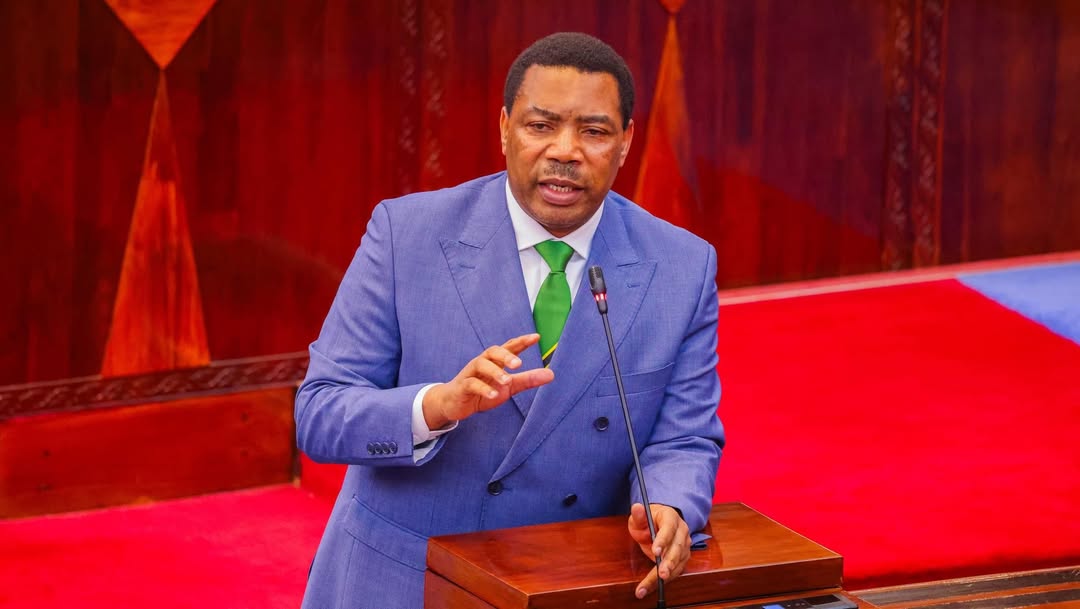
DODOMA: PRIME Minister Dr Mwigulu Nchemba has said the government has not sold any of the gold acquired by the Bank of Tanzania (BoT) as part of the country’s foreign exchange reserves, explaining that plans to do so were shelved after international prices declined, making such a move economically unviable.
Dr Nchemba made the clarification in the National Assembly yesterday, while responding to a question from Tarime Urban Member of Parliament Esther Matiko during the questions session to the Prime Minister.
Ms Matiko sought the government’s position on reports circulating among the public that part of the gold purchased and stored by the BoT had been sold abroad.
She also wanted to know whether such transactions would serve the broader national interest. Dr Nchemba dismissed the claims, saying speculation that Tanzania’s gold reserves had been secretly sold was unfounded and intended to create unnecessary public anxiety.
“There was a time when the idea of selling some gold was considered because market prices were attractive, at around 5,500 US dollars per ounce. However, before any sale could take place, global developments emerged and prices dropped to about 4,000 US dollars per ounce. The Central Bank assessed that selling at that point would result in losses and there was no urgency to dispose of the reserves,” he said.
The Prime Minister stressed that no gold has been sold to date and assured the National Assembly that all reserve management activities are conducted transparently and in accordance with established monetary policy frameworks.
He also commended President Samia Suluhu Hassan for initiating the policy of accumulating gold reserves, saying the move has strengthened Tanzania’s economic resilience and enhanced the country’s foreign exchange position.
According to Dr Nchemba, Tanzania currently holds about 27 tonnes of gold valued at approximately 3.9 billion US dollars (about 10.24tri/-) representing nearly 45 per cent of the country’s total foreign exchange reserves.
He said that, combined with other foreign currency holdings, the country’s reserve assets now exceed 6 billion US dollars, (about 15.75tri/-) enough to finance more than four months of imports.
the strong reserve position has enabled Tanzania to withstand global economic shocks that have affected many countries in recent years.
“If you want to know that Tanzania has remained stable despite global crises, look at our reserves. We have maintained reserves capable of covering more than four months of imports, while some countries faced situations where their reserves could only sustain imports for a few weeks or a month,” he said.
ALSO READ: BoT gets nod for steering economic stability
Dr Nchemba explained that the gold purchased by the BoT is not intended for commercial trading but forms part of the country’s monetary policy instruments, alongside foreign currency reserves.
He said both gold and foreign currencies are strategic assets maintained to preserve macroeconomic stability, support economic growth and safeguard the value of the Tanzanian shilling.
“This gold is not kept for business purposes. It is part of the country’s monetary policy framework, just as we maintain dollar reserves. Countries across the world use such reserves as instruments for implementing monetary policy and maintaining economic stability,” he said.
The Prime Minister added that foreign exchange reserves are used to meet international payment obligations and stabilise the domestic economy, while gold provides an additional layer of security within the reserve portfolio.
He said BoT may, under policy guidelines, adjust the composition of reserves by balancing holdings between gold and foreign currencies depending on market conditions and reserve management objectives.
The Premier said the BoT continues to purchase gold from local producers using available financial resources and may only consider selling part of its holdings to raise funds for further purchases or maintain the desired balance between gold and foreign currency assets.
He emphasised that such decisions are guided by monetary policy requirements rather than commercial profit motives.
“The Central Bank is expected to continue buying gold. If market conditions become favourable, it may sell some holdings to generate funds for additional purchases or to maintain the appropriate ratio between gold and foreign currency reserves,” he said.
Dr Nchemba further explained that reserve management is subject to strict oversight and international reporting standards, making unauthorised disposal of national assets impossible.
He said every reserve transaction is reflected in financial statements that are reviewed through periodic reporting mechanisms involving international financial institutions, including the International Monetary Fund (IMF) and the World Bank.
“If we purchase gold today, the reduction in cash holdings and the increase in gold reserves are immediately reflected in our financial records and become visible during routine reporting to international financial institutions,” he said.
The Prime Minister dismissed claims that gold could be secretly removed and sold without detection, saying such allegations ignore the stringent legal and institutional safeguards governing reserve management.
“No individual can simply wake up and decide to sell the country’s gold reserves. These are matters regulated by law, monetary policy and internationally recognised financial reporting systems. All transactions are conducted transparently and with full accountability,” he said.
He urged Tanzanians to disregard rumours alleging secret sales of the country’s gold reserves, describing them as misinformation spread by individuals seeking to create confusion and mistrust.
Dr Nchemba reaffirmed the government’s commitment to prudent management of strategic national assets, saying the accumulation of gold reserves remains a key pillar in strengthening Tanzania’s financial stability and protecting the economy against external shocks.