
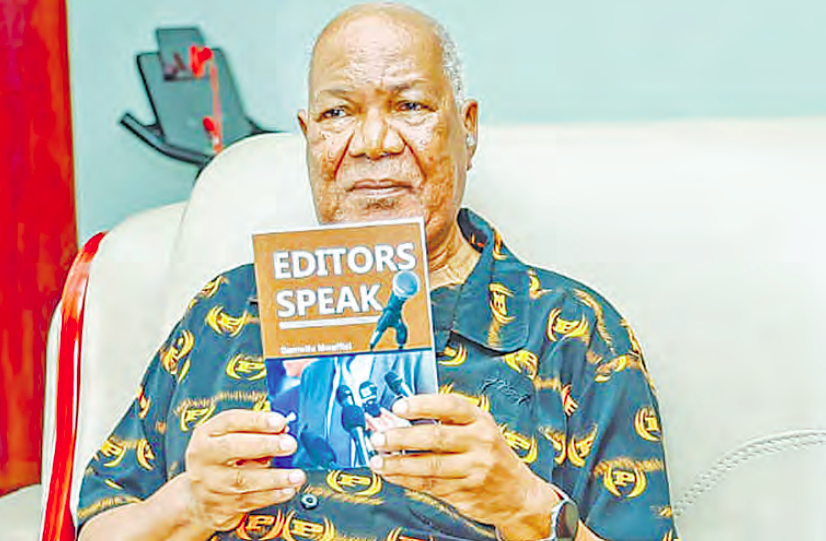
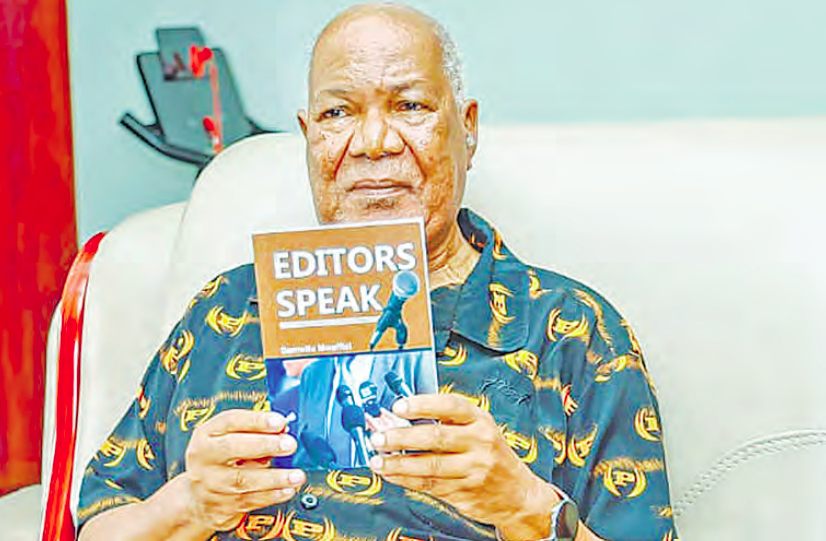
DAR ES SALAAM: IN an age when headlines can circle the globe within seconds and public perceptions influence investment, tourism and international relations, the media’s role in shaping a country’s image has never been more significant.
For veteran journalist, editor and media scholar Dr Maurice Mwaffisi, the challenge facing modern media is not whether to report the truth or safeguard the country’s reputation, but how to responsibly achieve both.
Drawing on decades of experience in journalism, media management and academia, Dr Mwaffisi argues that news organisations have a duty to inform citizens accurately, while ensuring that reporting does not unfairly portray Tanzania as a nation defined solely by its problems.
In an exclusive interview with the ‘Daily News’ at his residence in Segerea, Ilala District, Dar es Salaam recently, the seasoned media practitioner said responsible journalism should highlight both challenges and achievements.
He warned that an increasing tendency towards negativity-driven reporting risks damaging Tanzania’s image, discouraging investment and overshadowing progress made across various sectors.
“The media has a very important responsibility because it is part of the country. It should help build a positive image of Tanzania. But that does not mean hiding problems when they occur. The truth must always be told,” said Dr Mwaffisi.
According to him, many people mistakenly assume that reporting positive developments amounts to compromising journalistic independence. He insists that media freedom and national interests are not mutually exclusive.
“Freedom of the press cannot be separated from the interests of the nation. Media organisations have the freedom to discuss national interests, government achievements and the progress of citizens. However, this should not become sunshine journalism where every day is spent singing praises and ignoring challenges,” he said.
One of Dr Mwaffisi’s key concerns is what he describes as a growing tendency among some media outlets to focus overwhelmingly on negative stories, while paying little attention to positive developments.
He observed that in some newsrooms, bad news is automatically considered more valuable than stories about innovation, development and success.
“For some media organisations, negative information about the country is always considered news, while achievements and positive developments are treated as though they are not newsworthy. That kind of journalism damages the country’s image,” he said.
He cautioned that persistent negative reporting bear consequences beyond politics, affecting strategic sectors such as tourism and investment.
“When media outlets spend the entire day portraying the country as failing, they create a distorted image. This can discourage investors and even affect tourism because outsiders receive only one side of the story,” he said.
Dr Mwaffisi noted that investors, development partners and tourists often rely heavily on media reports when assessing conditions in a country.
“If someone receives only negative information, they naturally conclude that the negative picture represents the whole reality,” he said.
He stressed that balanced reporting provides audiences with a more accurate understanding of national realities.
Rejecting claims that little positive is happening in Tanzania, Dr Mwaffisi said journalists have a responsibility to acknowledge achievements where they exist.
“I have seen some media platforms spend morning to evening claiming that the government has done nothing. That is simply not true. Positive achievements should also be reported. Where credit is deserved, credit should be given,” he said.
He added that constant criticism without recognising progress does not constitute responsible journalism.
“Opposition politics may involve criticism, but journalism is different. A media outlet cannot spend every hour criticising and publishing only negative stories. That is not journalism and it is not patriotism either,” he said.
Dr Mwaffisi also believes the media should play a more active role in promoting public understanding of national development priorities.
ALSO READ: Media key to advancing healthcare PPP reforms, stakeholders told
Reflecting on Tanzania’s early post-independence years, he recalled a period when media institutions actively supported campaigns against poverty, disease and ignorance.
“At that time, editors would ask themselves how a particular story would help citizens fight poverty, ignorance or disease. News was viewed primarily as a public service,” he said.
According to him, media outlets worked closely with national development agendas by educating citizens on agriculture, health and literacy programmes.
“When agriculture was described as the backbone of the economy, the media continuously explained its importance so that people could participate. The same happened with health campaigns and literacy programmes,” he recalled.
However, he noted that today’s media environment is increasingly influenced by commercial pressures.
“Today, news has increasingly become a business. Media owners ask whether a story will sell newspapers, generate clicks or increase revenue. Once that becomes the primary consideration, educational value can easily be overshadowed,” he said.
While acknowledging these economic realities, Dr Mwaffisi urged journalists not to abandon their developmental role. He cited Tanzania’s Vision 2050 as an example of a national agenda requiring sustained public engagement and media coverage.
“The public needs to understand what Vision 2050 means and how they can participate. Government alone cannot achieve national goals. Citizens must understand them and take part in implementing them,” he said.
He argued that media organisations should devote greater effort to explaining major policies, reforms and development programmes so that citizens become active participants rather than passive observers.
“The government can create good policies. But if citizens are not properly informed and educated about them, those policies will not achieve their intended results,” he said.
Dr Mwaffisi further emphasised the media’s responsibility as a bridge between government and citizens.
“The media should not be a shield that distances citizens from their government. Instead, it should connect the two by ensuring that government information reaches the people and that citizens’ voices reach the government,” he said.
To illustrate his point, he referred to the historical mission of the ‘Daily News’ following its transition into a governmentowned publication.
He cited the newspaper’s founding editorial policy, commonly known as “The President’s Charter,” which defined the media as a two-way communication channel between leaders and citizens.
“The charter described the media as a two-way traffic system between the government and the people. Government communicates with citizens and citizens communicate with government through the media,” he explained.
Commenting on how media organisations can promote positive national stories without compromising professionalism, Dr Mwaffisi said the answer lies in strict adherence to journalistic ethics.
“If you follow journalistic ethics and principles, you are fulfilling your duty as a journalist. Some people may interpret your work according to their own feelings or political beliefs, but that does not change the ethical standards that guide the profession,” he said.
For him, professionalism requires fairness, balance, accuracy and context.
“Ethical journalism allows people to see reality as it is. It does not hide problems, but it also does not pretend that nothing good is happening,” he said.
As Tanzania pursues its long-term development goals, Dr Mwaffisi believes the media will remain one of the country’s most influential institutions, capable of shaping perceptions, attracting investment, strengthening public dialogue and encouraging citizen participation.
His message is ultimately a call for balance: report the truth, expose wrongdoing and hold leaders accountable, but also tell the stories of progress, innovation and achievement that reflect the nation’s aspirations.
“A country’s image is not protected by hiding problems. It is protected by honest, balanced journalism that tells the full story both the challenges we face and the progress we make,” he said.