
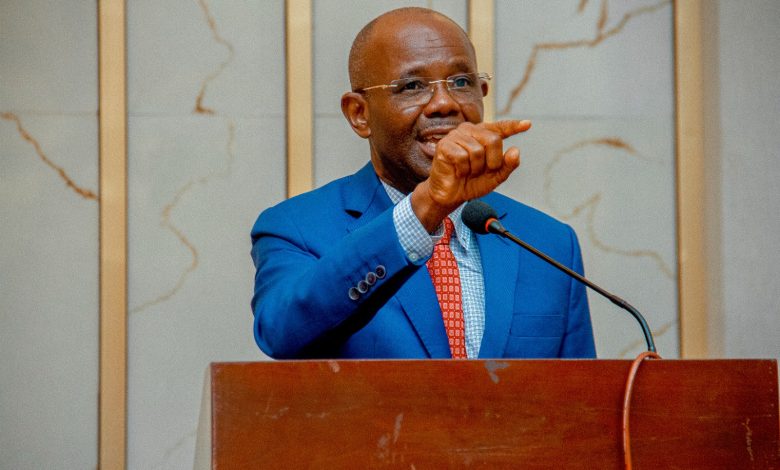

ARUSHA: THE Government has called for increased investment in climate science, advanced technologies and stronger international collaboration to improve operational climate prediction and early warning systems.
The call was made by the Minister for Transport, Prof. Makame Mbarawa while opening the Fourth World Meteorological Organization (WMO) International Workshop on Operational Climate Prediction (OCP-4) in Arusha today.
Prof. Mbarawa said the workshop demonstrates a shared commitment to advancing climate science, strengthening early warning systems and delivering climate services that protect lives, reduce disaster risks and support sustainable development.
He reaffirmed Tanzania’s commitment, under the leadership of President Samia Suluhu Hassan, to working closely with WMO and development partners to strengthen meteorological services, enhance climate resilience and promote sustainable development.
ALSO READ: 25 Tanzanians attain PhDs, Master’s degrees in Indonesian universities
He said climate change is intensifying floods, droughts, heatwaves and tropical cyclones, particularly in Africa, threatening lives, infrastructure, agriculture, water resources and economic growth.
He therefore urged countries to embrace advanced scientific modelling, high-performance computing, artificial intelligence (AI) and machine learning to produce faster and more accurate climate forecasts, while ensuring that scientific knowledge is translated into timely, reliable and actionable information.
Prof. Mbarawa highlighted Tanzania’s increased investment in meteorological infrastructure, including modern weather radar systems, a national forecasting centre, a meteorological equipment calibration centre in Dar es Salaam and improved upper-air observation systems, alongside the implementation of the Systematic Observations Financing Facility (SOFF) and the Early Warnings for All initiative.
Meanwhile, the Deputy Minister for Foreign Affairs and East African Cooperation, James Millya said Tanzania appreciates WMO and its development partners for supporting regional and global climate initiatives that have significantly improved the availability of reliable weather and climate information in Tanzania and across East Africa.
He stressed that climate-related disasters transcend national borders, making regional and international cooperation essential in addressing the growing impacts of climate change.
WMO Deputy Secretary, Ko Barrett commended the Tanzania Meteorological Authority (TMA), saying it has developed strong capabilities in issuing authoritative forecasts and timely warnings that benefit both Tanzania and neighbouring countries.
According to her, TMA has become a regional model through training, collaboration and technical support that continue to improve forecasting standards and early warning systems across East Africa.
TMA Director General, Dr. Ladislaus Chang’a said weather and climate information is crucial for saving lives, protecting property and supporting socio-economic development in sectors including transport, agriculture, energy, water resources, health, infrastructure and mining.
He disclosed that, through collaboration with WMO, TMA has supported Nigeria, Libya, Saudi Arabia, the Maldives, Namibia and Lesotho in implementing Quality Management Systems (QMS), and is currently assisting Burundi and South Sudan in strengthening weather forecasting and early warning services under the Climate Risk and Early Warning Systems (CREWS) programme.
Co-Chair of the Climate Information and Prediction Services (CIDS) experts team, Dr. Nicola Golding said the workshop aims to strengthen the entire climate information value chain, from the production of climate predictions to their transformation into decision-oriented climate services that support governments, businesses and communities.
Meanwhile, World Food Programme (WFP) Deputy Country Director, Christine Mendes reaffirmed WFP’s commitment to supporting efforts to strengthen climate information services and early warning systems, enhancing resilience against climate-related disasters. She expressed confidence that the workshop would advance operational climate prediction and improve climate services for informed decision-making.